


Since 1983 Shepherd’s Table, a nonprofit in downtown Silver Spring, has provided daily home-cooked meals and other vital resources for low-income communities and homeless individuals. By 2016, demand for its services increased — and the nonprofit was able to fund a move into a larger space.
Months before the upgrade, Shepherd’s Table had become a nonprofit partner with the Catalogue for Philanthropy: Greater Washington, which publishes a locally focused guide to giving and volunteering that promotes the mission and fundraising of nonprofits to potential donors. With support from the catalogue and an expanded local donor network, Shepherd’s Table can now sustain its upgraded program and provide meals — breakfast, lunch and dinner — to approximately 400 people each day.
“When we joined the catalogue in 2016, we definitely saw a jump in the number of donations we were receiving from people that we had not solicited individually,” said Jilna Kothary, senior development and communications associate for Shepherd’s Table. “We had individuals and companies who were finding us through the catalogue and were giving to us year after year. …. These are all real connections that we probably would have never had before.”
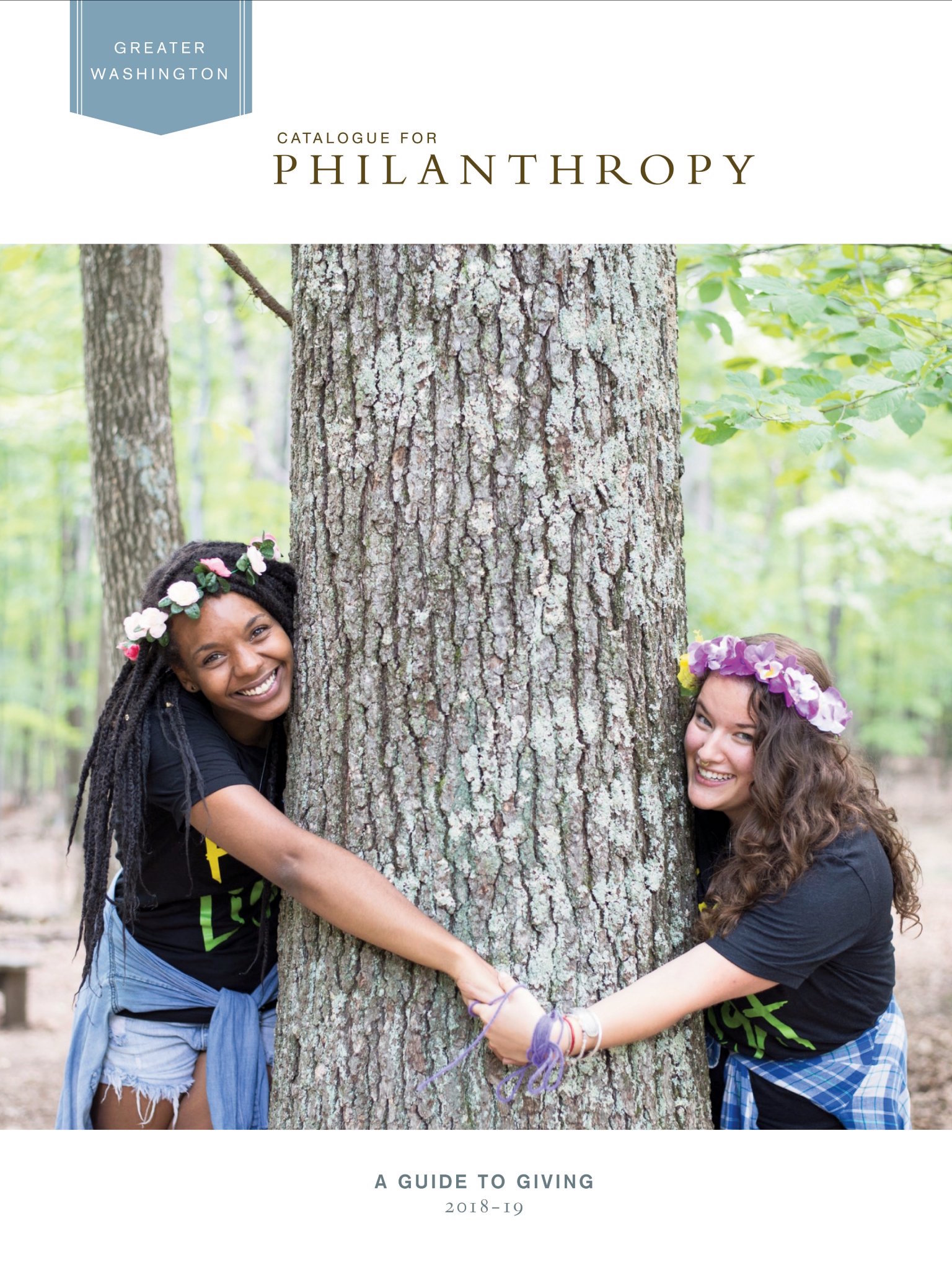
The catalogue’s 2018-19 Guide to Giving, released late last month in print and online versions, features 75 new nonprofits that are now part of the organization’s 400-plus network of partners. The catalogue teams up specifically with nonprofits with budgets under $3 million, helping them connect with individuals, groups or companies looking to make donations.
This week, the catalogue is leading efforts to harness the Giving Tuesday movement — devised to encourage charitable giving in the aftermath of the commercialism of Black Friday and Cyber Monday — to help boost local nonprofits. In 2017, the catalogue’s Giving Tuesday initiative raised a record $400,000, but organizers are hoping to exceed that amount this year.
On Tuesday, the catalogue’s leadership will join representatives of local nonprofits, donors and the director of the DC Department of Small and Local Business Development for a celebration at 11:30 a.m. at the DowntownDC Holiday Market at 8th and F streets NW. In the wake of this month’s announcement that Amazon will locate half of its second headquarters in the region and the Washington Capitals’ Stanley Cup win earlier this year, they’re hoping to use civic pride as a motivational tool.
“We believe in the power of small nonprofits to spark big change and Giving Tuesday is a great opportunity,” Bob Wittig, executive director of the Catalogue for Philanthropy, said in a news release.
Last month, the catalogue hosted its annual gala for supporters and donors of the guide at the Sidney Harman Hall in downtown DC, giving its nonprofits a chance to showcase their work and programs.
A variety of organizations performed or showcased their programs and initiatives throughout the building. Among the highlights was a newly released multimedia project produced by participants in Gandhi Brigade Youth Media, an organization that educates students on the use of digital media and technology for community involvement and engagement. Meanwhile, families with children or relatives with developmental and intellectual disabilities shared stories of growth and community support provided by the Arc of Virginia, a nonprofit that advocates for the rights, inclusion and participation of individuals with developmental and intellectual disabilities. For the final act of the evening, a talented troupe of students from One Common Unity — an afterschool program based in Columbia Heights that promotes multidisciplinary artistic engagement in order to break cycles of violence and trauma for at-risk youth and to build resiliency — performed a melodic, hip-hop crossover that drew a standing ovation from the audience.
Barbara Harman, founder and president of the catalogue, stressed the need to support local nonprofits amid the current chaotic political climate — and despite changes to tax laws that will mean donations are no longer deductible for many taxpayers.
“This is the year in which we must stop thinking about charitable giving in relationship to charitable deduction,” Harman said. “For some of us, that relationship will remain; for many it will not. No one has eliminated the ethical imperative to lift each other up, to give generously, to help others, to have [a] powerful sense of common cause.”
She added: “Charitable giving is in my mind an alternative form of speech — it is a way of giving voice to the things that matter to us.”
The catalogue, launched in 2003 as part of a project by the Harman Family Foundation, has helped raise $40 million for its nonprofit partners since then. Every year over 120 experts work to assess hundreds of applications from nonprofits, vetting them based on financial transparency, programming and community impact. In addition to being included in the print and online guides, the groups in the catalogue’s network also receive permission to use a “stamp of approval” on their websites and in donor materials, indicating the years they passed the vetting process. Approximately 75 new nonprofits are added every year to the print guide, which can be requested online. Each selected nonprofit is featured on the catalogue website for an additional three years, after which they can reapply.
Aimee Custis, deputy director of the Coalition for Smarter Growth, said the catalogue has a reputation “with some weight, recognition and prestige” — which has helped her nonprofit win donations and support for its mission of supporting walkable and transit-oriented communities and affordable housing.
“Particularly because we are hosted by a parent organization, a lot of people look for social proof that we are well-run and that we are spending money wisely,” Custis said. “The catalogue, for us, has been [like] a Good Housekeeping seal of approval with donors — to be part of the catalogue [requires] a very rigorous, deep, intensive vetting process on how the organization works and how we spend money.”
Many nonprofits featured in the catalogue’s giving guide lack the funding and resources to secure development or marketing staff, which makes fundraising and outreach all the more difficult, Wittig said.
He said inclusion in the giving guide can enhance visibility, while the catalogue’s “Learning Commons” program offers free on-site training and workshops on development, marketing, volunteer management and other topics. This month, the catalogue is launching an online version of that program that’s free to its official partners and available for a low cost to any nonprofit.
“Many smaller nonprofits don’t have a professional development budget, so they can’t afford to come to a workshop,” Wittig said. “This is a way to provide a service to them that they otherwise might not have access to.”
This post has been updated to correct the name of the Catalogue for Philanthropy: Greater Washington and to correct an erroneous reference to the size of the nonprofits it works with.
Comments are closed.