


With debut short story collection, Camille Acker writes a DC symphony
Wilson High alum adds to literature of local DC with a love letter to the city where she grew up
Every one of us inhabits our own DC. It overlaps with those of our family, neighbors, friends and colleagues, but we each travel in a District as unique as we are, made up of our haunts and history with bright familiar corners and dark alleys of the unknown.
That concept was very much on author Camille Acker’s mind when she was writing the stories in her debut collection, Training School for Negro Girls. “We all create our own city, where we go, where we grew up,” she recently told me.
If we’re lucky, our city is varied and we’re able to travel comfortably between neighborhoods, gaining gain firsthand knowledge of what it means to live a variety of experiences. But by virtue of race, class, geography or circumstance, we can’t travel back in time or walk in the shoes of someone whose life is significantly different from our own. That’s where a book like Acker’s comes in, offering glimpses of young women finding a way through their DC and providing a touchstone for young readers to relate to.
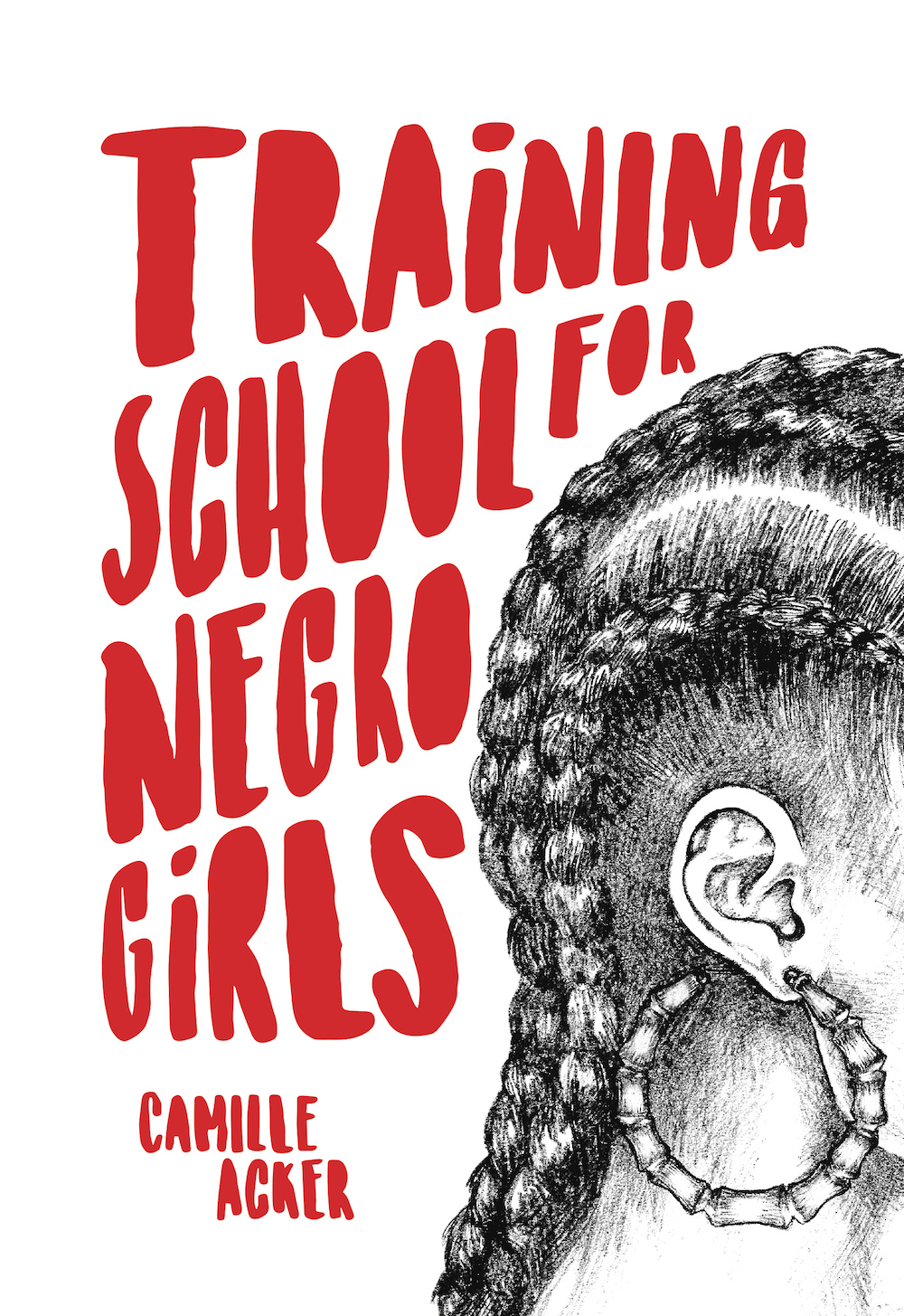 The collection was, appropriately enough, inspired by Nannie Helen Burroughs, a DC figure with a history that may be unfamiliar to many readers..
During graduate school in New Mexico, where she currently teaches far from her native DC, Acker learned more about Burroughs’ accomplishments in education — namely, founding the National Training School for Women and Girls in the early 1900s. It was a time of great social upheaval, especially for African-Americans and women, and it got Acker “thinking about young women having to navigate both race and gender and the expectations of who we’re supposed to be. I’d written a couple of stories already, but it was through that deeper understanding of her that I started to think about how we all get trained.”
Indeed, the stories depict young women learning about their world and themselves. Coming-of-age stories are a dime a dozen, but this collection of them highlights unexpected nuances.
The younger inhabitants of “The Lower School,” as the first half of the collection is titled, are emerging into themselves — trying on their future and figuring out how or whether to remain tied to their past. They are awkward and self-assured, smart and naive.
“Some of these stories come from thinking about race and gender and navigating how to be yourself. I was 16 when I first read The Bluest Eye and Edward P. Jones’ Lost in the City,” Acker said. “If my 16-year-old self had a book like this, I think she would have been pretty happy.”
The young women in the book aren’t exact replicas of Acker. Readers are often tempted to assume similarities between characters and their authors, but in Training School for Negro Girls, Acker isn’t writing what she knows, exactly. Instead, she cites advice a mentor once shared with her: “Write what you emotionally know. From an emotional standpoint, I know everything those characters go through. Feeling like they don’t belong, navigating their way through life, love, relationships.”
It’s advice that translates to the reader. In some stories — like “Who We Are,” the first in the collection — most readers will see a version of themselves, whether flattering or not, and will likely identify with at least one person.
District residents will certainly recognize their city as Acker’s book sweeps through its streets and into the homes.
“In a lot of ways it is a love letter to DC. I wanted to capture the DC I knew growing up,” said Acker, who lived in Manor Park in Northeast and went to Woodrow Wilson High School. “There are ways I love being in DC now when I visit my parents, but there are ways it’s different. For Washingtonians, it’s kind of a time capsule.”
Indeed, the stories largely take place in the recent past, though some like “Cicada” have a timeless quality that only starts to get pinned down by details like cellphones. The era of other stories comes into greater focus with the introduction of events or well-known figures, like the mayoral election that pit Marion Barry against Carol Schwartz in 1994.
Acker highlights two public figures — Barry, the four-term mayor who dominated DC politics for decades, and Len Bias, the University of Maryland basketball star whose death from a cocaine overdose traumatized the region — who serve as a sort of litmus test, in many ways, and the results largely depend on how well you know the history and culture of DC. It was important, she said, “to think about … how we frame mistakes that people make and this idea [of] how can black people be both safe and free in the world. Physically safe and economically safe and able to be ourselves.”
That freedom to be oneself, to find meaning and beauty that elevate us outside of our daily grind, can often be found in music — melodies that captivate and transport, lyrics that resonate and illuminate. Camille Acker’s writing, for me, reverberates like a favorite album, one that inspires awe at first listen and becomes a familiar touchstone as time passes.
There are particular characters I’d like to revisit, snippets that will stay with me, and lines that will become well-worn and familiar over time. Acker evokes the tagline of Howard University’s commercial radio station, WHUR — “Sounds Like Washington” — at the start of her most musically influenced story, “You Can Leave, But It’s Going to Cost You,” and that’s true of the collection.
That DC native Marvin Gaye’s “Here, My Dear” figures into the tale is no coincidence. “I thought about an album like that, a concept album, and how do all of these disparate things with different melodies and rhythms come together?”
They come together beautifully, binding joy and regret, drama and stoicism, promise and prejudice, and enlivening the past and future of the complex, complicated, heartbreaking and inspiring District of Columbia.
Camille Acker’s Training School for Negro Girls was published Oct. 9 by Feminist Press. Find out books Acker considers essential reads about DC at Publisher’s Weekly.
Many congratulations and best wishes to Ms. Acker on the book’s success. Need more DC-based and DC-focused stories that are not airport pulp about the Capitol Dome being blown up or whatever the latest meh.
Appreciate the time capsule theme … the Washingtonian diaspora is throughout the world but also many folks still here confounded by the destruction of Georgia Avenue and elsewhere. Thank you for uplifting Nannie Helen Burroughs … yes! more than just a street name!
Thank you, Ms. Acker for your new book and thanks Tayla for covering the literary scene and your review.
Respectfully,
surviving member of the 70 squad
JM