

Gordon Chaffin: DDOT offers milquetoast design for Alabama Avenue SE
Alabama Avenue SE from Bowen Road to Martin Luther King Jr. Avenue — a heavily trafficked, wide, and therefore dangerous road in wards 7 and 8 — is in the final design phase for big changes. Big more in terms of the length of the affected road than design ambition, though.
Last month, the DC Department of Transportation (DDOT) presented a milquetoast proposal to residents, having watered down potential safety benefits that would come from adding protected bike and pedestrian features. Yet, the small changes to Alabama Avenue outlined in the plans still managed to rile some residents fearing parking losses — and change in general. And neither elected officials nor the media have helped the agency’s cause.
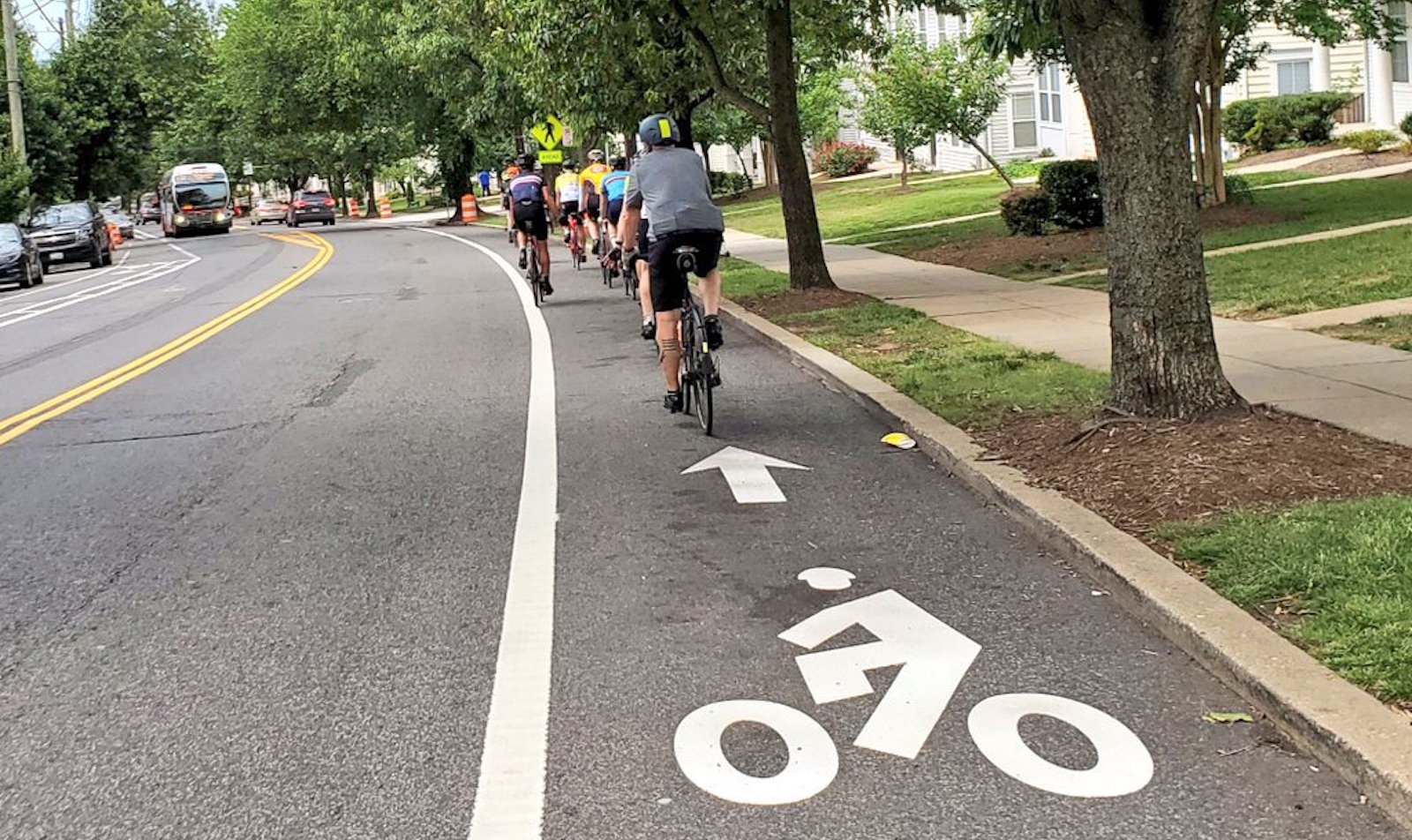
When he speaks ill of bike lanes on Alabama Avenue, Ward 8 DC Council member Trayon White demonstrates ignorance of the data-verified safety benefits of bike facilities to all road users. DC’s local TV news hasn’t done this road project justice either. The WJLA piece White commented on was a standard “bikelash” story that could almost be copy-pasted from similar stories in other cities. There’s a template: A proposed change to a road threatens parking; upset residents question the merit of safety changes that include bike lanes. The story — which focused on bike lanes installed on Alabama Avenue as part of a separate project — presents pro-safety and pro-status quo arguments as having equal credibility, while placing them in opposition.
DC’s local news media make this mistake in coverage time and again, failing to provide proper context for the road changes with reasoning from DDOT, and not letting the public know about more dramatic ideas proposed earlier. It’s just another binary fight. The WJLA piece doesn’t include residents’ safety concerns that have nothing to do with parking or bikes. And, I think this kind of incomplete context is largely DDOT’s fault.

The Alabama Avenue project is long — four miles — and each of the four reconfigurations planned for various portions of the corridor is a crappy design. The green section is the best in safety terms but doesn’t include any physical protections for the bike lanes. Also, that configuration seems to sacrifice pedestrian safety improvements like curb extensions. DDOT has to use different designs due to physical constraints in certain places, but I don’t think parking vs. bike lanes is the correct read on the conflict.
As Ward 8 resident Ronald Thompson Jr. tweeted, this fight is about DDOT presenting sub-par safety interventions. These designs might seem to make cyclists safer, but they won’t since they don’t protect bikes from cars. The renderings lack any ambitious improvements to pedestrian safety as well. So, nobody is happy with the changes and everyone’s complaining. That means, unless local reporters are experts or very diligent, news consumers get that “bikelash” framing.
What DDOT does now for most road projects is present an opening proposal to the community that already attempts to compromise between safety and driver convenience. The agency doesn’t offer a design that maximizes safety for residents. They reduce pedestrian crossing length by only 25 percent; as a result, community members view the parking loss they do suffer as a sacrifice without dramatic safety improvements — seeing as most of them don’t and will never bike.
On Alabama Avenue, DDOT could have set an opening bid that reduced the road to two travel lanes the entire way, with massive pedestrian improvements at every intersection with structural improvements and expansions to every sidewalk within a quarter mile on perpendicular streets. The sidewalk repairs are key: Residents I talk to say DDOT ignores terrible sidewalks everywhere, but especially in less-prosperous wards. But then the agency is quick to add what residents feel are non-essential features like new bike lanes where people of means move in.
DDOT could have used cutting-edge designs so every block has two parking spaces for handicapped neighbors plus a pickup and drop-off spot for commercial deliveries and ride-sharing. They could even have said no private vehicles at all: a bus lane each way with an expanded sidewalk and protected bike lanes curbside.
To defend the current designs, DDOT would likely say Alabama carries a high amount of traffic, and the road’s level-of-service can’t be compromised that much. There’d be conversations about the needs of DC Water and Pepco and the difficulty of having to relocate lines. The Federal Highway Administration would come up as a naysayer; maybe the National Park Service would have a role as a local stakeholder. But, if we’re going to reconfigure a road, let’s configure it for the whole community — not just the young, able-bodied, tend-to-be-transplant, higher-percentage-white residents expected to use the bike lanes.
Ward 8 has the lowest rate of car ownership of all DC’s eight wards; 47 percent of residents don’t have one, according to 2014 census data. And, as local DC reporter Andrew Giambrone tweeted: “a dozen people have died from DC traffic crashes in 2019. half of the fatal crashes occurred in Ward 8.” Wards 7 and 8 also have the most children, the most crashes and the least number of bike lanes. Bike lanes do make the road safer for everyone, but people deserve pedestrian and mobility interventions alongside bike additions.
DDOT will host another public meeting this summer on implementation of the Alabama Avenue safety measures proposed in a “final” report issued in October 2017. An event billed as an information session with White and DDOT director Jeff Marootian had initially been scheduled for Monday but was subsequently postponed. Hopefully officials will use this extra time to get the project right.
Gordon Chaffin is a reporter for Street Justice, a daily email newsletter covering transportation and infrastructure throughout the Washington region.

The existing design for the intersection of Alabama Avenue, 36th Street and Suitland Parkway SE (Rendering from the Alabama Avenue SE Corridor Safety Study) ![]()
The recommended design for the intersection of Alabama Avenue, 36th Street and Suitland Parkway SE (Rendering from the Alabama Avenue SE Corridor Safety Study)

Comments are closed.