

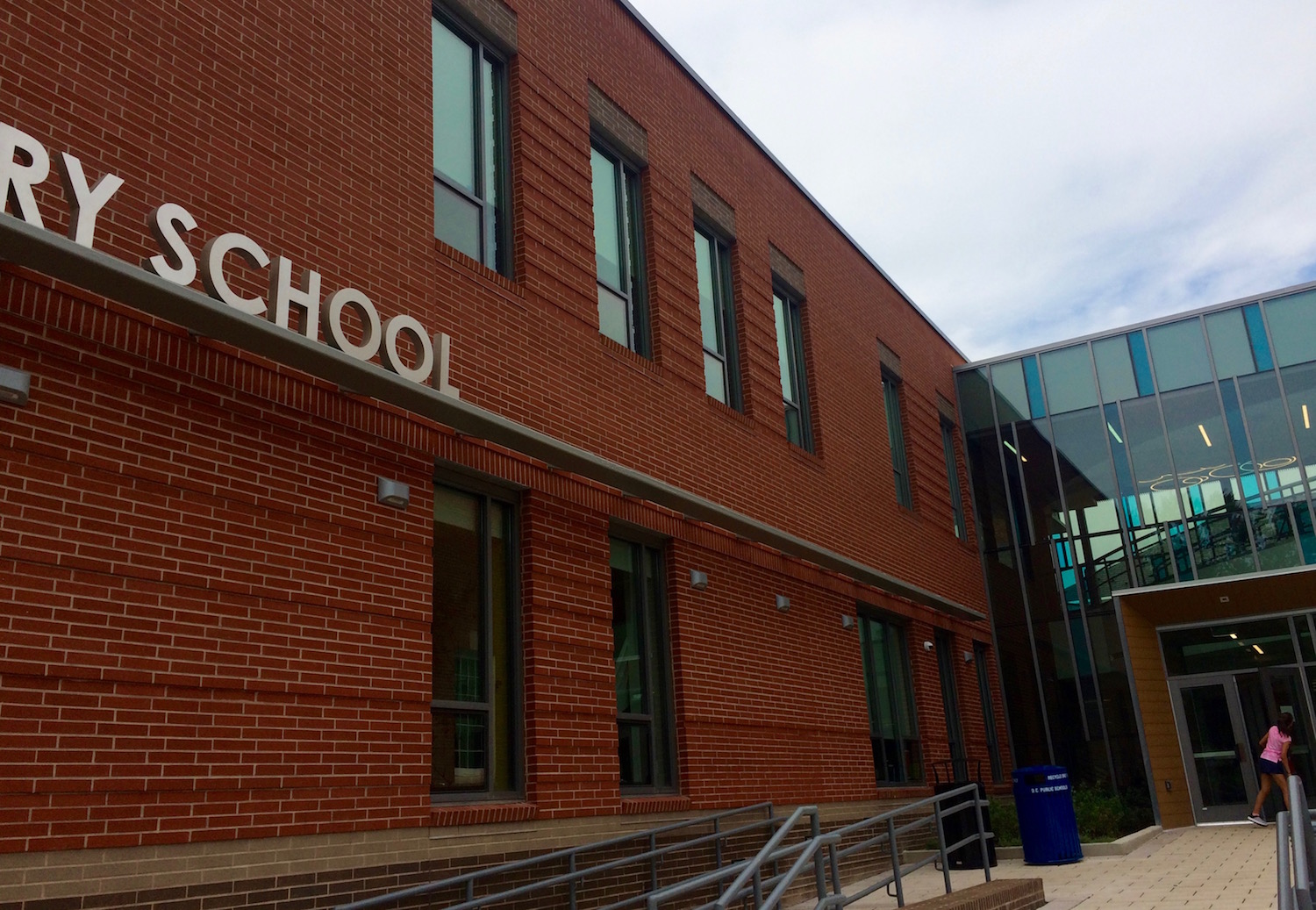
A few weeks after the DC Council voted, with enthusiastic guidance from Chairman Phil Mendelson, to disapprove the DC Public Education Master Facilities Plan 2018, Mayor Muriel Bowser sent a letter indicating her “disappointment” with the legislators’ decision to reject the plan. She was equally dissatisfied that their July 9 disapproval resolution was attached to legislation naming the newest Ward 4 middle school in honor of famed African American journalist Ida B. Wells. Consequently, Bowser chose not to sign that act rather than veto it.

In Bowser’s view, the facilities plan — or MFP in Wilson Building parlance — provided critical analysis that will help officials “address schools with over- and under-utilization” while also enabling the city to “more efficiently prioritize and allocate capital funding, better utilize the DC Government’s real estate assets, and make better use of available resources in our growing public education system,” she wrote in her July 26 correspondence.
Deputy Mayor for Education Paul Kihn, who developed the MFP, also pushed back against criticism by council members and others who asserted that the document didn’t provide important information, including solutions that would address the problems revealed in the collected data. “The District was fully compliant with the law as the [MFP] met the required provisions,” he told the The DC Line through a spokesperson soon after the council’s rejection.
“In moving forward, the District will submit supplements to the plan annually,” added Kihn, noting that additional data related to school quality and family/student demand will be collected through EdScape Beta, a new system with which Kihn and Bowser have become enamored.
The responses from Bowser and Kihn are illustrative of what ails DC school reform: too much talk, insufficient action and nauseating government intransigence. Mayoral control of public education was supposed to provide clean and clear lines of authority, establish a solid political buffer, create stability, and use smart innovations to fuel the system while producing improved student outcomes. None of that has occurred.
It may be the start of the new school year. But issues of the past still haunt the District’s multibillion-dollar public education system.
That was highlighted earlier this week with the release of PARCC (Partnership for Assessment of Readiness for College and Careers) scores, which revealed that the majority of the city’s public school students in 2018-19 did not perform at a proficient level for their grade. The overall results mirror the school rating system released last year by the Office of the State Superintendent for Education (OSSE).
Incredibly, high-fives were given all around on Monday based on extremely modest improvements: Citywide, the proportion of traditional and charter school students who performed at proficient and above (4 or 5 level) increased by 3.8 percentage points in English language arts (from 33.3% to 37.1%); in math the increase was only 1.1 percentage points (from 29.4% to 30.5%).
Focusing just on DCPS performance, some emphasized the fact that traditional schools’ overall one-year gains were greater than those at charter schools. In English, the percentage of students scoring proficient and above went from 35.1% to 39.9%, while at charters the rise was from 31.5% to 34.2%. In math, students reaching proficiency at DCPS went from 30.5% to 32.1%; at charters it went from 28.4% to 28.7%.
“We’re proud of our students and educators for continuing to achieve at higher levels. But with these results in hand, we’re also moving forward with a renewed sense of urgency to ensure all students are making gains at a pace that will set them up for success both inside and outside the classroom,” said Mayor Bowser at the announcement of the scores. She said her administration intends to provide more academic, health and social services resources at 10 DCPS institutions. OSSE will provide more professional development for teachers.
“While we should celebrate the real progress we have made as a city, our results also highlight that we need to do more to support all of our students,” said Hanseul Kang, state superintendent for education.
Does any of that sound familiar? Call it throwback Monday.
There is no reason to celebrate: The majority of DC public school students are stuck below grade level. Citywide, 62.9% of those who took the English language portion of the PARCC exam did not achieve proficiency. In math, 60.5% citywide did not reach proficiency.
In the parlance of PARCC, they are neither college- nor career-ready.
Despite the modest growth overall, test scores at some schools — Anne Beers Elementary, Browne Education Campus, McKinley Technology High School, Roosevelt High School and H.D. Woodson High School, for example — dropped in either English or math; Houston Elementary and Cleveland Elementary saw declines in both categories. What’s more, the huge achievement gap persists between students of color, particularly African Americans, and their white counterparts.
The reason for such poor performance might be right there in the MFP, which revealed insufficient programming across the city and significant under-utilization of facilities. The latter frequently has translated into reduced financial resources. The problems of the system are laid bare in the document. Solutions, however, have yet to be presented.
That prompted Mendelson to argue that the MFP was “not a plan.” In his report to the council, he said the facilities document lacked information about the future of six now-vacant schools; failed “to address school overcrowding and under-enrollment or [offer] a plan for school buildings with poor utilization (below 50 percent)”; and did not “clearly define the Facility Condition Index (FCI), which identifies ten schools with buildings in poor condition. Six of those ten schools in poor facilities are east of the river.”
Mary Filardo, head of the 21st Century School Fund, agreed with Mendelson’s assessment. “A plan isn’t just [a statement] of what is going to happen over three to five years. It has to do with goals and objectives, your hopes and dreams. That’s a plan,” she told me last week.
The MFP indicates that without an aggressive and deliberate plan of promotion and protection, DCPS’ future may be imperiled. Consider that the share of students enrolled in charter schools went from 36% in 2008-09 to 47% in 2017-18, according to the facilities report. “If this trend were to continue in a straight line (or with a consistent annual increase), 62 percent of public school students would be enrolled in public charter schools in five years and would rise to 73 percent by SY2027-28,” the report states.
Those numbers are a screeching alarm. After all, District children have no right to any specific charter school. The right to public education, by law, is only provided through DCPS. What would happen, then, to children with special needs, the majority of whom are served through DCPS, were the deputy mayor for education’s projections to become reality? Despite the allocation of nearly $1 billion of public money, taxpayers can make no demands on charter schools — not who they serve; where they open or don’t open; or even what information they share with parents and the public.
Kihn was on vacation last week when I called to discuss all of this. His spokesperson danced around my inquiries, sending me back to previously published statements; those comments ultimately failed to provide clarity about the DME’s intent. For example, based on information in his report, is Kihn prepared to request a moratorium on the opening of new charter schools or the expansion of existing ones? Is he developing a campaign to reconfigure the system or to promote DCPS facilities, like former Chancellor Michelle Rhee did to expand enrollment at existing traditional schools?
In the MFP, Kihn acknowledged that “residents shared their sentiment that Washington, DC should consider a position on optimal or minimum share of public school education that should be provided by traditional public schools, as well as the need to ensure quality education options for every student in every ward.”
That sounds like residents want a moratorium and that they want Kihn and Bowser to pay more attention to by-right neighborhood schools, which has to mean addressing under-utilization.
The mayor mentioned in her council letter that the MFP would help with under-utilization. That seemed more theoretical talk than planned action.
During a council hearing on the MFP earlier this summer, Kihn seemed proud that he was doing something about overcrowding in Ward 3 schools. He said he had identified over $26 million in the six-year capital improvement plan that would be used to “provide additional space and capacity” in schools that feed into Wilson High School. He said “over 135 seats” would be provided for Alice Deal Middle School and 90 for Lafayette Elementary.
In his committee report Mendelson argued that the MFP ignored potential solutions laid out by the Wilson High School Feeder Pattern Community Working Group. What’s more, he said, the administration’s solutions would simply replace portable units with permanent construction — all while leaving the fundamental problems untouched.
Overcrowding and under-utilization are interwoven dilemmas that require careful consideration and planning. Adding a lot of seats at Ward 3 schools — while at the same time opening more charter schools and an expanded Banneker Academic High School at a new site — risks further aggravating under-utilization at schools elsewhere, especially those east of the Anacostia River. Already several schools there are being under-funded, with the money intended to help improve performance of students described as at-risk repeatedly used to fill in budget gaps. Seeing the results from such decisions, parents have made the calculation to get their children into DCPS facilities outside of their neighborhoods or into charter schools.
It’s a vicious cycle.
So, not unlike last year, the year before that, and the year before that, the mayor and her team pontificate about what they will do to develop a high-quality pre-K-through-college public education system that well serves all District residents. Ensuring those promises are kept, however, can only come through rigorous oversight by the council, which in the past few years has been wanting.
Will this year be any different? Don’t hold your breath.
jonetta rose barras is an author, a freelance journalist and host of The Barras Report television show. She can be reached at thebarrasreport@gmail.com.
Comments are closed.