


A DC Jewel: Memorial service today to celebrate the life and music of R&B singer ‘Little Margie’ Clarke
Margie Clarke — one of four DC teenagers who formed the R&B girl group The Jewels in 1961 — had her biggest recording success three years later when their song “Opportunity” rose to No. 64 on the Billboard Hot 100. A petite woman who later acquired the nickname “Little Margie,” she began singing with her fellow Jewels while in the glee club at Roosevelt High School on 13th Street NW.
Remembered as a happy, charismatic performer, Clarke passed away Sept. 21 at the age of 74. On Monday, Oct. 14, family, friends, musicians and fans will celebrate her life at the Eloquent Touch Ballroom in Hillcrest Heights, Maryland.

Clarke and the other members of The Jewels had another brush with national fame when James Brown invited them to tour and record with him in 1966 and 1967. For those lucky enough to see The Jewels or to watch Clarke perform solo later in her career, she was more than just a member of a one-hit-wonder group endorsed by the Godfather of Soul. Clarke, who also worked as a music specialist with the DC Department of Parks and Recreation for about four decades, radiated joy.
One of four sisters, Marjorie Elizabeth Clarke was born and raised in Northwest DC. The Jewels’ original members included Clarke, Sandra Bears, Grace Ruffin and Carrie Mingo. Bears, Ruffins and Mingo attended Trinity AME Zion Church on 16th Street NW, while Clarke worshipped at St. Augustine Catholic Church on V Street NW. In an interview, Bears, who still lives in DC, says that Clarke didn’t sing only when surrounded by vocalists at church and school — someone was always singing at Clarke’s house.
Beverly Lindsay-Johnson — who directed and produced the documentary The Jewels: The Divas of DC Doo-Wop for local PBS station WHUT — describes the group’s history as “so awesome.” The group began circa 1961 as the Impalas, she said, and recorded at rock pioneer Bo Diddley’s home basement studio on Rhode Island Avenue NE. Other DC acts that frequented Diddley’s studio included the Marquees (with Marvin Gaye) and R&B singer and pianist Billy Stewart (of “Sitting in the Park” fame).
Diddley, who was with Chicago’s Chess Records label, helped get the Impalas’ debut 45-rpm single “For the Love of Mike”/“I Need You So Much” released on Chess Records’ subsidiary Checker. Clarke sang lead on “I Need You So Much.”
The Impalas changed their name to The Four Jewels at the suggestion of Bob Lee, who in 1962 began managing and writing songs for the group, as well as producing their music. They recorded six singles under that name between 1962 and 1964. Around 1963, Jewel Carrie Mingo — busy with a government day job and newly engaged — was no longer able to tour with the group. Martha Harvin, a Roosevelt student at the time who later changed her name to Martha High, soon took Mingo’s place as the group became simply The Jewels. They recorded four singles between 1964 and 1966.
Bears notes that The Jewels’ sound was influenced by Stewart, who was Ruffin’s cousin, and by a group that had been led by Ruffin’s brother.
“Bo [Diddley] said, ‘You don’t harmonize like other girls, you harmonize like men,’ ” Bears says. “Women sound kinda whiney, but we were ‘ooooh,’ ” she says, humming in a low pitch. She describes the sound as “blue lights in the basement.”
Bears notes that Clarke also developed a form of scatting that she picked up from Stewart. “She’d do that fast-talking and that ‘brrr’ sound, and I didn’t know what she was saying,” Bears says. “That was her way of getting her music across. People liked that.”
The Jewels’ chart success with “Opportunity” helped them get a gig at the Apollo Theatre in New York, where James Brown saw them perform. Although Clarke missed the show because of family and day-job responsibilities back in DC, the other three dazzled Brown, who wanted them to join his revue immediately, Bears recalls. Under contract with another manager, The Jewels had to decline the invitation. Later, Brown saw them at the Howard Theatre (this time with Clarke). No longer under contract with their previous manager, Bears says they asked Brown if he was still interested. He said yes, and they agreed to join his tour.
Bears notes that originally they were supposed to do just three gigs with Brown, but their collaboration with him ended up lasting a year and a half. The Jewels performed with the Godfather of Soul at theaters and larger arenas, including New York City’s Madison Square Garden. Because of her DC commitments, Clarke participated in only some of the gigs.
In 1966, they sang background vocals on Brown’s 45-rpm single “Don’t Be a Drop-Out.” They also recorded the Brown-produced Jewels single “Papa Left Mama Holding The Bag”/”This Is My Story.” By 1967, Bears, Ruffins and Clarke had all returned to the District to work government day jobs, while Martha High became a backup vocalist for James Brown.
The Jewels continued to perform on occasion over the years at cabarets, colleges and Washington-area military bases including Fort Belvoir and Fort Meade. They also sang at the Warner Theatre and Carter Barron Amphitheatre, often appearing as a trio of Clarke, Bears & Ruffins. In 1985, the four original members re-recorded their early singles and released them as Loaded With Goodies, an album that’s now out of print.
In 2012 they performed at the Howard Theatre for the premiere of Lindsay-Johnson’s documentary. Longtime NBC4 anchor Jim Vance, a fan of the group, attended the show and featured them on a subsequent newscast. The Jewels also performed at the Smithsonian Folklife Festival in 2013 and the Bluebird Blues Festival at Prince George’s Community College in 2014 and 2015.
Working as a music specialist with the DC Parks and Recreation Department from the late 1960s, Clarke sang over the years at events for kids, seniors and DC mayors — including gigs even after she retired. She gave voice lessons to children and performed at senior centers, where she encouraged the audience to join her in singing. Clarke’s daughter, Mishawn Hellams, remembers her mom traveling around the city and performing on the stage of the department’s large, long Showmobile vehicle.
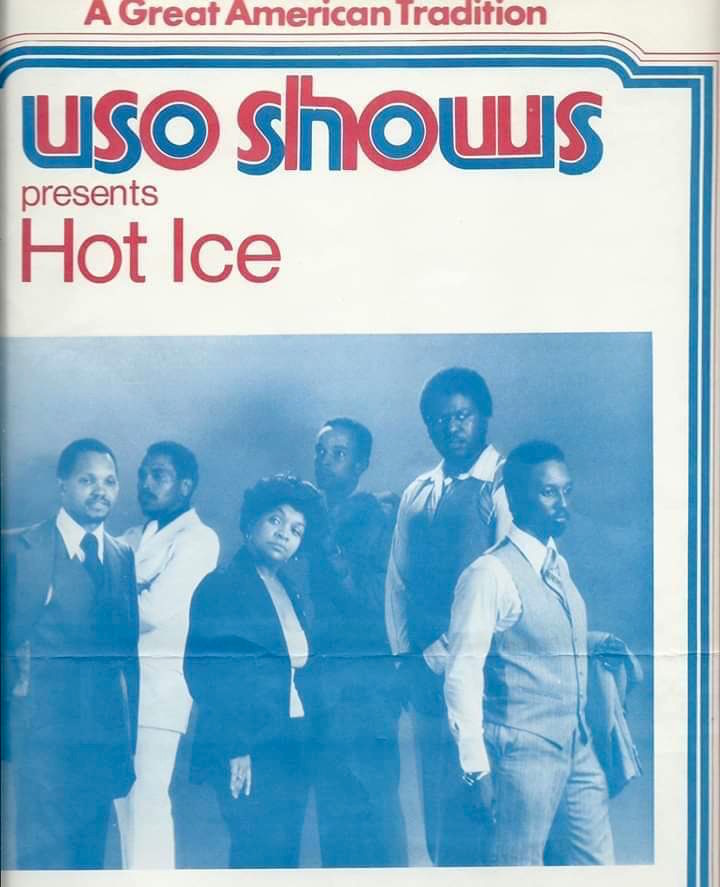
Clarke also traveled abroad with the late comedian Bob Hope’s USO shows, performing in Vietnam and Germany with a group called Hot Ice. In 2004, Clarke released an album titled At Last featuring her as lead singer with a band led by Jacques Johnson; together, they performed well-known R&B covers like the title track and “Mustang Sally.” Over the years Clarke also sang soul, blues and jazz in clubs. Recently she had performed at Westminster Presbyterian Church in Southwest DC, including a New Year’s Eve show last December.
Westminster co-pastor Brian Hamilton notes that Little Margie was a crowd favorite at the church’s Blue Monday Blues. “Her R&B energy was intense,” says Hamilton. “Part of her mystique was her size — very small frame, but an oversized energy emerged from her. When she was feeling well, she danced and strutted around and was so animated that she engaged people in the music.”
For DC-born guitarist and songwriter Cathy Ponton King, it is Clarke’s great range as a singer that stands out. “Margie had this way of reaching way down on the lower vocal scale, in a guttural way of emphasizing emotion,” King says. “Then she could ascend high up on the scales again!” She also remembers Margie as “so elegant, polished and funny on stage and she’d emote and tell great love stories in her songs.”
Filmmaker Lindsay-Johnson highlights her unique sound and her endearing stage presence. “Margie had a very distinctive voice. You think of The Jewels, and you think of Margie,” Lindsay-Johnson says. “She had that showmanship. She was a sweetheart.”
Hellams, who organized today’s memorial tribute to her mother, says that it will feature live musical performances as well as a number of guest speakers who knew Clarke. Hellams notes that Clarke, who suffered a stroke about a week before her death, was always “down to earth, often laughing and telling jokes.” Hellams says her mother “always sang to everybody and sang to commercials. Her passion was music. Very seldom was she mad.”
Toward the end of her life, when Clarke was in intensive care, she couldn’t sing anymore and had difficulty speaking, says her daughter. “I think she was just tired, and knowing she couldn’t sing anymore, she just gave up,” says Hellams. “[But] she had a smile on her face the day she passed.”
“Celebrating the Life of Marjorie E. Clarke” will take place Monday, Oct. 14, from 1 to 5 p.m. at the Eloquent Touch Ballroom, 3914 Bexley Place, Hillcrest Heights, Maryland. DC Legendary Musicians Inc. has raised $2,585 through a GoFundMe page to help defray the cost of the memorial service.
She was a great lady. And I miss her.
Oh I’m so sorry to read this. I was a dancer on the Showmobile dancing behind her singing. Started dancing with Bren-Car Dancers then later working my summer job at Park Rd under Joyce Mosso where I saw her daily. Also performed at Crampton auditorium on HUs campus with her along side Pryor. Man she was awesome. A small woman with a big voice! May she rest in peace. And her daughter find strength in the memories with her.
Ms. Little Margie was nothong3 less than a rau of sunshine at all times…..when she overheard that i was a dwim coach at Roosevelt shs she became my numbet one cheerleader for team. She was an ambassador and simply a kind and beautiful person absent amd present of her talent as a singer.