

Merger of two familiar DC names aims to bring seamless care to special-needs children
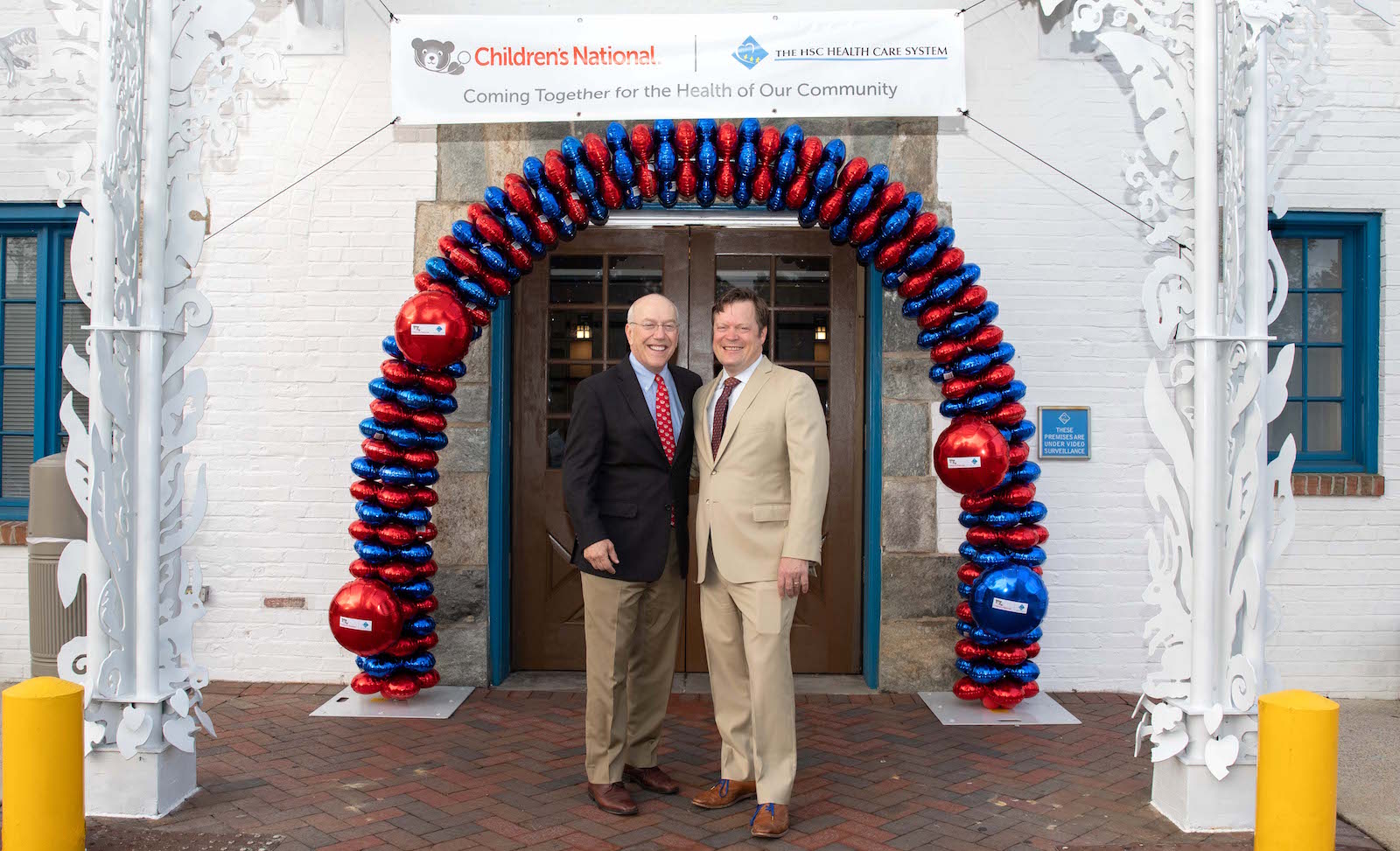
Two DC health care systems have joined forces to provide expanded care for children and young adults with complex medical needs. In September, HSC Health Care System became an official subsidiary of Children’s National Hospital upon receiving regulatory approval to integrate services.
Under the merger, which has been in the making for over a year, Children’s National has absorbed the HSC Health Care System and its outlets, including its pediatric hospital, outpatient therapy center and skilled nursing facility, among others. “Integration” of the two brands is slated to occur over a five-year period, with the organizations’ two logos currently being used next to each other in the meantime, according to a spokesperson.
Children’s National, based in Northwest DC, has been providing pediatric health care for nearly 150 years. Beyond the traditional hospital on Michigan Avenue NW, its services extend to regional outpatient centers in DC, Maryland and Virginia that provide specialty care such as cardiology services, nutritional consultation, psychiatric services and more.
HSC Health Care System, a organization that has been in DC for 135 years, operates a specialty hospital on Bunker Hill Road NE that provides comprehensive health services for children and young adults with special needs, including care coordination, rehabilitation and therapeutic services, and transitional care. (The previous name for the pediatric center, the Hospital for Sick Children, was dropped in 2004.) Earlier this year, the nonprofit health care provider teamed up with National Children’s Center to expand its services to children with special needs in Southeast.

Children with complex medical needs may have long-term diseases such as cancer, chronic conditions such as diabetes or asthma, and/or functional limitations such as intellectual disabilities or developmental delays. As a result, these children need specialized care.
“What we were trying to be clear about is that children and adults today often have complex health needs,” Dr. Nathaniel Beers, president and CEO at the HSC Health Care System, said in an interview with The DC Line. “They may start in neonatal care in the hospital at Children’s and transition their care over to HSC on the inpatient side. And as they transition out of HSC inpatient care to home, they often will have follow-up care with anywhere from two to five specialists. Our job is to make sure that the care is seamless for them.”
Dr. Kurt Newman, president and CEO of Children’s National, added that the acquisition will create a single system in which information is shared and families can obtain care for their children without having to travel as far as they previously did.
“We now have the information systems that we need where we can access records easier, or make appointments easier,” he told The DC Line. “Our specialists are the ones who go back and forth so that the children don’t have to travel unnecessarily.”
New federal legislation encourages the kind of coordination and efficiency that Children’s National is seeking to develop, Newman said.
In April, President Donald Trump signed the Medicaid Services Investment and Accountability Act of 2019, which includes a section known as the Advancing Care for Exceptional Kids Act (ACE Kids Act). Under it, state Medicaid programs can receive federal support to expand and improve coordination of care across providers, and to remove barriers to out-of-state care. This law is expected to reduce the overall cost to Medicaid by lowering the number of emergency-room visits and inpatient days.
“We want to take advantage of the opportunity that this legislation creates,” Newman said. “By coordinating the care for children with complex medical needs, you can improve the quality and lower the cost.”
Health care experts stress that it is critical that children with special health care needs have comprehensive insurance coverage. Without coverage, these children run the risk of not receiving timely care for health and dental needs or of missing referrals for specialists and therapeutic services. Having Medicaid coverage and access to navigation and coordinating services helps ensure that such children from low-income families can get the same care as their privately insured counterparts, experts say.
Officials at Children’s National describe the collaboration as a way to develop a better health care system for children in the District who need care that goes the extra mile. “I think that fundamental benefit is that we will improve the care for these children, and we will be one hospital with two campuses,” Newman said.
The joining of Children’s National and HSC Health Care System will help reduce inequality in the District because these youngsters will have better access to services, Beers said.
“We have always focused on health equity and how we deliver high-quality service to all the children in DC,” he said. “We try to ensure that every child regardless of their medical needs [gets] what they need. That has been a true part of the mission of Children’s as well as HSC. And coming together only allows us to expand out that mission that we have together.”
Comments are closed.