


Capital Projections: Desert punks edition
Capital Projections is The DC Line’s selective and subjective guide to some of the most interesting arthouse and repertory screenings in the coming week.
DESOLATION CENTER
The Washington area doesn’t lack for DIY ventures that operate on a shoestring. Still, one may wonder: Whatever happened to the truly groundbreaking, anti-establishment movements of the past? This 2018 documentary by Stuart Swezey tells the story of a turbulent era that may have been the counterculture’s last hurrah before it was hopelessly commodified.
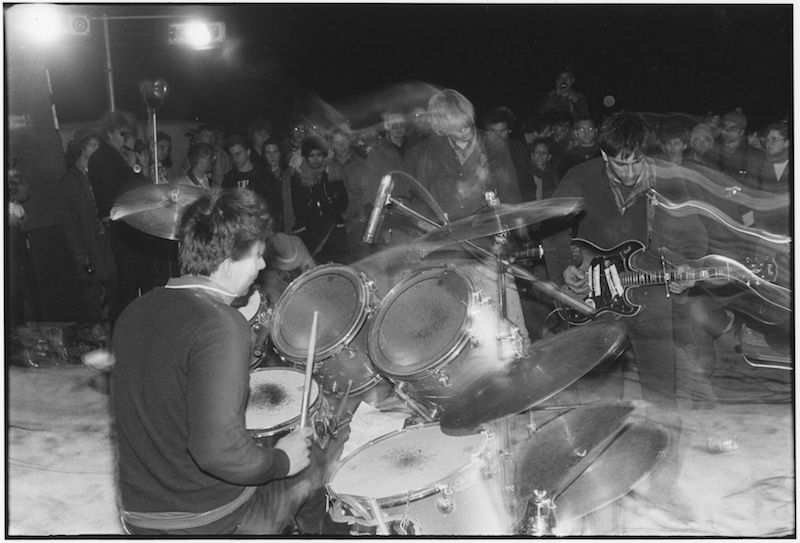
In the early ‘80s, Swezey organized a series of art and music events (guerrilla-style, without permits) in unlikely Southern California spots such as the Mojave Desert. For the 1983 program Mojave Exodus, featuring the bands Minutemen and Savage Republic, attendees met in Los Angeles to be bused to an undisclosed site three hours away, where wind and sand threatened to overwhelm microphones and musicians alike. The stark locations lent the music an air of mystery, compounded at a 1985 desert show featuring Sonic Youth, where most of the audience was on LSD. These concerts could be free-flowing, unpredictable affairs, in large part due to the unconventional, open-air performance sites. The members of Redd Kross were hours late for their scheduled appearance having received only vague directions to take a dirt road somewhere in the middle of nowhere. At another show, an enthusiastic skinhead took the microphone and just started shouting “We’re in the desert!” to the crowd. The experiences documented in Desolation Center were free-form, but Swezey’s film has a straightforward structure that intersperses vintage concert footage and interviews with participating artists like Sonic Youth’s Thurston Moore and Minutemen’s Mike Watt. These elder statesmen look back at their volatile youth with the steady perspective of maturity.
As Swezey and his peers matured, their legacy morphed as well, but not necessarily for the better. These small-scale happenings inspired much larger endeavors, like Lollapalooza (whose founder, Perry Ferrell, performed at one of the desert programs). But Swezey seems to have less-than-positive feelings about the cash cows that followed in his footsteps. When a title card explains the enormous audiences and production costs behind Coachella and Burning Man, it’s hard not to see organizers of such high-profile festivals as sellouts who gave up on their original aspirations. The scrappy resourcefulness that drove Swezey’s money-losing efforts in the ’80s has been replaced by just another mainstream commercial product, bereft of anything truly rebellious.
Watch the trailer.
Monday, Nov. 4, at 6 p.m. at the Hirshhorn Museum and Sculpture Garden’s Ring Auditorium. Director Stuart Swezey will participate in a Q&A after the screening. Free.
GIFT
“Today, culture is no longer culture. It’s the society of the spectacle, it’s tourism, or mass consumption.” Referring to French philosopher Guy Debord’s seminal 1967 work The Society of the Spectacle, that’s how one of the subjects of a new documentary by Robin McKenna laments the commercialism of contemporary art. A meditation on creativity and the importance of simply giving it away, McKenna’s film tells the interlocking story of several artists and arts programs that seem to follow that generous spirit. Lewis Hyde’s 1983 book The Gift provided the inspiration for the film, which intermittently features title cards quoting from the work.
McKenna shifts among different locations, spending a few minutes with one project before moving to the next and then returning to each to follow their progress. There are no identifying titles, which perhaps requires the viewer to give more of themselves in order to engage with the material. As explained in the press notes, individual artists and projects on view include an abandoned Italian factory repurposed as a museum and migrant housing; an indigenous man in the Pacific Northwest carving large wooden sculptures for a gift-giving ceremony known as a potlatch; a New Zealand artist encouraging museum visitors to share gifts of flowers and song with fellow art lovers; and a beekeeper building a bee-shaped art car for Burning Man, the creative community gathering held in the Nevada desert.
Especially when viewed in conjunction with Desolation Center, the film’s inclusion of Burning Man seems a bit out of place here. Participants in the annual festival may give time and materials away for free, but visitors generally travel great distances and spend hundreds of dollars to attend the event itself. While most of the projects in Gift are by and large uncommercial, this one seems all about tourism and spectacle, which runs counter to the film’s generally low-key tone. But perhaps McKenna’s gentle film, which encourages the viewer to look beyond the monetary value of creativity, sees a generosity even in such a lavish, money-making enterprise.
Watch the trailer.
Opens Friday, Nov. 1, at Landmark E Street Cinema. $12.50.
CAUGHT BY NIGHT
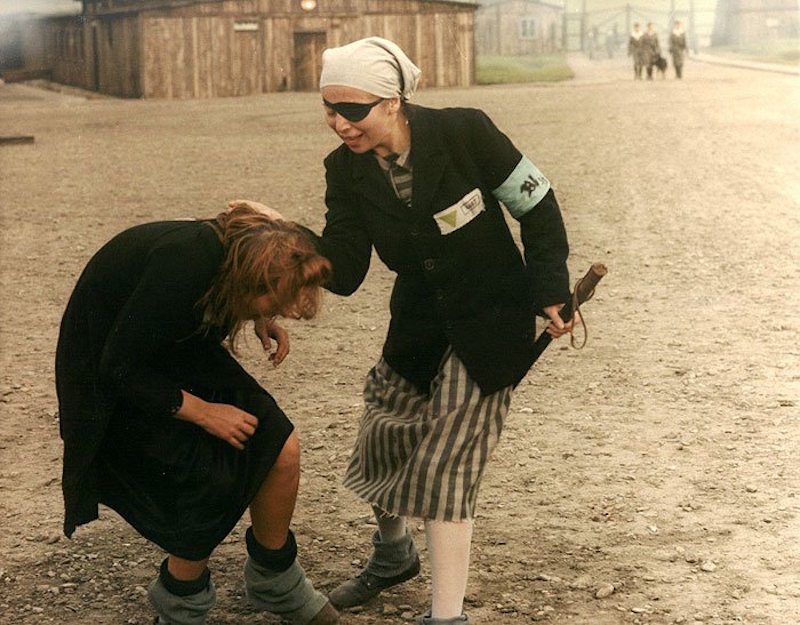
The AFI Silver Theatre and Cultural Center continues its survey of Czech filmmaker Juraz Herz with a 35-mm print of this powerful Holocaust drama. Also known as The Night Overtake Me, the 1986 film is based on the life of female journalist Jožka Jabůrková, who was imprisoned in the Ravenstock concentration camp after German forces invaded Prague in 1939. Herz, who himself was a prisoner at Ravenstock, opted not for a starkly realistic war picture but a highly stylized art film. Critic David Cairns writes: “Intercutting desaturated, dark and sometimes distorted and blurred scenes in the camp with vibrant, blown-out flashbacks, all searing oranges and yellows, [Herz] creates a dazzling sense of life recollected in hell.”
Watch the trailer.
Monday, Nov. 4, at 7 p.m. at the AFI Silver Theatre and Cultural Center. $13.
THE WITNESS
This weekend the National Gallery of Art launches “Welcome to Absurdistan: Eastern European Cinema From 1950 to 1989,” which runs through Nov. 24. A showcase for the distinct, politically tinged absurdity of the region’s filmmakers, the series begins with Péter Bacsó’s
1969 comedy-drama about a man arrested for illegally slaughtering his own pig. The film was banned for more than a decade after its release for criticizing the oppressive regime that took over Hungary after World War II. Anton Bitel of the British Film Institute wrote, in an article about a 2018 revival, that “the film viciously lampoons the way that Hungary’s bumbling Communist rulers have taken over from the Nazis as accusers, oppressors and executors of the most upright in their society.”
Watch the trailer.
Saturday, Nov. 2, at 1 p.m. at the National Gallery of Art in the West Building Lecture Hall. Free.

THE DOBERMAN GANG
Next week the Washington Psychotronic Film Society features a program for dog lovers and criminologists alike with this 1972 action comedy about bank robbers who train a pack of dogs to pull off a heist. The first of a series of four doberman-themed movies directed by Byron Chudnow (including Fred Astaire’s 1976 late-career vehicle The Amazing Dobermans), The Doberman Gang only has a 5.2 rating on IMDb, but the film had an unlikely champion in the Chicago Tribune’s Gene Siskel, who gave it three out of four stars. The late At the Movies co-host saw the film as a canine Bonnie and Clyde, writing that although it “runs out of creative gas after the robbery and settles for a stupid ending, the robbery and its planning privide general portions of laughs and tension.” Still, the Psychotronic programmers warn, “You’re gonna learn how many dog-related puns can be made before we all go woof.”
Watch the trailer.
Monday, Nov. 4. at 8 p.m. at Smoke and Barrel. Free.
Comments are closed.