


With Jack Evans running, it’s anyone’s game in the Ward 2 DC Council race
There’s a power vacuum in Washington: The Ward 2 seat on the DC Council is up for grabs with the Jan. 17 resignation of 29-year incumbent Jack Evans, who departed the office amid a massive ethics scandal. A special election to determine who will complete Evans’ term, which lasts through 2020, has been scheduled for June 16.
But in a befuddling timeline, that’s exactly two weeks after the District’s June 2 primary elections, including the hotly contested Democratic contest for the Ward 2 seat. The primaries are open only to party members, while the special election is open to all registered Ward 2 voters, of whom there were roughly 48,000 as of Jan. 31. It’s conceivable — though some say unlikely — that the winner of the Democratic primary won’t be the same as the winner of the special election. (Council terms run for four years and, in largely blue DC, the Democratic primary victor typically also wins the subsequent general election.)
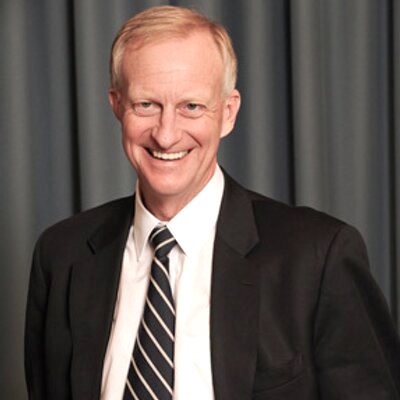
This sequence of elections isn’t the only oddity in the race for Evans’ old seat. Late last month, Evans himself filed paperwork to run in both the Democratic primary and the special election. The move drew swift condemnation from his former council colleagues, his electoral opponents, local political observers and residents across the city. Even in Ward 2, few rose to the immediate defense of Evans, who, according to the findings of investigations last year, violated multiple ethics rules by taking official actions to benefit his secret consulting clients. He avoided expulsion from the council by resigning days before the 12 other legislators were slated to oust him with a vote.
Evans is the District’s ultimate political insider. He ranks as the council’s longest-ever serving member and for years presided over its powerful Finance and Revenue Committee, shaping tax policy, shepherding subsidies for developers, and overseeing the Washington Metropolitan Area Transit Authority, where he also served as chair of the board. During his tenure, he ran repeatedly for mayor, never winning but always sticking around. Now, with a possible vote split in the Ward 2 race — as well as his lingering support within neighborhoods and the business community — Evans could nab his barely former position, even if it’s by a slim margin.
Some of his constituents aren’t willing to forgive him so quickly, however. “I want to say to Mr. Evans, ‘How can we miss you when you won’t go away?’” says longtime DC activist Richard J. Rosendall. “Enough of this. Ward 2 and the rest of the District need to move on. It’s incredibly selfish of him not to let us, in addition to the expense of the multiple investigations and the special election.” (According to a spokesperson for the DC Board of Elections, the special election will cost $200,000, although that doesn’t account for public financing for the candidates; a spokesperson for the Office of Campaign Finance says $700,000 has been budgeted for this purpose.)
Rosendall is a Dupont Circle resident who writes a column for the Washington Blade; an article of his from last October, shortly before the council’s ethics investigation into Evans was finished, ran under the headline “It’s time for Jack Evans to go.” While the veteran politician has publicly apologized, in general terms, for how he handled his outside employment, Rosendall says it’s too soon for Evans to have a “redemption narrative.”
“It just really sticks badly for him to run in the special election set off by his own resignation,” adds Rosendall. “That’s a slap in the face.”
“A big man on campus”
Evans’ candidacy isn’t just inciting public anger, though; it’s complicating the contest for the person who will next represent his home district. With an estimated population of about 78,000 residents, Ward 2 comprises downtown, Foggy Bottom, Dupont Circle, Georgetown and several other Northwest neighborhoods — many of DC’s wealthiest and busiest. It also contains globally prominent landmarks such as the White House, the National Mall and the Kennedy Center.
Evans did not respond to The DC Line’s requests for comment for this article. His campaign registration papers show that in both elections he will serve as his own campaign chair, with local attorney Don Dinan as his campaign treasurer. (Dinan defended Evans against an unsuccessful recall effort last year.) Moreover, Evans has registered for the District’s new public elections financing program, so if he qualifies by receiving enough small donations, taxpayer money would propel his campaign. His opponents are also taking advantage of the so-called “Fair Elections” program — one that Evans, despite some prior misgivings, voted for along with all the other council members.
Evans has yet to articulate publicly why he’s running for the position he quit in disgrace. But if past is prologue, he seems to enjoy the familiar feeling of “being a big man on campus.” That’s how his friend Herb Miller, a real estate developer and former Georgetown neighbor of Evans’, put it to the Washington City Paper in 2011, when Evans — by that point in office for two decades — was seeking reelection.
“What I’ve learned over the years is that you can outlast everyone,” Evans told the alt-weekly at the time.
Despite the ethical cloud and a federal investigation hanging over him, Evans still appears to have some loyal supporters. MaryEva Candon, a lawyer-lobbyist who lives in Sheridan-Kalorama and last year spearheaded an open letter praising Evans (“The Jack We Know”), points to his well-honed financial skills, his fiscal restraint with government programs, and his record helping improve neighborhoods. She says she will collect nominating signatures for Evans, even as she respects his opponents.
“I consider capitalism to be the basis of the American government, and I think we need more focus on capitalists with a social conscience,” says Candon, who served as the first executive director of the DC Demoractic Party in the Home Rule era and has known Evans since 1979. “That’s what I think of Jack.”
Asked about the substantial ethical allegations against Evans, Candon says Evans “must have had a brain freeze of some sort” to blur his private affairs with the public interest via his now-closed consulting firm, whose clients had business stakes in DC government decisions and through which Evans raked in more than $400,000 in fees between 2016 and 2019. But Candon insists this activity wasn’t “selfish” or “self-aggrandizing” on Evans’ part, and notes that Evans didn’t steal from taxpayers or improperly divert government funds. He has not been charged with a crime. (Through a spokesperson, the U.S. Attorney’s Office for D.C. declined to comment on the status of the federal investigation into Evans.)
“I absolutely trust him that he understands his non-criminal transgressions, and I think he’s thankful for it being so demonstrably presented to him,” says Candon, adding that she has recently spoken with Evans and has heard him express remorse. “He realizes his commitment to the Ward 2 community can still do a lot of good, and he can do it without the blurring of the issues. I also trust his closest friends, because we are not going — ever — to let him do it again.”
Fierce competition
Six other Democrats are currently vying for the Ward 2 seat: John Fanning, Jordan Grossman, Daniel Hernandez, Patrick Kennedy, Kishan Putta and Yilin Zhang. Three (Fanning, Kennedy and Putta) are advisory neighborhood commissioners, while the rest are political newcomers. Three are people of color (Hernandez, Putta and Zhang), one is a woman (Zhang), and one is openly gay (Fanning). Their experiences and platforms vary, but all say Evans’ candidacy poses a distraction from the issues facing Ward 2 residents and the city at large: living costs, schools and transportation, among others. Republican Katherine Venice is also running for the seat in her party’s primary and the special election.
At this stage, it’s still unclear who will emerge as the front-runner, although endorsements and fundraising reports are rolling in and poll results may be released at some point. Seemingly the biggest question on race-watchers’ minds is whether voters — by splintering the anti-Evans vote across the other candidates — will open a path for Evans to eke out a victory with a simple plurality in the Democratic primary and/or the special election. His opponents say they aren’t worried about his candidacy, based on feedback they’ve received from residents, but already there’s talk of whether the field must narrow to safely prevent Evans’ resurgence.
Turnout in both contests, for which the candidates must maintain separate campaign accounts, will prove key. It’s expected to be higher on primary day than for the special election, because the former is when party-affiliated voters will get to choose their hoped-for nominee in the U.S. presidential race. (Of course, participation in the Democratic primary will in part depend on whether the nominee is already obvious from the national primary process, given that DC is among the last to go.)
Petitions for the primaries are due to the District’s elections board March 4, and each party candidate must submit 250 signatures to qualify for the ballot. Petitions for the special election, for which 500 signatures are necessary, are due March 18. Each deadline will be followed by a challenge period, during which the candidates can try to preclude one another from the final ballots by contesting submitted signatures as invalid.
Given that these thresholds are relatively low, few doubt Evans will be able to meet them. “After all, Jack is unemployed,” says DC political consultant Chuck Thies, who worked for Evans in 2005 and is currently treasurer of Ward 7 incumbent Vincent Gray’s reelection bid but spoke to The DC Line in his personal capacity. “He has all day to knock on doors or hang out in front of a Safeway.”
Or as Rosendall suggests: “He could get 250 signatures just from pity, from people feeling sorry for him.” (This past Sunday, Evans was reportedly trying to collect signatures, including one from an opponent, at the Dupont Circle farmers market.)
Other major dates for the Ward 2 elections are April 9 and 23: the respective deadlines for candidates to officially withdraw from the primaries and special election if they don’t want their names to appear on the ballots. By April, the state of the race could look a lot different — or not much different at all.
What’s certain is that, for now, Evans is running and has received the most attention — negative or otherwise — of any candidate in the race. Whether enough Ward 2 voters will look past his well-documented ethical misconduct for him to win in a crowded field of political aspirants may end up as the deciding factor.
“We caught it early enough and now he’s gonna stop it,” says his booster Candon. “I just don’t think we have much to condemn him for. Thank God we caught it.”
But, for people like Rosendall, it would be nice to have a new person representing Ward 2 for the first time since 1991, regardless of Evans’ accomplishments and errors.
“Why is it necessary for so many of our local officials to act as if they won’t leave willingly until they’re on a cold slab?” Rosendall says. “I just wish that Jack would step back and allow us to go through this process without having to make it about himself again, without just spraying his sense of entitlement all over the place.”
What a dissapointment this article is. You had the opportunity to let voters know about the 6 candidates other than the corrupt Evans, but spent almost the whole article on him!