

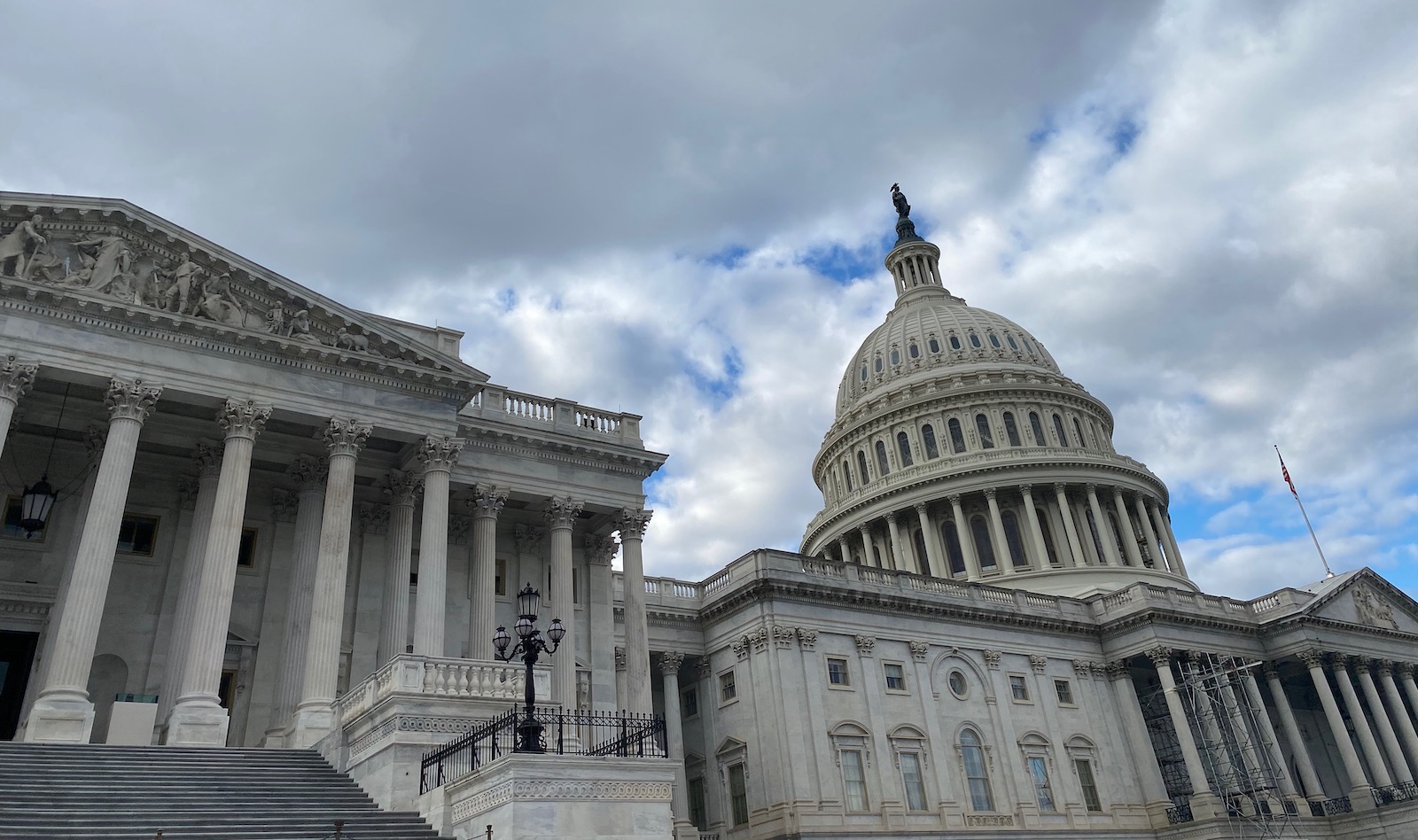
jonetta rose barras: Are DC elected officials once again inviting congressional meddling with their actions? Maybe.
“The council is bringing this on itself,” Jack Evans, a former Ward 2 legislator and expert on District finances, said earlier this week during an interview with me about yet another congressional encroachment into the local government’s public policy and management decisions.
Evans’ declaration came just days before Rep. James Comer, the Kentucky Republican who is chair of the House Committee on Oversight and Government Reform, pushed his newly introduced D.C. Taxing Authority Review Act through that panel on a 23-18 party-line vote. As approved by the committee, the bill would require an affirmative vote by the House and the Senate within 60 days of receiving legislation from the DC Council that would create or increase taxes or fees in the city, with the exception of a fee below $500 as long as the proposed law does not impose or increase any other fee; the same requirement for explicit approval would apply to any legislation to revise the portion of the DC Code that includes taxation. Without a joint resolution of approval, the city could not proceed.

“Radical DC Democrats want to solve their spending problem by reaching deeper into taxpayer pockets and driving farther on the path to socialism,” Comer argued at Wednesday’s committee markup session.
He cited as dangerous examples the Business Activity Tax — a proposal discussed by DC mayoral nominee Janeese Lewis George, a self-described democratic socialist. She may be talking, but she has not introduced any such tax increase, although as the current Ward 4 councilmember she may do so between now and December.
Comer also took aim against a newly imposed food delivery fee and other revenue-generating actions that he claimed “only serve to hurt small businesses and the District’s vulnerable residents.”
“These are just more examples of bad policies that disincentivize investment, drive residents out and undermine the economic competitiveness of the city,” added Comer.
Unsurprisingly, the committee’s Democratic members vehemently opposed the measure. Robert Garcia of California, the ranking member; Maxwell Frost from Florida; Stephen Lynch of Massachusetts; Melanie Stansbury of New Mexico; and DC Del. Eleanor Holmes Norton all spoke during about 40 minutes of debate.
“This whole wacky idea would have Congress become the de facto city council of Washington, DC,” said Lynch, who like others, noted the absurdity of expecting that Congress would be able to act in 60 days.
“Seriously. We can’t even pass our own bills. … It’s foolish to add this to our plate,” said Frost.
“If enacted, this bill would be the most consequential reduction in D.C.’s authority to govern itself since the D.C. Home Rule Act was passed in 1973 — the entire modern history of D.C. home rule,” said Norton, noting the broad impact of the bill. Title 47, she said, “has more than 50 chapters and encompasses not only taxation but also licensing, permits, assessments and fees, among other things.”
In making such a sweeping statement, Norton seemingly ignored the imposition in the mid-1990s of a financial control board, which was a bipartisan effort to resolve an acute fiscal crisis.
In a prepared statement ahead of the vote, Mayor Muriel Bowser also announced her opposition to Comer’s proposal, predicting a detrimental economic impact. “This would render the District incapable of recovering from the debilitating impacts of COVID, federal remote work, and DOGE,” she said. “A safe and beautiful Nation’s Capital can only be sustained with a vibrant economy,”
Bowser said the feds shouldn’t touch the city’s taxing authority, but added that they “can and should help us replace the economic activity lost through reductions to the federal workforce and a shrinking federal footprint — that would help us ‘unstick’ this period of slowed growth.”
She called for “changes to federal law to promote local growth,” including increasing the childcare tax credit, reinstating the homebuyers tax credit, and encouraging the construction of multifamily buildings by allowing bonus depreciation.
That all sounds good. But someone may want to remind the mayor that there are benefits in the current federal One Big Beautiful Bill Act from which the council has deliberately separated the city. If these other credits were added on the federal level, I am less than sanguine that the District legislature would extend them to local tax obligations.
In a letter dated July 20, two days before the vote, DC Council Chair Phil Mendelson made no mention of what Congress could do. In fact, he seemed to accuse Comer of deceptively keeping local officials in the dark, noting that staff members from their two offices had been working on trying to resolve issues involving property tax sales. Then, “without any consultation with my office, and as a complete surprise,” the bill was introduced July 16 and a committee vote was scheduled to take place just six days later.
Mendelson argued that the bill would “straitjacket District governance while not adding to congressional authority over the District.” After all, he added in bold letters, “Congress already has the authority to disapprove any and every tax increase adopted by the Council.”
Indeed, the U.S. Constitution gives Congress control over the entirety of the local jurisdiction — not just the federal enclave. The city’s quasi-independent governance and limited political enfranchisement are codified by the Home Rule Act of 1973. DC officials are obligated to send legislation they have passed to the House and the Senate for a 30- or 60-day review, depending on the subject.
During that timeframe, a House member or senator can introduce a disapproval resolution in an effort to prevent implementation — as seen a few years ago with the House GOP’s successful effort to block adoption of a rewritten criminal code. Congress also has other mechanisms, such as imposing budget riders. For example, long before the Supreme Court buried Roe v. Wade, Congress prohibited the city from using public money to finance abortions. Legislators can also push to repeal existing DC laws.
Given that reality, there is no real need for Comer’s bill — aside, perhaps, from providing an opportunity for Republicans to grandstand on the issue of taxation in a deep-blue city, or trying to stack the odds against approval of any local tax-related bills. But this isn’t only about taxation. The repeated references by President Donald Trump, Rep. Comer and other GOP leaders to communism and socialist Democrats are no accident. This is about the midterms. This is a flashback to the Communists-are-coming 1950s tactics, sans Roy Cohn but with a budding blacklist.
The saving grace is that it’s unclear what will happen next. The full House, which has not yet voted on Comer’s bill, has headed out of town until late August. Equally important, there is no comparable proposal in the Senate; that seems to signal that there is no appetite there for feeding from small plates, like the tax code and licensing fee-structure of a municipality comprising 700,000 residents. If it does pass the House, the bill would also be subject to a filibuster, giving Democratic senators a chance to block it.
This much is clear: Comer’s legislation is no solution to the District’s real fiscal mismanagement problems. If Norton is correct, it would cause far more chaos than it would solve. If Comer is genuinely looking to make things better in DC, as he has claimed, he could jump in the weeds and hold productive oversight hearings where he and other lawmakers could press the mayor, the DC Council and the independent Office of the Chief Financial Officer to identify and rein in wasteful spending and unnecessary taxation.
Still, no one should feel obligated to defend local elected leaders when there is indisputable evidence that they have been rash and reckless stewards of the public’s money. Any such protestations should be seen not as anti-home rule but rather as pro-accountability and pro-good governance.
Ask yourself: Why would DC officials, concerned about resuscitating the local economy, vote to decouple sections of the federal tax code from the city’s tax code if those features might spur business expansion and innovation?
Why plan an attack via a “Wealth Proceeds Tax” on the population of residents whose income is helping to partially stabilize the city’s finances? Why impose a 20-cent food delivery fee on companies like DoorDash, Grubhub, Uber Eats and Instacart when those expenses are likely to be passed down to struggling restaurants and their customers?
Why snatch $150 million from one of the DC’s reserve accounts, knowing it may jeopardize the city’s positive cash flow?
The council’s budget decisions have been baffling. It has seemed at times that legislators have been engaged in a political exercise driven primarily by a few vocal advocates rather than seriously considering the fiscal health and future of the city — including the retention of its quasi-independent status.
Once upon a time, the council was in the tax-cutting business. Evans recalled the Tax Parity Act introduced and advanced by himself and then-at-large Councilmember David Catania during the early aughts. They reduced sales taxes and property taxes, among other things.
In the years since then, asserted Evans, elected officials have implemented policies that gradually but significantly increased local taxes. While DC’s income tax rates may be competitive with those in Maryland, they are far higher than in Virginia, giving the edge to the commonwealth.
For example, DC residents earning between $10,000 and $40,000 are taxed at 6%; those with incomes between $60,000 and $250,000 are taxed at a rate of 8.50%; and those earning over $1 million are taxed at 10.75%.
In Virginia, the maximum rate is 5.75%, said Evans. Lower rates apply to taxable income up to $17,000.
“It’s amazing what [councilmembers] have done,” he continued. “They have put the District as one of the highest tax jurisdictions not only in the region but in the country.”
It appears, however, that District lawmakers aren’t done yet. Hoping, perhaps, to stave off a more significant tax-raising spree in the middle of the June primary election, Mendelson promised to schedule a roundtable later this year to entertain a host of ideas.
One of the leading proponents of more taxes has been Ward 1’s Brianne Nadeau, who points to the DC Council’s use of one-time revenue to balance the District’s budget for fiscal year 2027 as having created an issue for the upcoming budget. “The Council is keenly aware of the problem: Next year we’ll face a ‘fiscal cliff’ — a significant gap between what we bring in and what we need to spend,” she wrote in her newsletter earlier this week, adding, “I’m afraid it’ll keep happening unless we make changes to the way we raise revenue.”
What?!
Nadeau makes no mention of reducing spending. Is that the way she runs her own household?
She has pushed for taxing the wealthy, the definition of which can change depending on how much she and her colleagues want to be able to spend. Nadeau has been advocating for the “Wealth Proceeds Tax,” which she described in her newsletter as a “3 percent surtax on unearned income for individuals making over $400,000 per year and couples making over $500,000,” with the extra charge applying only “to the amount of unearned income over those thresholds.”
Nadeau has also introduced legislation to establish a permanent Tax and Revenue Commission. The need for that is instigated by the fact that legislators have supported Mendelson’s resistance to the restoration of a separate, free-standing Committee on Finance and Revenue.
Meanwhile, in its recent Fiscal Year 2027 Budget Support Act, the council required Chief Financial Officer Glen Lee to present a report about how his agency would implement a Business Activity Tax. That suggests lawmakers may be ready to hit the bank accounts of certain businesses, although proponents say it would mostly affect large law firms that benefit from a loophole to avoid other DC business taxes.
Help us!
Comer may be right in one regard: Councilmembers clearly believe they can tax their way out of the city’s financial crisis.
Truth be told, the District doesn’t have a revenue problem. It just approved a $22 billion FY 2027 Budget and Financial Plan — more than half of which is homegrown.
DC has a spending problem. Full stop.
Expert after expert has articulated that fact, including Kathy Patterson, the DC auditor and a former Ward 3 councilmember. “As long as there’s little to no spending discipline [in DC], there will continue to be calls for raising taxes, which will continue the cycle that draws attention from the Hill,” she told me during an interview earlier this week.
She argued that a tax revenue commission isn’t the answer. The city already had that and “the leadership didn’t follow through.” Patterson said Mendelson could bring in experts from universities and think tanks to examine the city’s taxing structures and offer recommendations for how it can improve parity.
“The council should schedule comprehensive hearings this fall on the District’s financial situation – including the revenue hearing during which the chairman promised to hear the arguments for raising revenue. But more than that, it would be a chance to focus on the spending issues and the OCFO shortcomings we’ve cited,” continued Patterson.
She offered that such a process “could go a long way in convincing Congress that local elected officials are taking care of business.”
I want to join Patterson in her optimism. But from my vantage there is no evidence that either side, federal or local, is prepared to alter what has become predictable behavior.
In other words, the proverbial die has been cast.
jonetta rose barras is an author and DC-based freelance journalist, covering national and local issues. She can be reached at thebarrasreport@gmail.com.
Comments are closed.