


Navy Yard residents hope to see 2-year-old rec center thrive with management shift
Two years after opening, management of the Arthur Capper Community Center in Navy Yard will transition this January from the DC Housing Authority to the DC Department of Parks and Recreation (DPR). Residents see the change as an opportunity to fully realize the dormant potential of the center as a neighborhood hub.
DC Housing Authority officials have admitted that operating the center has been challenging, since it is outside the scope of their typical duties. On Sept. 18, approximately 40 Navy Yard residents gathered with representatives from DPR, the housing authority and the offices of Ward 6 DC Council member Charles Allen and Mayor Muriel Bowser to discuss the transition and brainstorm new programming.

Residents emerged after two hours optimistic about the future of the center.
“What I saw tonight is fantastic,” said Meredith Fascett, an advisory neighborhood commissioner for the area. “If they can deliver on the core programming piece they discussed, we’re going to be in a great place.”
The original community center was opened in the early 1950s, but along with the Arthur Capper/Carrollsburg public housing complex next door, it was fully demolished by 2007.
The replacement structure was built using part of a $34.9 million grant from the HOPE VI program, a federal initiative to revitalize failing public housing projects. The grant was also used to convert nearby public housing into mixed-income developments, though planners hoped to maintain the existing 707 affordable units.
The recession in 2008 stalled construction on the new community building for six years. Once it was finished in 2016, the Capper Community Center won an award for “Government/Public Building Best Project” in the annual ENR MidAtlantic Best Projects competition, with the entry submission highlighting its flexibility with multipurpose rooms throughout the building and sustainable features such as a green roof.
When the new center opened, the Housing Authority could not find an operator, according to Capitol Hill Corner, and ran the facility itself, despite a lack of expertise in providing recreation services. The Housing Authority’s mission is to provide and maintain public or affordable housing for low-income DC residents.
“It’s never been fully funded and fully programmed to realize its potential,” said Fascett. “It’s not a match with the core competencies of the Housing Authority.”
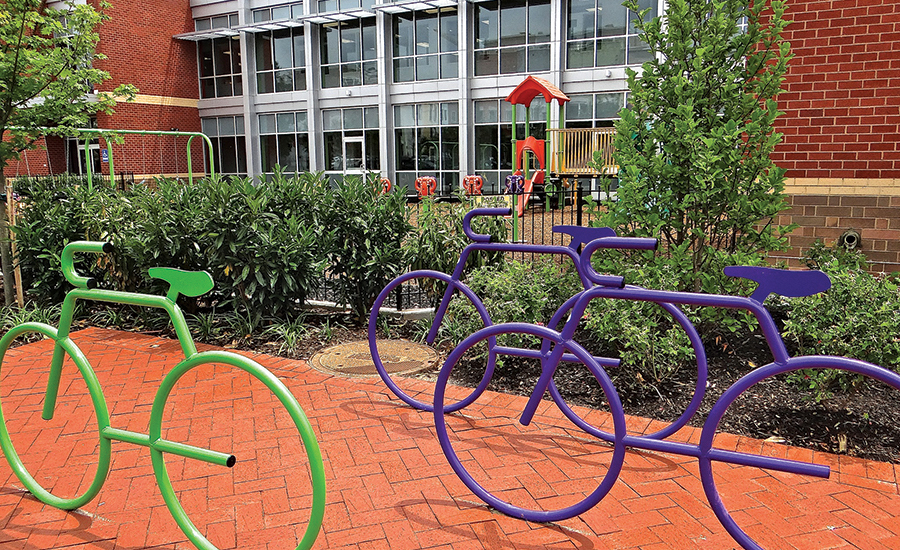
Residents use several different names for the center, including the Caper Community Center (with the alternate spelling in recognition of a well-loved employee who worked there in the mid-20th century) and the Capitol Quarter Community Center.
At the Sept. 18 meeting, parks department officials presented a list of program areas they plan to provide, sourced from community surveys and a 2014 Housing Authority report. Meeting attendees helped deepen and refine the list, suggesting classes in financial literacy, creative writing, coding and basket-weaving, as well as special programs for seniors and children. Some audience members mused about ways to integrate therapy and mental wellness into classes.
John Stokes, deputy director of the parks department, took note of the suggestions, though he said some might be harder to implement than others. DPR’s strengths are leisure and recreation rather than education programs, he said. Where the department can’t run a program on its own, officials look for a contractor or community-based organizer.
One theme of the night was looking for new ways to entertain teenagers, keep them out of trouble and help them build community bonds. Residents floated late-night basketball games, as well as programs with seniors, police and other mentors.
Updating the center’s security system is also a Department of Parks and Recreation priority, according to Stokes, with agency officials saying they prefer new cameras over armed guards. The neighborhood has experienced several high-stress incidents in recent months — a drive-by shooting in July across the street from the center, and a fire last Wednesday that displaced residents of 162 apartments at the Arthur Capper Senior Building down the street. Building residents found immediate shelter in the community center.
Stokes emphasized that DPR’s community engagement efforts have only just begun.
“This is the first of many meetings we will be having with you, the community,” he said. “This is not an us-versus-you. This is us doing this together.”
Two community members said they wanted more transparency from DPR about the funding and mission of the center, referencing the building’s rocky start.
DPR representatives said that they have the funds to hire five full-time employees for the year, and a DC Council budget document cited a $575,358 budget for the agency to operate the center in the upcoming fiscal year, which starts Oct. 1. The center also has $522,000 available for capital improvements.
Though the Housing Authority has been able to offer a day care center, an after-school program and basketball games at the facility, Fascett said she’ll be glad to see expanded classes.
“I’m really looking forward to it being a place where there’s programming for a broad and diverse group of neighbors so that we can all come together and find things we all like to do,” she said.
Tyrone Garrett, executive director of the DC Housing Authority, attended last week’s meeting as well, and expressed optimism that the center could benefit from transitioning to DPR.
Garrett hopes DPR can operate the center on a daily basis, instead of in the ad hoc manner of the Housing Authority’s operation. Garrett — who has been known to visit the center himself to provide community members with early-morning access to the basketball court — hopes DPR can serve it well.
“I did stress [to parks department officials] on more than one occasion that this was a unique community,” said Garrett.
Comments are closed.