

jonetta rose barras: Behind the scenes of the Evans ethics mess
DC Council’s handling over the past year of allegations of ethics violations by Jack Evans has been a wholly messy affair. Legislators engaged in rash behavior, twice punishing the Ward 2 representative before conducting their own fact-finding investigation. Rightly, the council hired a local law firm to launch a probe, but then it established a 12-person ad hoc committee after the fact to make recommendations about yet another punishment for Evans. In creating that committee, the council ignored its own rules, which indicate the ad hoc panel shall include five members.

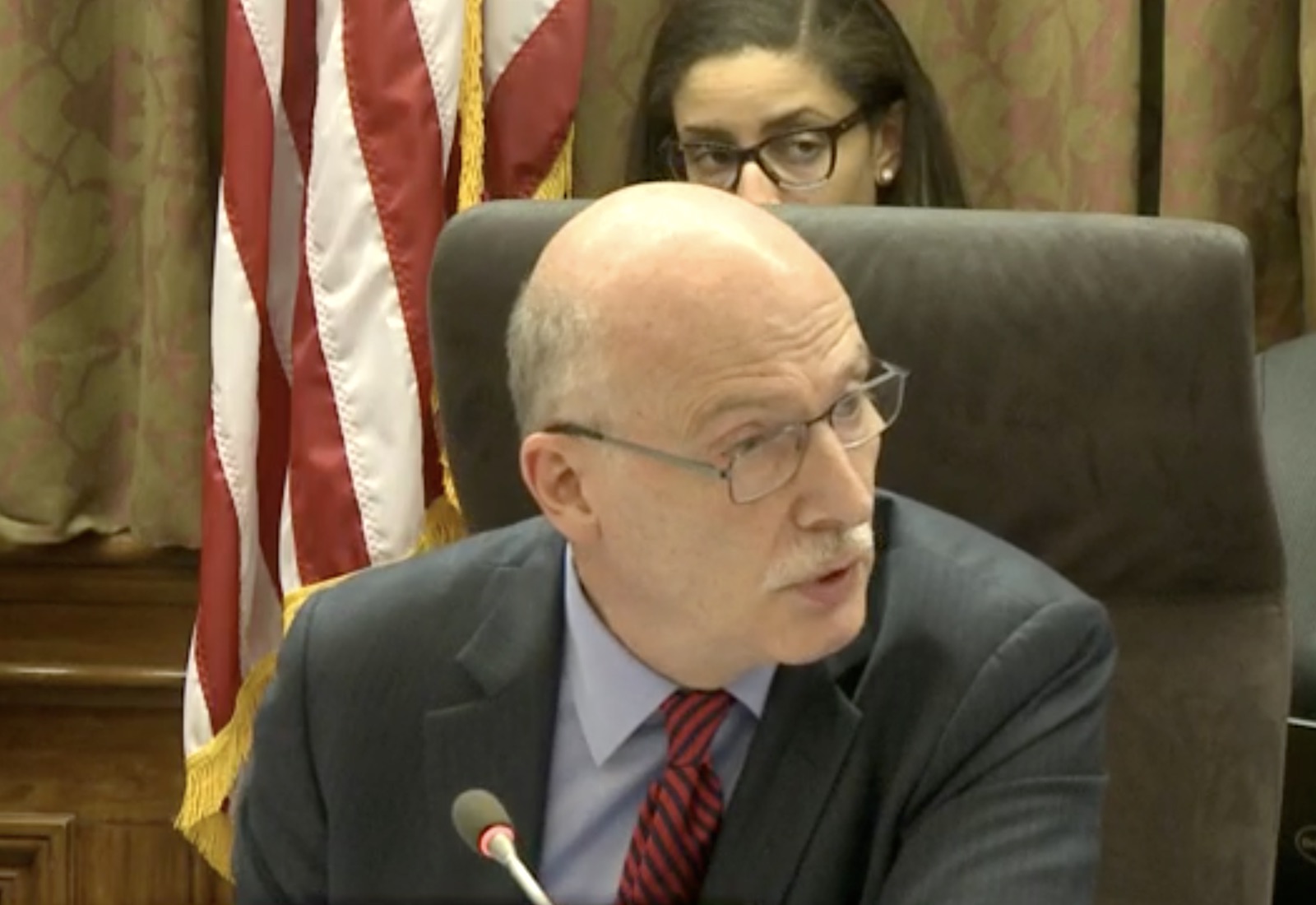
Council Chairman Phil Mendelson disputed my characterization that the legislature ignored its own rules, before arguing that, “For a variety of reasons, I felt that appointing 12 was the better way than picking any five members. That would have led to questions about why I picked them and not five others.
“It’s unfortunate how this has not played out in such a linear fashion,” he added during an extensive interview with me earlier this week. We talked about various aspects of the Evans investigation — the decisions that have been made, thus far, and the path forward.
Evans clearly violated the council’s rules and Code of Official Conduct. As I wrote last week, don’t expect me to defend him. However, it’s hard not to be at least somewhat critical of how things have been handled. I wanted to understand what Mendelson may have been up against as he sought to navigate the politics while attempting to protect the trust the public has placed in its elected officials.
Prior to the council’s vote to reprimand Evans in March, Mendelson said, he received hundreds of emails, many of which seemed part of a campaign promoted by progressive groups demanding swift and severe punishment. “From the perspective of the public trust, I don’t think it would have been appropriate for us to do nothing,” he said.
If Mendelson is concerned about the public’s trust, he should consider reconstituting the ad hoc committee — and not just because the size of the panel violates the legislature’s own rules. More troubling is the fact that last week three council members — Elissa Silverman, David Grosso and Robert White — announced they intend to vote to expel Evans from the legislature.
Reliable progressives on the council, Silverman, Grosso and White have often fought against Evans’ public policy agenda, including holding down taxes on the business community and upper-income residents. The kick-him-off trio made its pronouncement despite the fact that the ad hoc committee has yet to formally begin its work.
The ad hoc panel is expected to hold a public session on Tuesday, Nov. 19, to receive testimony from O’Melveny & Myers. The law firm was hired during the summer under a $250,000 contract to examine the intersection of Evans’ activities on the council and his private-sector employment since 2014. The investigative team was led by Steve Bunnell, who, according to the firm’s website, is a former general counsel of the U.S. Department of Homeland Security, a former chief of the Criminal Division at the U.S. Attorney’s Office for DC, and co-chair of the data security and privacy practice at O’Melveny. According to the report Bunnell and his team filed, Evans violated the council’s code of conduct and its rules 11 times during the five-year period covered by the investigation.
Sources told me that Evans and his two attorneys — Abbe David Lowell with Winston & Strawn and Mark Tuohey, of counsel with BakerHostetler — have requested that they be allowed to present their case on the same day; they have already submitted a written rebuttal of the O’Melveny report. It’s unclear whether ad hoc committee chair Mary Cheh will honor that request since she had scheduled Evans’ appearance for Dec. 3. Council rules allow up to 90 days for the committee to complete its work, which could also include additional fact-finding and preparation of a report and recommendations for punitive action.
“Fairness is really important — the actual and the appearance,” said one of several legal, civil rights and political experts I spoke with earlier this week about the challenge facing the council. The legal expert, who requested anonymity, agreed that Silverman, Grosso and White should be removed from the ad hoc committee. “I think that’s reasonable.”
Mendelson said council members “should be careful not to criticize too quickly,” but he argued that “reconstituting the committee would not be productive.”
“The public reaction has broadened from where it was a few months ago,” continued Mendelson, referring to when the council voted in March to reprimand. “I am being hammered on both sides.”
He said one group of people, mostly allied with political progressives, believe things are moving too slowly. Another group wants to slow the pace, claiming that what’s happening is not fair. He didn’t mention a third group: African Americans who believe Evans is receiving special treatment, drawing a contrast to the experience of former Council members Harry Thomas Jr., Michael Brown and Kwame Brown. Each of those individuals faced federal criminal charges. Thomas and Michael Brown served substantial time in federal prison.
Despite significant distinctions, issues surrounding the Evans investigation are no less serious, demanding sober, deliberate and thoughtful action by the city’s elected officials. Silverman, Grosso and White have demonstrated a level of recklessness that can only exacerbate public concern about the process.
“People should realize that when politicians are involved, they often have one eye on their own position and possibly re-election,” said one of the legal experts I spoke with earlier this week. “[Politicians] aren’t really thinking hard about the evidence; they are thinking about their future.”
“This is unusual, and the council is in a tough spot. I am prepared to give them the benefit of the doubt,” said Michael Fauntroy, a political science professor and acting director of the Ronald Walters Leadership and Public Policy Center at Howard University. He essentially called the idea of due process, given the current situation, a pipedream.
“‘Fair’ is a very subjective term,” said Mendelson, conceding that what is occurring is “essentially a political process, much like impeachment on the Hill.”
“The most we hope for is an open and transparent process,” continued Mendelson, adding that he is leaving management of the ad hoc committee to Cheh.
“She is tough and a constitutional law professor,” said one of the legal experts. “She will be able to help people put aside the politics and look at the facts.”
I am less sanguine about politics taking a backseat to facts, given what we have seen throughout the year. Complicating the situation is the fact that there are questions about the thoroughness of the O’Melveny investigation and report.
Why didn’t investigators make any connection between Evans’ personal finances and legislation he allegedly supported on behalf of his consulting firm clients? Did investigators review the council member’s personal finances?
Why didn’t O’Melveny go to court to compel the testimony of uncooperative witnesses, instead of simply allowing them to declare that they would exercise their Fifth Amendment rights if forced to comply with any subpoena? Did the fact that the firm spent its entire $250,000 budget prior to completion of the investigation affect the depth of the work that was done?
And most interesting: On what basis did investigators determine that Evans had not violated ethics rules when he used his staff and other government resources to complete invoices or adjust agreements with his consulting clients?
O’Melveny noted in the report that the rules allow for “de minimis” or “incidental use — use that does not interfere with an employee’s official duties and responsibilities.” In a similar case, when Evans used staff to send out two emails in which he was soliciting employment, he was reprimanded by the council. In August, the DC Board of Ethics and Government Accountability (BEGA) entered into a $20,000 negotiated settlement with Evans over that so-called infraction. Following the O’Melveny report’s logic, should the agreement now be nullified?
Mendelson said he disagrees that the email use was not a violation. “It was a clear breach of the council rules.” But he said he doesn’t know how BEGA decided on the $20,000 fine. “I didn’t even know they were doing an investigation.”
See what I mean about a messy affair?
jonetta rose barras is an author, a freelance journalist and host of The Barras Report television show. She can be reached at thebarrasreport@gmail.com.
Comments are closed.