

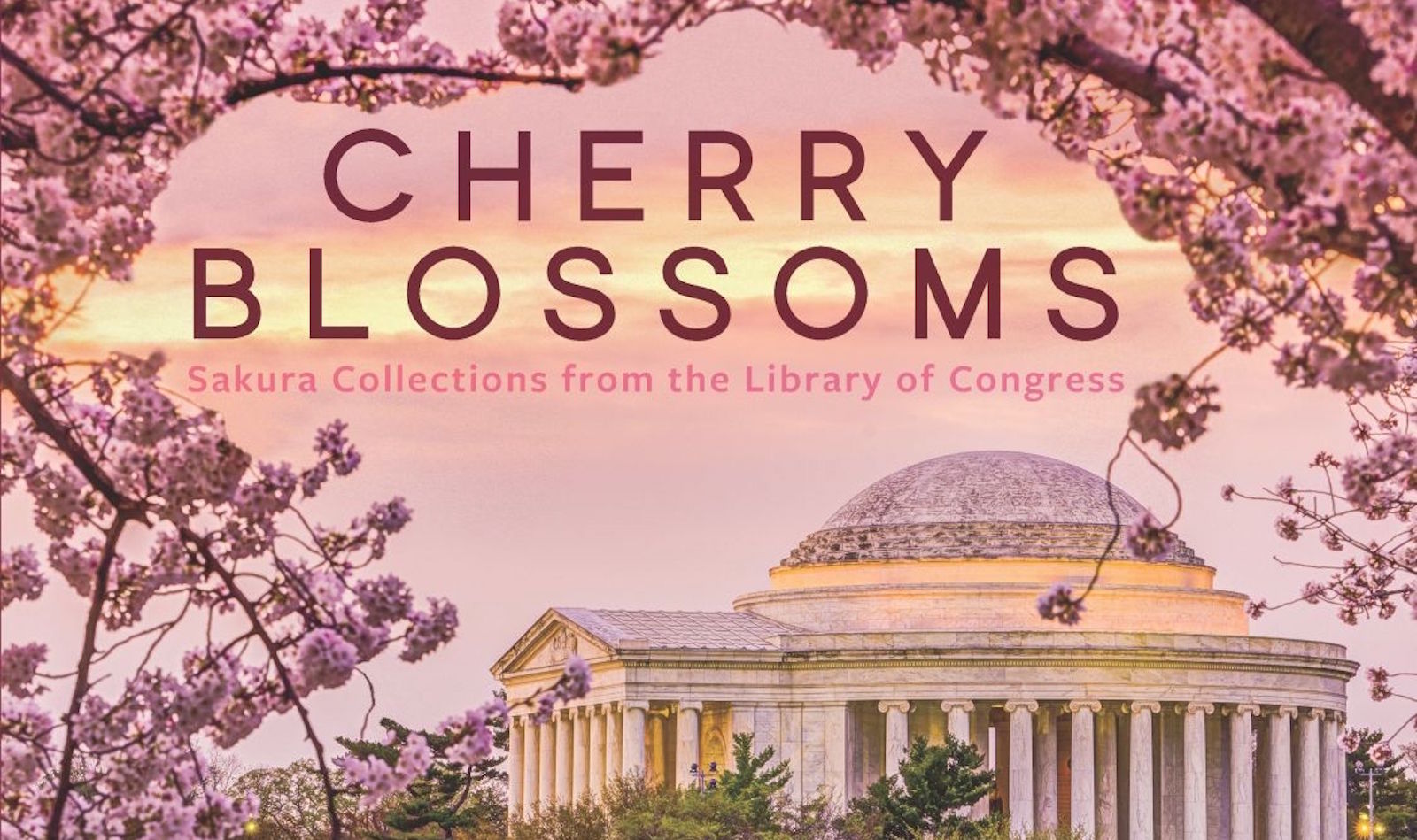
‘Cherry Blossoms’ captures the history and magic of DC’s floral ambassadors
The 108-year-old gift of more than 3,000 cherry blossom trees from Tokyo to Washington, DC, finds fresh life in a vibrant new keepsake book from Smithsonian Books, Cherry Blossoms: Sakura Collections From the Library of Congress. The slim, image-heavy volume explores the art, photography and object holdings of multiple divisions of the Library of Congress pertinent to the gift of trees in 1912 as well as how the trees became icons and catalysts of celebration in DC.
The book — written by Mari Nakahara and Katherine Blood, with a foreword by Carla D. Hayden, Librarian of Congress — was published last week, ahead of the National Cherry Blossom Festival, happening Friday, March 20, to Easter Sunday, April 12, which every year turns the whole city bright pink.
Both authors work in the Prints and Photographs Division at the Library of Congress, where Blood is curator of fine prints and Nakahara is curator of architecture, design and engineering. While compiling works to include in their book, they collected photographs, prints and picture postcards from their own division’s extensive collections, as well as maps, architectural drawings and other materials from across the library’s many other divisions.

In a recent conversation on the book, the authors spoke of their aim to capture the history of cherry blossom appreciation in Japan, while also exploring the newer history of cherry blossom enjoyment in DC. Blood noted that the interdisciplinary nature of the book project excited her, providing a chance to introduce readers to the unique variety of the library’s collections.
Nakahara, who previously worked in the library’s Asian Division, said the idea for the book first took root in 2012, during the 100th anniversary celebrations and before her move to the Prints and Photographs Division. From then to now, she and her colleagues worked hard to acquire new materials to expand the collections on the theme of cherry blossoms, with an eye on the possibility of some kind of cherry blossom project. Those efforts resulted in this book.
The seeds of the book, according to Nakahara, were 11 botanical watercolors by Kōkichi Tsunoi from the library’s collection. The illustrations, part of an original group of 12, were commissioned by Seisaku Funatsu, the Japanese cherry blossom grower who supplied the bulk of the gift of trees. Funatsu gifted the group of illustrations to Walter Tennyson Swingle, a botanist with the U.S. Department of Agriculture, who donated them to the library soon after. Nakahara noted that when she transferred to the Prints and Photographs Division, she begged to have the 11 prints come along, too. Administrators granted the request and she continued to work closely with them.
As Nakahara, Blood and their colleagues continued to study the library’s cherry blossom holdings and to acquire materials for the collections, new themes and stories emerged from the pieces. One such story is that of Hiroshi Saitō, who began his diplomatic career in the District just as the gift of trees arrived and who went on to become Japan’s ambassador to the United States from 1934 to 1939.
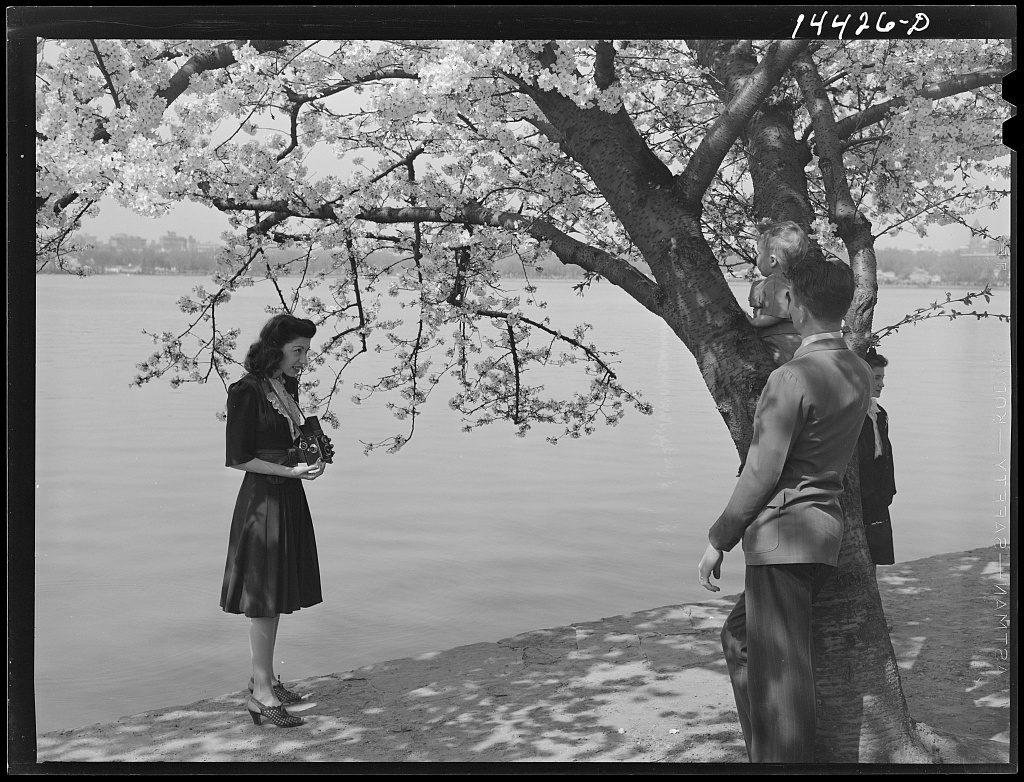
Important for his personal commitment to peace between the U.S. and Japan, even on the eve of World War II, Saitō was a fan of the city’s cherry blossom trees and participated in the early festivals that sprouted up around the trees. His daughter, Sakiko, was even crowned Queen of the Cherry Blossoms in 1937, long before the National Conference of State Societies founded the formal Cherry Blossom Festival Princess Program in 1948. Several photos, including the first image in the book, show the Saitō family enjoying cherry blossom season in DC. The book ends with a quote from Saitō’s speech at the 1936 festival, when he said cherry blossoms “never die, for their memory lingers long in the minds of those who have seen them, and every spring there comes with them the promise of new birth.”
After an introduction on the importance of the cherry blossoms to DC culture, the first section of the book, “Cherry Blossoms in Japanese Culture,” gives an overview of the deep relationship between the Japanese and their revered blossoming trees. This section also serves as a brief survey of Japanese woodblock prints in the library’s collection, with blossoms adding beauty and metaphor. The authors point out in the book that cherry blossoms capture for the Japanese a “sense of the transitory beauty of life.”
The second section, “Friendship & Gift,” covers the history of the 3,020 trees sent from Tokyo and explains how this gift came to be — all thanks to the dedication of many Japanese and Americans, including first lady Helen Taft. This section also recounts the lesser-known story of the fate of the original trees. Unfortunately, most were uprooted and destroyed soon after planting, upon discovery of tree diseases and insect infestations. Despite some in the government fearing the Japanese would take offense, the government in Tokyo sprang into action replacing the unlucky trees with healthy specimens.
The final section, “Celebration & Legacy,” relates how modest city celebrations to greet the blooming season evolved into the National Cherry Blossom Festival and the accompanying Cherry Blossom Princess Program. This section includes posters, programs and other memorabilia from the festival through the decades, including the 2011 poster that originated the now-iconic bright pink blossom stickers that adorn Metro gates, Capital Bikeshare bicycles and just about everything else in town each spring.
The Library of Congress and the Cherry Blossoms authors are planning to showcase their new book and the cherry blossom collections during the National Cherry Blossom Festival. Scheduled events at the Library of Congress include a book talk on Thursday, April 9, at 6 p.m. and a family-friendly Japanese culture event April 11 presented in collaboration with the Japan-America Society of Washington, DC. More events are in the works to celebrate the beauty and legacy of Japan’s gift, so those interested can check the Library of Congress events page.

Comments are closed.