


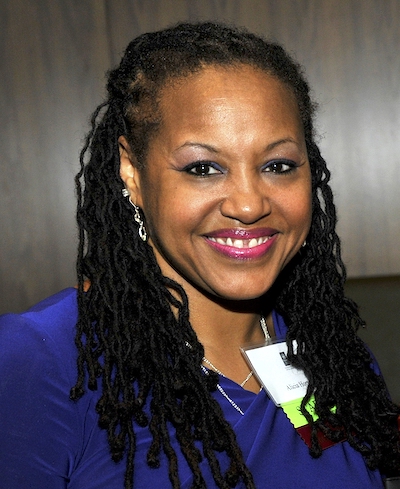
Alicia Horton: Flu and COVID present new challenges for people experiencing homelessness
Every year, the annual flu season brings new concerns about how to protect everyone but particularly those in the most vulnerable communities. This year, however, cold and flu season brings a particular challenge as the novel coronavirus continues to spread — and, in many cases, surge — across the United States, leading to the possibility of completely overwhelming the public health system.
While there are certainly significant differences in the ways in which COVID-19 and the flu can ultimately disrupt the body’s immune system and lead to severe health complications, the early symptoms are often similar, with fever, coughs and shortness of breath. As such, public health experts across the country are imploring all Americans to get their flu vaccinations as quickly as possible. They hope to increase the country’s flu vaccination rates, which in recent years have been less than 50%, according to recent Centers for Disease Control data.
For many, a flu vaccination is easy to get — a quick trip to their primary care physician or a swing by the local pharmacy. But we must remember that not all Americans have access to this critical public health service, with those left homeless or housing insecure facing particular challenges. And for those who cannot afford to go into self-isolation or adhere to other quarantine measures mandated by public health officials, inaction around the pandemic and flu season can have devastating consequences.
People who are homeless have their own thoughts, fears and concerns. They are vulnerable. They struggled even before COVID-19 hit and are now struggling in a pandemic world.
At my nonprofit, Thrive DC, we provide critical support to people who are experiencing a housing crisis, and we offer a wide range of services to help stabilize their lives. But as we enter cold and flu season in the midst of the ongoing public health crisis, we are launching new initiatives to provide critical medical care through flu vaccinations to help protect DC’s vulnerable homeless and housing-insecure communities.
We are honored — and frankly thankful — to have partnered recently with George Washington University’s Rodham Institute, which provided Thrive DC with thousands of flu shots so we can give them to our clients. During our grocery distribution days, our clients have been able to receive flu vaccinations free of charge from a licensed member of George Washington’s physician group.
Services like these are desperately needed in such an uncertain moment in public health.
Despite these short-term solutions for an immediate public health crisis, we need to embrace a long-term agenda to make sure that those left on the margins of society are not defeated in the wake of an ongoing pandemic.
During this crisis, we need continued support not only for programs and organizations that provide day-to-day services to the people who are most vulnerable and adversely impacted, but also for those that offer essential public health care services. That requires forward-looking legislation — from local as well as federal lawmakers — that creates opportunities for all Americans in a post-COVID-19 world, not just those who are well-served or well-connected.
Unfortunately, that is not what’s happening right now in our nation’s capital, a city where lawmakers are supposed to gather to pass legislation to improve the well-being of all. Despite a recent year-to-year decline, DC’s high rate of homelessness and home insecurity — nearly 10,000 homeless residents throughout the Washington area on a given night — should be a constant reminder to our lawmakers that millions of Americans across the country are struggling, while public policy continues to do nothing.
As the executive director of Thrive DC, I worry about our ability to care for those we serve on a daily basis, but I also worry about former and potential clients who we cannot reach and are thus unable to serve. These people — who cannot access critical public health and essential care services — could be relegated further to the margins of society if support for community nonprofits is not championed by all.
I am so grateful for the recent assistance we have received during the COVID-19 crisis, whether it be from George Washington or via the volunteer hours put in by our generous supporters. In the post-pandemic world and beyond, however, we cannot forget those who are so often utterly dismissed. It may be convenient to provide donations and support in unprecedented times, but the challenge for all of us is to continue to assist those most vulnerable long after this current crisis has ended.
Alicia Horton is the executive director of Thrive DC, a 501(c)(3) not-for-profit organization with a mission to end and prevent homelessness in DC.
About commentaries
The DC Line welcomes commentaries representing various viewpoints on local issues of concern, but the opinions expressed do not represent those of The DC Line. Submissions of up to 850 words may be sent to editor Chris Kain at chriskain@thedcline.org.
Comments are closed.