


Comprehensive history of Decatur House marks historic home’s bicentennial
In time for the bicentennial of the Decatur House on Lafayette Square, the White House Historical Association has released The Stephen Decatur House: A History. This coffee-table extravaganza examines every corner of the iconic home at Jackson Place and H Street NW, from the architectural details to the stories suffusing the space. Clocking in at 446 pages, the book appears formidable at first glance, but proves to be a large compendium of smaller, snackable pieces. The book is divided into four main parts and two breakout sections, with experts in naval history, architectural history, fine and decorative arts, and historic preservation providing the narrative.
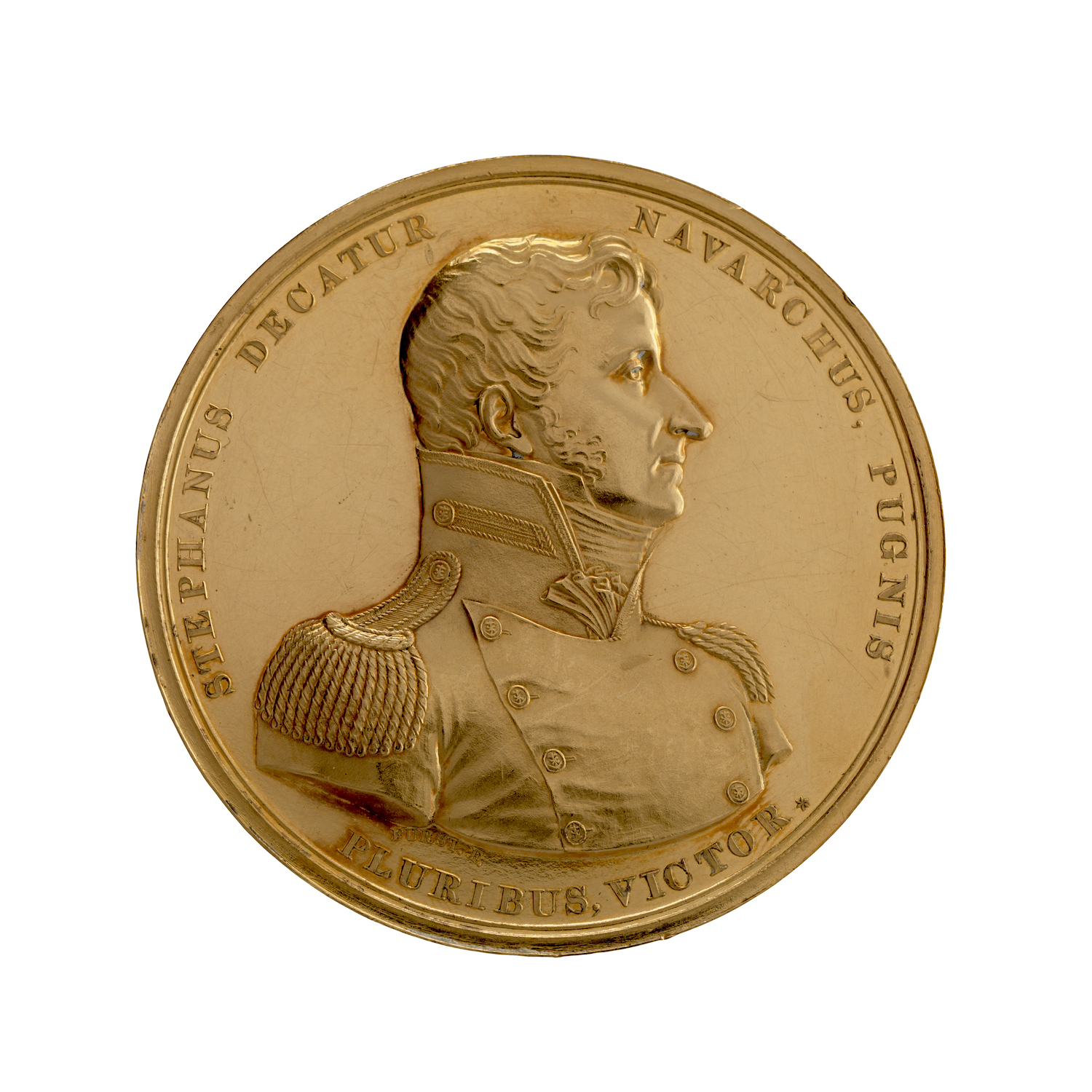
In the first section, naval historian James Tertius de Kay tells a page-turning tale of Stephen Decatur, a charismatic and ambitious seaman determined to win glory for himself and his fledgling republic — a man who undoubtedly would have risen to even greater heights had he not died in a duel with a rival naval officer in 1820 at the age of 41.

Decatur was a warrior and ardent patriot who shot up through the ranks to become, at age 25, the youngest U.S. Navy captain ever. He gained lasting fame for his daring victories in the Barbary Wars and the War of 1812 and was on his way to becoming an influential statesman, perhaps even president, at the time of his death. Decatur was so beloved that the crowd that gathered for his funeral remained unrivaled in size until the funeral procession of President Abraham Lincoln.
In the second section of the book, architectural historian Michael Fazio examines the design of the Federalist house Stephen and Susan Decatur built between 1818 and 1819. The couple constructed the residence during Commodore Decatur’s years in a prestigious land-based role in the Navy. While its neighbor across Lafayette Square, the White House, is by far the more famous, Decatur House possesses its share of firsts and bests, as well as sharing a designer with the Capitol Building – Benjamin Henry Latrobe, the first professional architect in the new nation.
Decatur House was the first private residence in the White House neighborhood. It was also the last building used as a private residence on Lafayette Square before its final owner, Marie Oge Beale, bequeathed it to the National Trust for Historic Preservation in 1953, which maintains it to this day (now in partnership with the White House Historical Association). Today, the main house serves as a museum of decorative arts and important artifacts from the Decatur and Beale families, as well as the headquarters of the White House Historical Association’s David M. Rubenstein National Center for White House History, which seeks to preserve and interpret White House history. Educational programs, public events and free tours bring visitors in to relive an early American lifestyle, and the second floor stands in for the White House in re-enactments for school-age children.

The breakout section in the center of the book gathers Decatur House’s many residents into a compressed gallery. Following that, historian Jesse Kratz of the National Archives tells the story, through documents from the time, of slavery in the house, beginning with slaves brought in by the home’s renter from 1827 to 1829 — Henry Clay, the secretary of state under President John Quincy Adams.
In the next section, fine and decorative arts expert Osbourne Phinizy Mackie examines the best of the Decatur House collection. Nearly 200 gorgeous color photos showcase the hundreds of pieces originally owned by the Decatur and Beale families, as well as those added later as representative of the tenants and the times.
The final section of the book tells the tale of Decatur House’s progression from private home to luxurious rental to naval museum and finally to historic preservation site. Katherine Malone-France, the senior vice president for historic sites at the National Trust for Historic Preservation, brings the 200-year story to a close with the narrative of the house’s transition, thanks to the devotion of the final owner, Beale, as well as the interest of Presidents Franklin D. Roosevelt and John F. Kennedy, and first lady Jacqueline Kennedy.
Malone-France points out the importance of the house not only as a rare surviving home in the White House’s neighborhood, but also its significance to the historic preservation movement in America as a whole. Marie Beale, an avid preservationist, commissioned extensive restorations and architectural documentation of Decatur House. While she was seeking the ideal institution to carry on her work, Gen. Ulysses S. Grant III, then head of the National Trust for Historic Preservation, persuaded her to leave it in the care of his fledgling institution. Decatur House became a museum and the headquarters of the National Trust — and by extension a crucial hub in the flowering preservation movement.
The Stephen Decatur House: A History offers not only the story of the Decatur House and its illustrious occupants, but also a broader picture of the ages in which the house was built, furnished, occupied, and passed on from family to family. The house is firmly rooted in the history of Washington as the cradle of a new era. As historian de Kay describes Stephen Decatur, “If he grew up to be a hero, it was in part because he was born into an age of heroes, an age when Americans, having won their freedom from the world’s most powerful empire, were convinced they could accomplish anything they set their mind to.”
Certainly an item for any history aficionado, The Stephen Decatur House: A History will as easily satisfy enthusiasts of naval history and America’s early celebrities as it will lovers of early American architecture and decorative arts. Pick it up as an impressive gift or as a centerpiece of an art or history collection.
The Stephen Decatur House: A History is available to order for $75 from the White House Historical Association at shop.whitehousehistory.org. The association also released an episode of its podcast, “The 1600 Sessions,” dedicated to the Decatur House, with guest appearances by two of the new books’ authors. Listen here. Book-signing events will be scheduled throughout the fall. Contact books@whha.org for more information.
Comments are closed.