


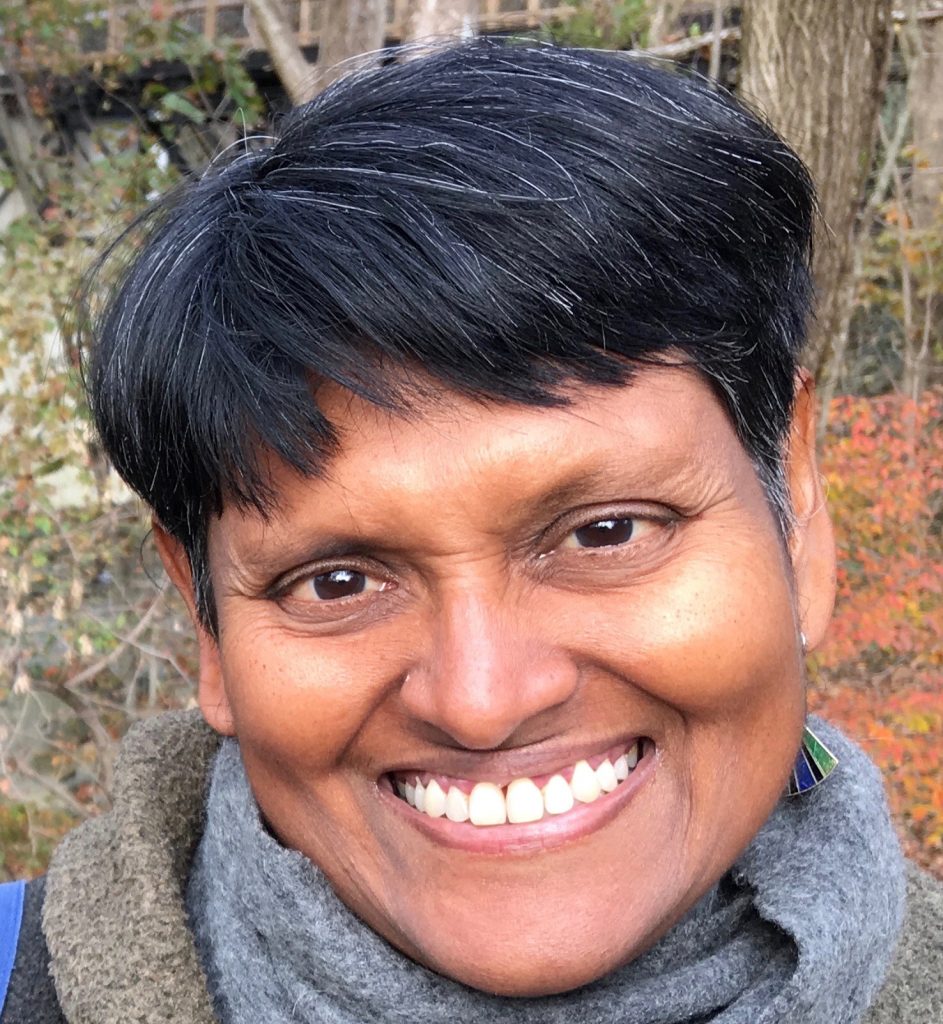
Keshini Ladduwahetty: Grassroots activists channeled public outrage over Evans
Until a week ago, we had dared to hope the Jack Evans nightmare was over. But Evans continues to haunt DC politics like a vengeful zombie. Ward 2 voters can expect to see his disgraced name on the ballot in both the Democratic primary and the special election. It also appears the public will be forced to pay for his campaign under Fair Elections, the public financing program. With this news, all 12 DC Council members voiced their disgust at their former colleague in a public statement denouncing his candidacy. As we enter this new phase of the Evans scandal, we must not ignore valuable lessons from the previous phase that ended with the council member’s resignation.
Last year, a sea change occurred in DC politics. Washington Post reporter Steve Thompson wrote the previous December about Ward 2 DC Council member Jack Evans’ relationship with Digi Outdoor Media, building on Jeffrey Anderson’s previous reporting in District Dig. The Post investigation presaged a steady drumbeat of negative media coverage of Evans for the first time in the lawmaker’s career. To grassroots activists, including myself, who had long suspected Evans’ conflicts of interest, the sustained mainstream media attention finally presented an opportunity to channel the public outrage — and we seized it.
A loose group of progressive activists, including many Ward 2 residents, had begun meeting regularly to discuss how to respond to the mounting allegations of Evans’ corruption. This group would later develop into the informal “Sack Jack” campaign. By late February, when the public learned that Evans had been subpoenaed by a grand jury, the grassroots opposition had grown to include advisory neighborhood commissioners concerned about ethics; progressive groups like DC Working Families, Jews United for Justice and DC for Democracy; and reform-minded members of the DC Democratic State Committee. As a member of DC for Democracy’s steering committee, I was deeply involved.
In March, activists channeled their anger over the council’s purely symbolic reprimand of Evans into a flurry of actions aimed at the council. Twenty advisory neighborhood commissioners — including Denise Rucker Krepp (ANC 6B), Erin Palmer (ANC 4B), and Trupti Patel and James Harnett (ANC 2A) — joined forces to send a letter to Chairman Phil Mendelson asking that Evans be removed from his committee assignments and that the council open an investigation. Several commissions passed resolutions echoing similar demands, as well as calling for public release of the Washington Metropolitan Area Transit Authority’s investigation and pushing the council to enforce its Code of Conduct and other ethics regulations.
Independent organizers with the Sack Jack campaign and DC Working Families, Jews United for Justice and DC for Democracy mounted phone call actions and email campaigns asking Mendelson to investigate Evans and to remove him from council committees and the Metro board. Similar actions were urged in a DC Line op-ed by Delvone Michael, senior political strategist for DC Working Families, as well as by DC for Democracy in a resolution that also called for Evans’ resignation as national committeeman of the DC Democratic State Committee.
Later that spring, the grassroots discontent erupted into the recall campaign. The DC Board of Elections officially recognized the Committee to Hold Jack Evans Accountable, headed by Adam Eidinger. Dozens of people participated in the campaign, mostly unpaid Ward 2 volunteers. Meanwhile, DC for Democracy rolled out a pay-to-play reform petition, launching canvasses in Georgetown and Dupont Circle. The reform caucus in the DC Democratic State Committee, led by Todd Brogan, Renée Bowser, Zach Israel and others, pushed for a resolution calling for Evans to resign as national committeeman. But the establishment-friendly wing of the party organization prevailed, defeating the resolution.
The heat turned up in June, when the FBI searched Evans’ home, the Metro ethics investigation became public and compelling evidence was uncovered of Evans’ pay-to-play scandals. The recall campaign continued gathering petition signatures, spreading the word about Evans’ corruption and helping to build the overwhelming consensus in Ward 2 and elsewhere that Evans had to be removed from office.
Sack Jack launched a website and Facebook page. ONE DC, SURJ-DC, 350 DC, Greater Greater Washington, Public Citizen, DC for Democracy, DC Working Families Party, Jews United for Justice and select ANC commissioners sent an open letter to Mendelson calling for Evans to resign and repeating previous demands for a council investigation and removal of Evans from committees.
Later that summer, volunteers postered “Sack Jack” signs across Ward 2, marched in the Palisades July Fourth parade and confronted Evans at the 17th Street Festival, holding a mock Shark Tank episode in which an actor playing Evans asked corporate sponsors to bid on his services outside the Wilson Building. Ericka Taylor and Mat Hanson, co-directors of DC Working Families, wrote an op-ed that appeared in The DC Line making the case for Evans’ resignation. At long last, the negative media and grassroots pressure pushed the council to remove Evans as chair of the Committee on Finance and Revenue and to authorize an investigation over the summer recess.
By November, it was evident that the public outrage was beginning to shift the council. The recall campaign turned in petitions with more than 5,600 signatures. Former ANC commissioner Alan Roth had filed a formal complaint with the Board of Ethics and Government Accountability (BEGA) objecting that Evans had been allowed to vote on his own disciplinary actions. Months of negative media and sustained grassroots pressure finally pushed 10 council members to call publicly for Evans’ resignation — all but Mendelson and Ward 7 Council member Vincent Gray. Three members — David Grosso, Elissa Silverman and Robert White, all elected at-large — called for Evans to be expelled by the council. When the Board of Elections ruled that the recall campaign fell short of the required number of valid signatures, organizers considered whether to appeal the ruling; it was rendered moot, however, by the council ad hoc committee’s unanimous vote on Dec. 3 recommending Evans’ expulsion. During the vote, dozens of activists who had worked for almost a year to hold Evans to account packed the council hearing room sporting anti-corruption stickers; in the front row, eight people sported T-shirts spelling “Sack Jack.” Many of the same activists were in the council chamber on Jan. 7 when the council expected to hear Evans testify but instead received his resignation.
The near universal relief that followed Evans’ resignation abruptly ended with the announcement of his candidacy for the Ward 2 seat. In an extremely fractured race with seven candidates, it is quite possible Evans will be re-elected. If the public is to be spared the nauseating prospect of Evans reclaiming his council seat, we will need to rely on continued grassroots activism. Many of the individuals and organizations highlighted here will be working actively to educate the public about their choices in the primary and special election, as well as promoting electoral reforms such as ranked-choice voting; potential amendments to Fair Elections and broader elections law to prevent abuse of public funds; and a thorough overhaul of the DC government’s ethics regime. Such reforms will not be achieved by the random, uncoordinated actions of individuals, but by the organized cooperation of principled, dedicated grassroots organizations.
Keshini Ladduwahetty is former chair of DC for Democracy (DC4D) and a member of the group’s steering committee. In the first part of this op-ed, she covered activists and independent journalists who had long scrutinized Jack Evans’ behavior.
About commentaries
The DC Line welcomes commentaries representing various viewpoints on local issues of concern, but the opinions expressed do not represent those of The DC Line. Submissions of up to 850 words may be sent to editor Chris Kain at chriskain@thedcline.org.
Comments are closed.