

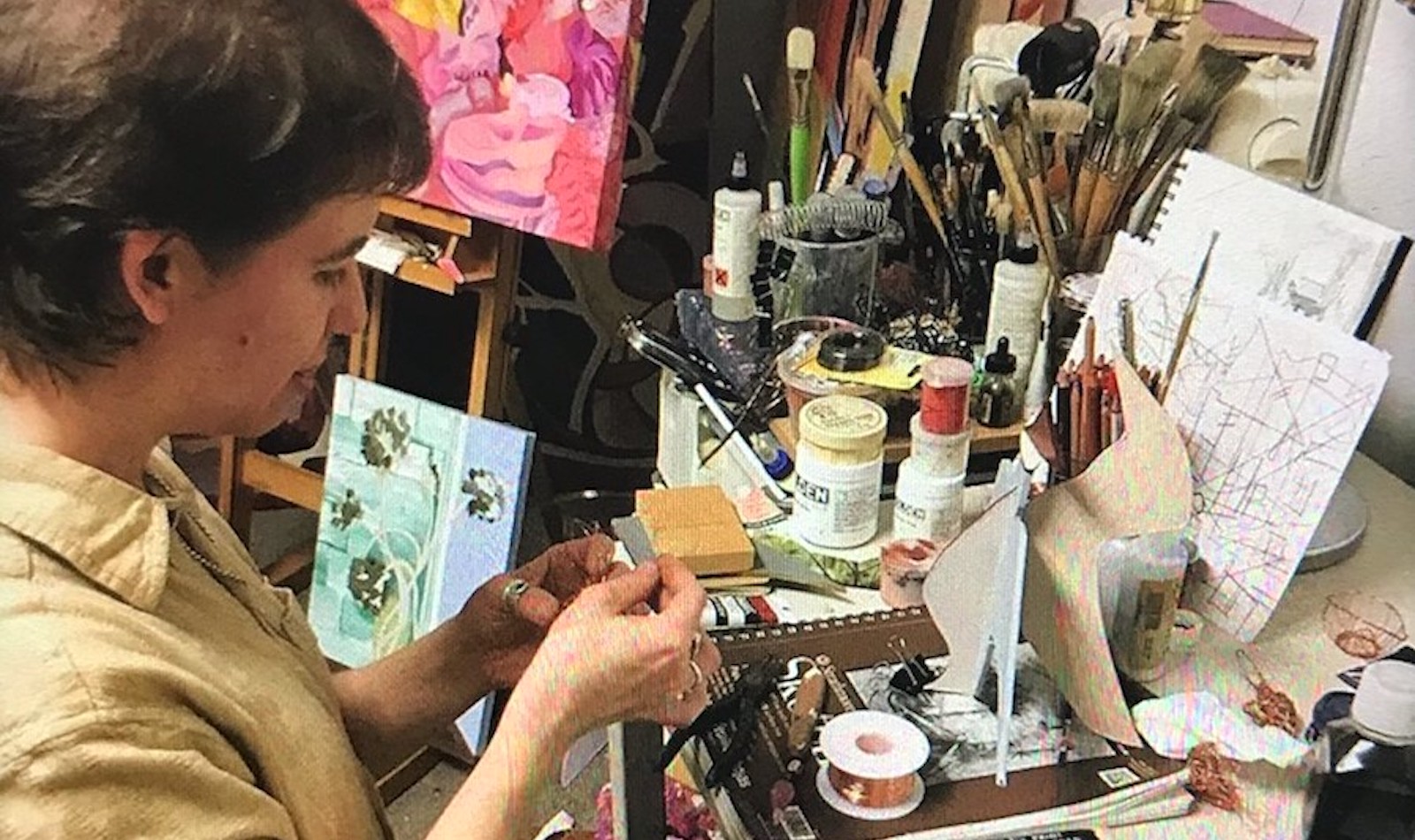
Art during COVID-19: Painting mountains in isolation
My 2020 started out brilliantly. I’d landed two new jobs — as gallery manager for the DC Arts Center and exhibit and events technician for the Katzen Arts Center at American University — and was able to spend more time in the studio, which really worked for me.
In late January, I finished a large orchids painting I started last spring, and I was chosen for a four-month art residency at Portico Gallery/Studios in Brentwood, Maryland. At the same time I was working on a curatorial project funded by the DC Commission on the Arts and Humanities, titled “Not So Concrete.” All of the professional changes into which I had put months of tangible effort were coming together.
When COVID moved to the foreground in March, the exhibit timeline stalled and I began shuffling deadlines and marketing plans with my co-curator, Mary Pat Norton. That’s pretty much where the “brilliant” part of 2020 slowed down.
Trouble started a few weeks in with a careless accident. I was moving a stool, put in place for a Zoom meeting, away from my standing desk. The workday was over, and I wanted to finish a poetry submission. While moving the stool, and holding the Association of Writers and Writing Programs (AWP) magazine, I slipped. Ouch!
I broke both wrists as a child, so I was immediately confident I had done so again. The next day I scheduled a doc consultation online and she agreed it was a break, not a sprain. It was only swollen a little, so she advised me against going to a DC hospital, as all were swamped with COVID patients. If the injury worsened in the next week, she’d schedule a radiology appointment. In the meantime, I bought a strong brace and wore it diligently for six weeks. I still put it on when I’m typing.
I still went to my studio — for quiet time, and to get away from the news. I slowly and carefully made a run of block prints about my mother’s home. It is on a bay, with seals and bald eagles, some peace, and sunrises over Mount Rainier in Washington state. But in my image, the house is pinned to the bedrock and sits on the cliff like a hat. I carved the block last year after doctors diagnosed her with an incredibly rare heart condition. The house’s foundation is re-supported, and not going anywhere.
In mid-March, my mother was diagnosed with COVID-19. She managed to get one of five available tests that week in Washington state. Her doctor gave her the phone numbers to call, knowing my mom would have better luck at securing a test than the doctor’s office would.
The diagnosis made me too stressed to think about art. All I did in my free time was read, mostly about the virus. I read medical research and news articles, and books by authors I’ve met: Barbara Kingsolver, Sheryl St. Germain and Kim Thay. I needed the wisdom of familiar voices, even if they were only in my head.
Last year, when my mother was diagnosed with the heart condition, I couldn’t be with her because my boss threatened to fire me if I took time off. This time, I couldn’t go home because of the health risks associated with travel. I focused on helping her from afar. It took me two hours of online shopping to find vitamin C and zinc for her, and another two to set her up for grocery delivery. I was so worried, anxious, and frustrated by the lack of information that I could barely sleep. No matter what I did, I couldn’t cure her; ordering groceries for her was the only way I could battle feeling utterly useless.
Because of my mother’s heart condition, her COVID-19 diagnosis was particularly concerning. She had fever spikes for a couple weeks, and then nothing for three weeks. She signed up for the antibodies test, but had a fever the morning she was scheduled to get the test. As of June 1, she still had the virus. This isn’t a “two weeks and you’re clear” infection. A final test in mid-August came back negative. It was another few weeks before her energy levels were back to normal.
My mother’s protracted bout of COVID-19 affected her own plans, but it also dramatically shifted the imagery in my arts practice. When my mother got sick, she closed her gallery and rented out the storefront on a two-year lease. She is now focused on painting and her garden.
I started thinking about what kindnesses humans do for one another, like giving flowers in times of celebration and grief. Once my wrist healed, I decided my grander, more decorative flower paintings of the previous year should become quicker, one- or two-day paintings. I wanted to emerge from quarantine with a full collection of paintings that spoke of kindness, beauty, isolation and connections. I settled on a mountain landscape series.
I jumped on the sourdough bread challenge, and extra loaves make their way to friends’ front porches. In the first month, I cleaned the apartment intensively, anywhere from 30 minutes to two hours a day. I have learned that my productivity in the studio is directly proportional to tidiness at home.
As the stay-home order wore on, and the weeks began to run together, I waited for my wrist to heal and started looking into art marketing websites and online platforms for exhibitions. I found many galleries using a digital gallery space VR — viewing room — and decided that my curatorial partner and I would use one for our “Not So Concrete” exhibition from July 7 to Aug. 14. The DC Commission on the Arts and Humanities approved the change. Because “Not So Concrete” is about architecture, the viewing room served the concept, bringing digital architecture within the exhibition’s constraints.
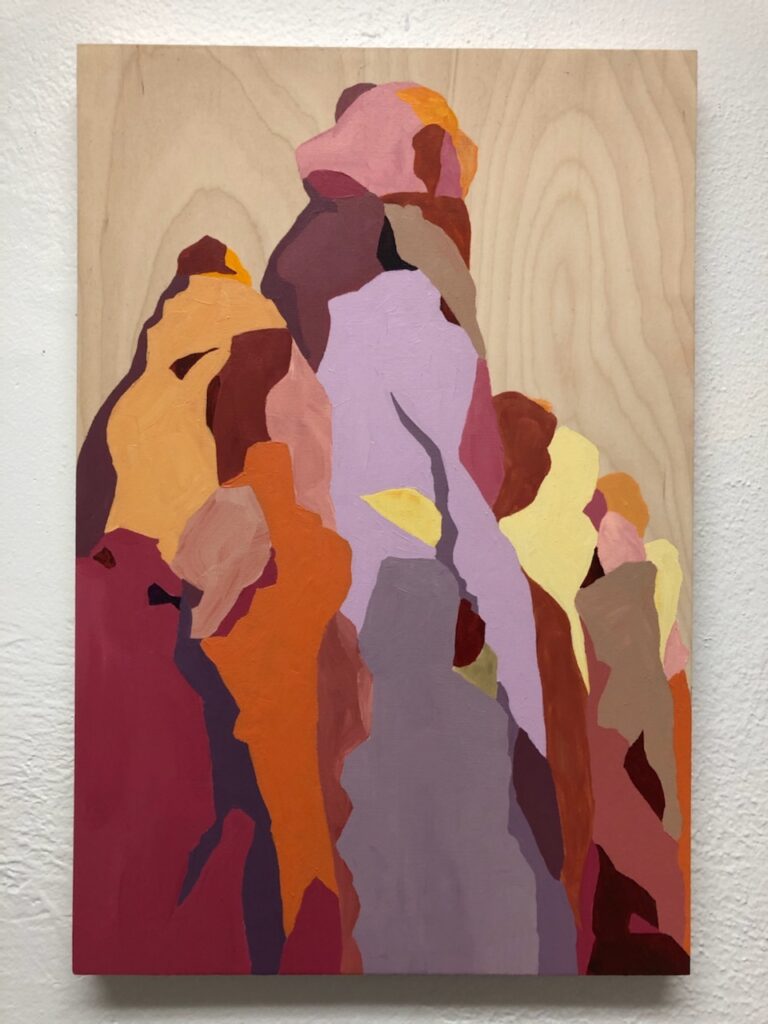
Now it is October. I’ve used all my N95 masks — even extending their lives with oven-heat refreshers — and ordered cloth ones to use. I don’t trust my sewing machine skills to make my own. I am now pretty good with Adobe InDesign. I stopped painting flowers, but continued with making fast works. I continue painting mountains, as the notion of them as spaces of isolation, claustrophobia, and attention to global warming has started to fully resonate. There are now 29 paintings.
Artist friends are telling me about how their studio buildings are, or were, locked; the struggle to shift to making art at home; and the effort it takes to keep hope intact for planned physical exhibits later in the year. I started ordering groceries and wine delivery, and organizing Zoom hangouts with fellow artists. I canceled a planned residency in Colorado, but my residency at Portico was extended to the end of this year.
All in all, I’m still hunkered down like a good California transplant, raised to accept disasters and get through them.
Elizabeth Ashe is a sculptor and poet who earned a Master of Fine Arts from the Mount Royal School of Art at the Maryland Institute College of Art and an MFA in creative writing from Chatham University. Her public art projects have been on view at the Bemidji Sculpture Walk, Sukkahwood Festival, Art All Night DC and the H Street Festival. Her media include metalwork, mold-making, installation art, drawing and painting. Ashe’s poetry has appeared in Yellow Medicine Review, Vagabondage and Badlands Literary Journal, among others, and art reviews in Artscope Magazine. Her work is included in Studio Visit Magazine, Issue 46. She is a recipient of a fiscal year 2021 Arts and Humanities Fellowship Program grant from the DC Commission on the Arts and Humanities.
This article was co-produced with the arts magazine Bourgeon through a project of the nonprofit Day Eight to support artists during COVID-19 quarantine.
This is a lovely piece of writing. I think it captures the pain and agony of the moment–the author’s inability to care directly for her mother; to realize an arts project. Still their is triumph and hope, which many of us carry in our hearts as we navigate the impact of the coronavirus and other challenges.
Thank you so much, Jonetta.