

jonetta rose barras: The good and bad of the DC Council’s budget
The DC Council took its first vote earlier this week on the city’s fiscal year 2023 budget, which is based in large part on $11 billion in local revenues. Legislators are expected to take a second vote later this month on the Local Budget Act and the accompanying Budget Support Act, the policy document that authorizes the programs and initiatives funded by the financial plan. They also must still consider the federal portion of the budget, which will push total spending to $19.6 billion.
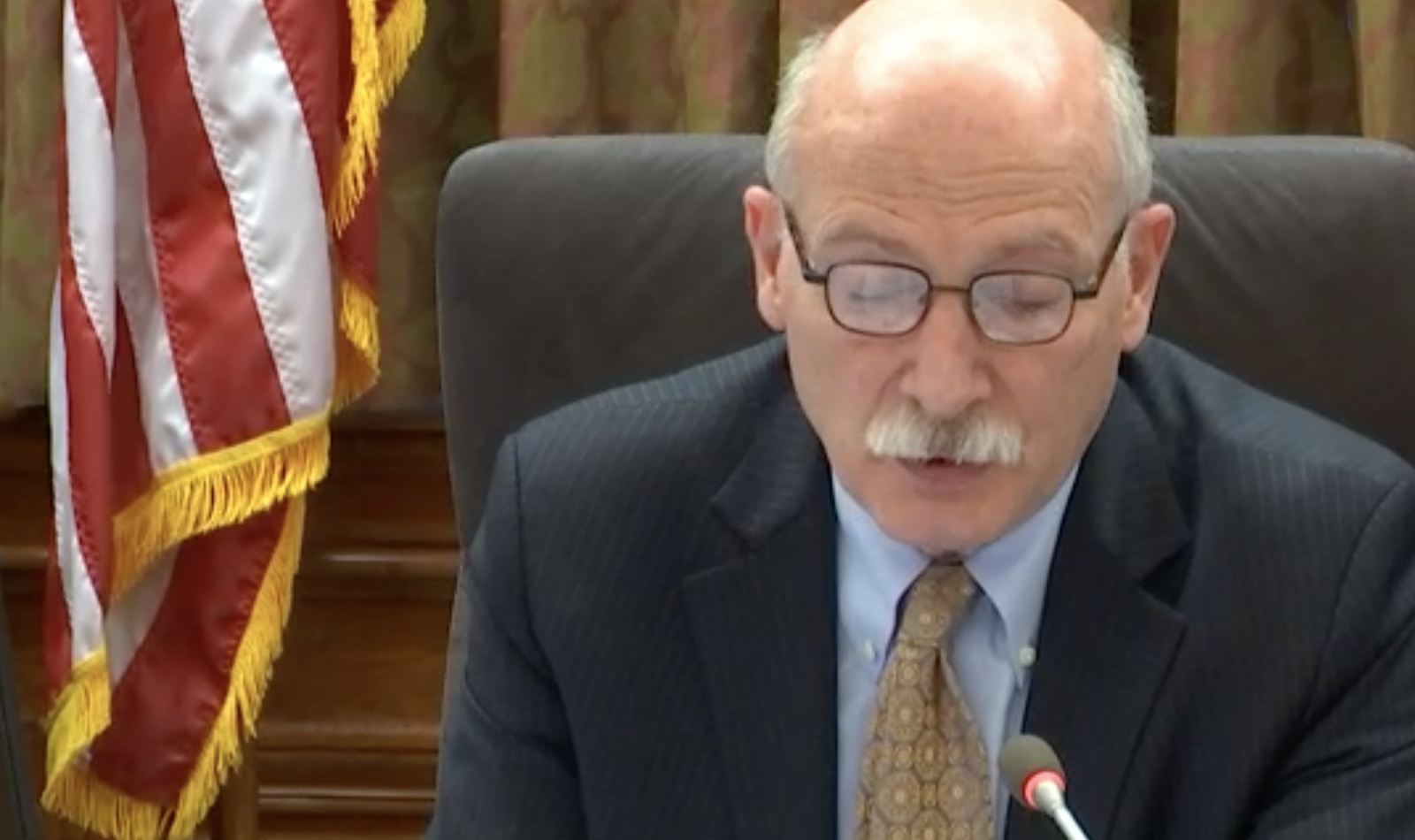
Prior to Tuesday’s vote, Council Chair Phil Mendelson boasted in a prepared statement that the budget he developed, with the help of colleagues, took “major steps to level the playing field in education and expand the city’s efforts to increase the availability of affordable housing.” He called his proposal to increase funds for at-risk schools a “game-changer.”
He specifically highlighted the expansion of the earned income tax credit, which would be available to “undocumented workers with a tax ID number”; rental assistance for low-income senior citizens; the creation of 400 Targeted Affordable Housing (TAH) vouchers for families facing eviction from the city’s Rapid Rehousing program; and $11.6 million for the Access to Justice Initiative that provides legal representation to poor residents.
Despite the unprecedented amount of spending, it seems that several members weren’t finished running through the public’s wallet. During the council session, the most egregious spendthrifts like Ward 4’s Janeese Lewis George, Ward 1’s Brianne Nadeau and at-large member Elissa Silverman bemoaned the failure to provide more money for certain programs and talked about collaborating with Mendelson over the next two weeks to identify additional funds. Perhaps most prominently, the requests seek more immediate assistance for excluded workers.
Finding more money may be a grueling task to perform. After reviewing budget documents, it appears that both Mayor Muriel Bowser and the council have raked through agency budgets, snatching money that had been set aside to hire personnel, implement initiatives or purchase supplies and other materials. Those funds were converted into one-time allotments for programs pushed by advocates and other special-interest groups. For example, Project Reconnect designed to counter homelessness received a one-time enhancement of $300,000; the same amount went to the Emergency Rental Assistance Program, commonly called ERAP.
Right now the District is awash in money, a sizable portion of which has come from the federal government as pandemic relief. It may be difficult to fully assess the recklessness, wastefulness and contradictory policies within the council decisions on the 2023 budget to date.
Consider, for example, the new proposal to increase funding to schools with a high concentration of at-risk students — those who are homeless, who are in foster care, who may be behind grade level and/or whose families receive a government subsidy like the Supplemental Nutrition Assistance Program. Over the next four years, that change will lead to $41.6 million being divided among schools that meet the predetermined criteria. Principals at those schools will decide how those funds are used — not the central administration of DCPS (as is the case with existing at-risk funding, which will remain in place) or the charter school board.
The change has been widely heralded. In a prepared statement, DC Auditor Kathy Patterson noted that her office has issued at least two reports on how the existing at-risk funds were being misused and abused. “In June 2019 we published the report, District Schools Shortchange At-Risk Students, which found D.C. Public Schools (DCPS) with the highest proportion of at-risk students had their base funding cut and at-risk funds used for teacher and social worker pay instead of for added efforts to improve academic achievement.
“That report found that the at-risk funding stream created in 2013 had been used primarily to fill budget gaps the DCPS central office created by reducing formula funds for schools with high at-risk populations,” said Patterson.
In 2020, a report prepared for her office by the Johns Hopkins School of Education Center for Research and Reform in Education “found that District parents were choosing schools with fewer students who are considered at-risk when not attending their in-boundary schools, leaving schools serving the highest concentrations of needy students with ever-dwindling resources due to declining enrollments,” Patterson said.
“Today’s action addresses the negative cycle of schools serving the most at-risk students facing ever lower rather than enhanced financial support,” she added.
For years, I, too, have lamented the plight of low-income students and the misdirection of at-risk funds. Helping at-risk students sounds good and sells well during an election year. But it’s doubtful that flushing more money into a nearly $3 billion system can address the other problems that are equally problematic and are, at root, systemic inequities: a flawed per pupil funding formula that determines the budget for each school, a boundary map that encourages the abandonment of neighborhood schools, and a charter approval process run amok that creates unhealthy competition and mediocre academic results.
All of those problems have been discussed in various reports produced by knowledgeable professionals, government agencies and citizen-led task forces. Elected officials have sidestepped or ignored recommendations. The new at-risk weight is no magical elixir for what truly ails the DC public education system and why it repeatedly fails low-income students and their families.
Ironically, as the council moved to increase at-risk funding, it approved a separate initiative that highlights the complications inside the city’s public education system. Calling attention to the fact that many DCPS teachers do not know how to teach reading, Ward 2 Council member Brooke Pinto persuaded her colleagues to require the Office of the State Superintendent for Education to provide — at long last — the necessary training for teachers in how to teach this fundamental skill.
I don’t make this stuff up.
The council sees the learning gaps experienced by at-risk students — and their approach is to target those schools with more money. Separately, council members point to a general problem with competence and quality of foundational reading instruction. They do not seem to recognize a likely connection between these two problems.
I don’t know whether Mendelson’s new at-risk funding is a case of putting the cart before the horse or whether it is a complete disregard for the cart and horse.
Besides the contradictory policy and financial decisions, there is evidence of waste made clear by the fact that the council doesn’t know the bang it is getting for the public’s bucks. Consider my exchange on Monday with Mendelson when I asked about the nearly $12 million increase for the Access to Justice Initiative. Through the DC Bar Foundation, legal services are provided to residents “facing eviction or denial of benefits.”
Undoubtedly that’s important. But when I asked how many residents were served last year, how many more will be served with the increase, and how many lawyers will participate in the program, Mendelson couldn’t tell me. He directed me to the foundation. It’s DC taxpayers’ money that is being spent; the chair of the council, charged with finalizing the budget, should have the answer to those basic questions.
There are other areas of questionable proposed spending that raise concerns: Several organizations are identified to receive funds, without the benefit of competition. In one case, the Budget Support Act calls for “the Department of Health to issue a $75,000 grant, on an annual basis, to a nonprofit organization to hire a full-time employee to provide wraparound services that supports mentorship to female students who are District residents.” Who is this group? Mendelson did not know and did not seem troubled by the covert or camouflaged nature of the funding.
Further, instead of going to the general fund, up to $5 million of the money generated from the resolution of Office of the Inspector General-involved cases will be retained by OIG for its own use. That’s the same deal provided to the Office of the Attorney General, which has been known to make contributions from court settlements to organizations favored by AG Karl Racine and his staff without any outside consultation.
Mendelson’s response about the former was to ask me whether I agree there is waste in the government. Of course, there is. But should the council be a contributing factor? Shouldn’t it be a better fiscal steward?
I know, I know I am shouting in the wind while it’s raining money — your money, dear readers. I guess I should be satisfied that some worthwhile programs and services are being funded.
I also should be thankful that thus far no one on the council has proposed a tax increase. Let’s keep our fingers crossed: Who knows what will happen later this month if Mendelson can’t find the additional money for which some members are hounding him?
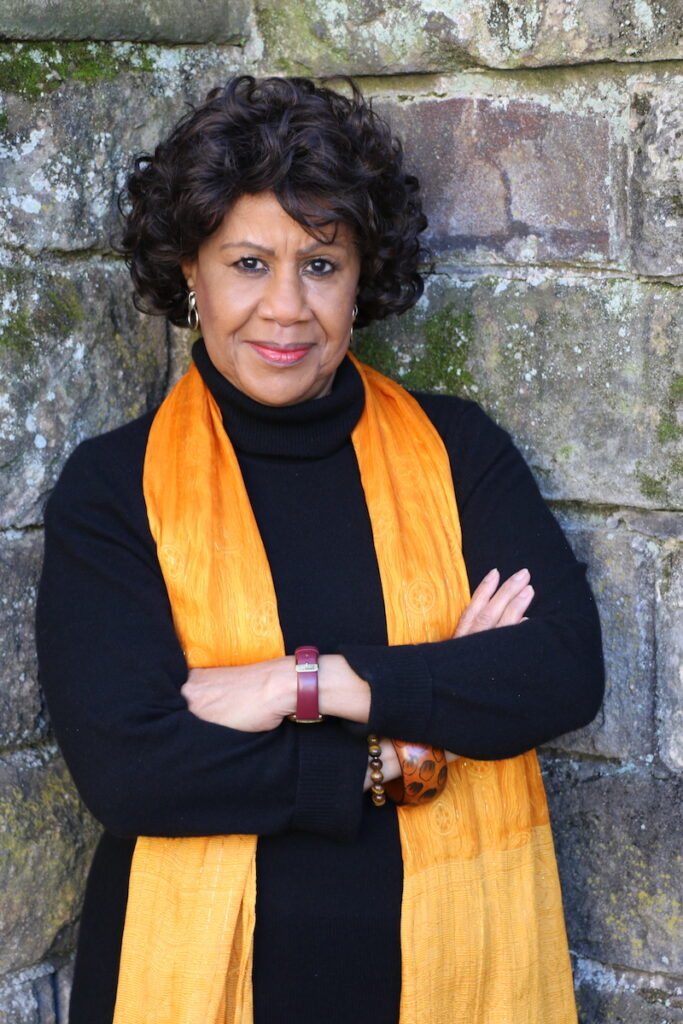
jonetta rose barras is an author and freelance journalist, covering national and local issues including politics, childhood trauma, public education, economic development and urban public policies. She can be reached at thebarrasreport@gmail.com.
Here’s what I don’t get. Mendelson wants $48 million for 400 Targeted Affordable Housing vouchers. That’s $120,000 per voucher. Average rent is a little under $3,000 for two bedrooms. Why would a $10,000-per-month voucher be needed?