


jonetta rose barras: Ward 3 DC Council member Mary Cheh’s legislative ride comes to an end, Part 1
Ward 3 DC Council member Mary Cheh stood in front of the Days Inn at 4400 Connecticut Ave. NW on Jan. 27 waiting to begin a community meeting and press briefing. Earlier that morning five people had been shot in one of the rooms inside the low-budget hotel; one person eventually died. Now, the four-term legislator was holding forth, joined by DC Metropolitan Police Department Chief Robert Contee and 2nd District Police Cmdr. Duncan Bedlion.
That day would come to be remembered as an inglorious bookend for an impressive and enviable 16-year legislative career. Cheh’s policy portfolio contains a 55-page listing of legislative achievements — from the establishment of visionary environmental reforms to public education improvements, creation of nutritional and food security programs for low-income residents, and mundane government regulatory changes. Yet this enviable record seemed to be overshadowed by the fact that the city’s serious crime problems, including gun violence and drugs, were beating down the door of her ward and filling many of her constituents with palpable fear.
In the previous two years police had received 278 calls for assistance related to the Days Inn, according to published news reports; 78 of those came within the six months before that January shooting. Underscoring that reality, a few months later, 21-year-old Raymond Spencer opened fire on students, faculty and others who were at the Edmund Burke School — not far from the hotel. Four people were wounded; the shooter killed himself.
Where once a shooting seemed foreign in neighborhoods that comprise one of DC’s wealthiest wards, there had been four homicides in 2021 in the 2nd District and then the one at the Days Inn during the opening weeks of 2022, according to the commander.
“The size of this crowd reflects the fact that the community is extraordinarily concerned about the rise of crime along this avenue but [also] in other neighborhoods in Ward 3,” Cheh said as she opened the meeting. She offered that the rise seemed exacerbated in part by the government’s decision to locate in the area individuals suffering an array of socioeconomic or health issues without providing them significant wraparound support services.
”We are victims, if you will, of people who are acting out because they are troubled,” continued Cheh. “I’m not saying that that accounts for all of it, but I am saying that it accounts for some of it.”
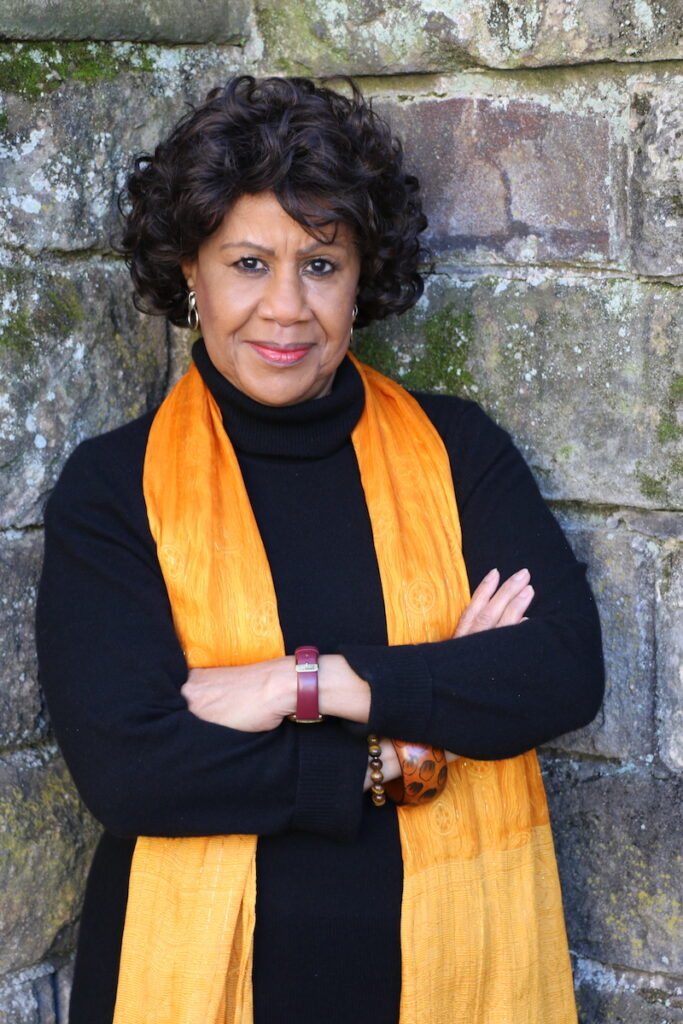
A petite, bespectacled woman, whose bike riding and other activities allow her to flaunt a fit physique that belie her age and a bout with cancer, Cheh’s straight talk is typical of her style. However, her comments at the Days Inn didn’t sit well with some who interpreted them as suggesting that people who were previously homeless were responsible at least in part for the increase in crime and violence.
Kate Coventry of the nonprofit advocacy group DC Fiscal Policy Institute tweeted that Cheh was “wrong. Studies show that people experiencing homelessness face high levels of violence and are more often victims of crime than housed people.
“Her statement is offensive and harmful,” Coventry added — although Cheh did not refer explicitly to homelessness in her remarks, notwithstanding suggestions otherwise.
People at the community meeting and some who live or work in the Van Ness neighborhood applauded Cheh’s assessment. “It’s like a de-gentrification taking place,” one person who has an office in the area told me.
Still, two weeks later on Feb. 11, Cheh announced her forthcoming retirement from the council. Some observers suggested her feathers had been ruffled by the criticism. In a “Dear Neighbor” written statement, she blamed the pandemic and the need to reevaluate her priorities. “I want to recover my personal life and dedicate more time to my granddaughter, who has been the light in my life since she was born on my re-election day three years ago.”
Ironically, a week after that announcement, the police made an arrest in the Days Inn shooting.
Chuck Thies, a longtime political consultant, lambasted council members for not coming to Cheh’s defense over her comments outside the Days Inn. “Her point was that the city is increasingly unsafe. She was pilloried because of that. Not a single colleague stood up to defend her, and that really upset her,” he told me during an interview in July.
“The entire council is [in effect comprised] of Democrats. [Council Chair Phil] Mendelson didn’t say anything. [Former chair] Vincent Gray didn’t say anything,” continued Thies. “So, she was like, I don’t need this … .”
During my two lengthy Zoom interviews with her in May and June, Cheh said that for the past 16 years she has held two full-time jobs — council member and tenured professor at George Washington University Law School. Technically the position in the legislature is part-time, but I take her point.
“I’m no martyr. I don’t want to portray it that way,” she continued, offering that her adult daughters had “seen the toll it’s taken on me in terms of dealing with contentious issues, [the] time I spend going to meetings at night and during the day, and all the rest of that.
“They have been saying, ‘Mom, it’s enough. You’ve done enough,’” she added.
Cheh’s announcement shocked the entire city. She had already raised more than $80,000 for her run for a fifth term, and her campaign team had begun collecting nominating signatures. “I do feel badly on some level because people have said, ‘Why are you not running? Why are you not running?’
“It was really a highly personal decision,“ she told me. “It had nothing to do with any particular event.”
A desire to do good
In the years leading up to 2006, when she officially entered the city’s political scene, Cheh was teaching not only law but also girls soccer. “I coached Kathy Patterson’s daughter,” she told me. At the time, Patterson was the Ward 3 council member.
“So, I had conversations with her on the sidelines from time to time. Then she started asking me to do stuff, because she’s not a lawyer and I am a lawyer,” said Cheh. (Patterson had been a journalist earlier in her career; it’s not surprising that she and the constitutional law professor began a collaborative relationship that ultimately led to a friendship.)
“Finally, she asked me could I be the legal counsel — again, pro bono — on her big investigation into the police and their handling of the [International Monetary Fund] protests and demonstrations back in 2003.
“I was sitting in my office. She called and said, ‘You know there’s this lawsuit involving that whole thing and I want to know how I can join the lawsuit,’” said Cheh, recalling that she advised Patterson that she didn’t have “standing” but that if the case went to appeal she might be able to submit a friend of the court brief.
Cheh soon called Patterson back, suggesting that the council member consider launching an investigation. “What’s wonderful about [that], you get subpoena power,“ Cheh told her while describing the benefits of conducting an investigation rather than just an oversight hearing.
“So, she set up the whole thing,” said Cheh. “That was the first time I realized how the council could do something. It even resulted in [new] legislation. But that didn’t motivate me per se to get into office.”
That trigger came when Patterson decided to run for council chair against Vincent Gray, then the Ward 7 council member. “I don’t know how many times people in her office [told me], ‘You should run.’ I said, ‘Oh, don’t be nuts.’”
Cheh reconsidered her initial reluctance: “I felt in my bones that this would be a real opportunity to actually do some good. I know that sounds corny, but that’s what I was thinking.”
Despite serving as pro bono special counsel for Patterson on that IMF investigation, Cheh lacked depth in local politics: “I could not have named all the council members. I didn’t know the boundaries of Ward 3. I didn’t know that we had 17 precincts. And the reason why I came to know all of this is because once we were having a meeting with some people during the campaign and I said stupidly, ‘By the way, I’m just curious, why are we meeting outside of the ward?’
“There [was] this big silence. They said, ‘We’re not outside of the ward.’”
On election night, as returns started coming in, Cheh’s daughters were at the DC Board of Elections (BOE) headquarters. One called the campaign office, telling Cheh that votes from three or four precincts were “dramatically in my favor.” Her daughter urged her to come down.
“I said, ‘Honey, even I know now that there are 17 [precincts],’ and I was joking. You got three or four.” Her daughter reminded Cheh that she didn’t know how things worked: “‘These people know, get over here, you won the election.’”
Cheh had been one of nine Democrats vying for the vacant seat. She pulled in 6,452 votes (44.28%) in that crowded 2006 primary. In the general election, her support swelled to 13,811 votes (71.47%) against a Republican challenger.
Four years later, in 2010, she ran unopposed in the primary, winning with 14,090 votes (93.68%). The next two races, she may have coasted to reelection without a primary opponent, but the ward’s registered voters seemed to exhibit a lack of enthusiasm or perhaps even a sense of dissatisfaction given a shrinking absolute number of votes. In 2014, she received only 11,484 votes (95.80%); there were 503 under votes from those who opted not to cast a vote in the Ward 3 race. In 2018, she won with 10,111 votes (94.95%), but the under votes expanded to 1,126, according to results posted on the BOE website.
Cheh’s voter base never seemed to grow although she proved quite capable of raising money. The campaign war chest she amassed for the 2022 primary as a Fair Elections candidate likely scared the bejesus out of potential Democratic opponents.
“If I were to have stayed in the race, I have a high degree of confidence that people would’ve reelected me. But that would [have been] a commitment for four more years,” Cheh told me. “The impending deadline was getting closer and closer. I just decided, ‘Well, maybe I should leave off on this.’”
Her departure created the kind of political free-for-all she experienced when she first decided to run for office in the 2006 Democratic primary. Interestingly, some late maneuvering instigated by at-large Council member Elissa Silverman — currently the subject of investigation by the DC Office of Campaign Finance — helped propel Matt Frumin to victory in the June 21 Democratic primary. He had been the treasurer of Cheh’s reelection campaign.
Next week: A look at Mary Cheh’s legislative record
jonetta rose barras is an author and freelance journalist, covering national and local issues including politics, childhood trauma, public education, economic development and urban public policies. She can be reached at thebarrasreport@gmail.com.
Comments are closed.