

Amid the political fighting that has captured the bulk of the attention given to the at-large DC Council race on Tuesday’s ballot, contenders for the two available spots have highlighted topics such as affordable housing, education, poverty and traffic at multiple debates and forums over the past month, offering varying approaches to these perennial issues.
One such discussion took place in Ward 6 on Oct. 10 at a debate held at the Friendship Chamberlain Elementary & Middle School and sponsored by the Hill Rag, the Ward 6 Democrats and the Hill Center. In touting their platforms, several candidates focused on the need for equity in response to problems created as economic development and gentrification in the city have ramped up in recent years.
Incumbents Anita Bonds, the Democratic nominee, and Elissa Silverman, an independent, face four challengers for the two available seats. David Schwartzman, a climate scientist and former professor at Howard University, is representing the DC Statehood Green Party. Ralph Chittams, a contractor, is the Republican nominee. Dionne Reeder, a business owner, and Rustin Lewis, a nonprofit manager and adjunct faculty member at the University of the District of Columbia, are running as independents.

Mayor Muriel Bowser, who endorsed Reeder in September, watched the Oct. 10 debate from the audience, a rare example of visible involvement from a sitting mayor in a council race. Bowser has continued her outspoken support for the at-large contender in the weeks since then, including organizing a Get Out the Vote rally with Reeder and Bonds as featured guests.
In attempting to unseat Silverman, a favorite of local progressives, Bowser has allies among the many business leaders who also object to the incumbent’s advocacy of causes such as paid family leave. The Washington Post reported that Reeder outraised Silverman in the weeks following the mayor’s endorsement. Silverman, for her part, has received more individual donations and has stressed that she doesn’t accept money from corporate donors.

Silverman used the Ward 6 event to tout her progressive perspective. On affordable housing, she said the council needs to look skeptically at the DC Housing Authority’s development partnerships with the private sector. “It’s important to give people the opportunity to stay in the communities that they grew up in and want to raise their children in,” she said.
Responding to a question about how to improve transit to accommodate DC’s growing nightlife, Silverman reframed the question to focus on employees who work on night shifts in the service or medical industries. She further endorsed more aggressive ticketing for cars that block bike lanes, describing the additional enforcement as a key step in fulfilling the city’s Vision Zero plan to eliminate traffic fatalities.
Silverman wrapped up by discussing her paid family leave legislation, alluding to Reeder’s statements that she supports paid family leave in general but objects to the financing mechanism approved by the DC Council, which establishes a tax of 0.62 percent on employee wages or the annual income of self-employed workers.

“I’m proud to be the co-author of the paid family leave bill,” Silverman said. “And if you have candidates that say they don’t support this type of paid leave, but don’t have an alternative plan, that means they don’t support paid family leave.”
Reeder used her time with the audience to emphasize self-sufficiency as her vision for the District. On a question about closing the achievement gap between white and non-white students, Reeder, who is black, stressed the role of parents.
“What we forget is we know our babies,” she said. “We need to focus on more [centers] where families who are hurting and who are struggling can come to their school and get the resources necessary — with our community-based organizations — to make those families self-sufficient, so those children can be proud of their parents.”
On neighborhood displacement, Reeder said that many families do not want to stay in the neighborhoods they grew up in. What’s more important is that they are able to stay in the District, she argued.

“Government can’t solve all our problems. Partner with our community-based organizations, provide wraparound services so that families can actually live in DC self-sufficiently, without receiving entitlements,” she said. “We gotta move beyond this. We really do.”
Schwartzman took a more extreme progressive stance throughout the forum. He proposed levying a tax on the District’s highest earners, who he said are getting a break from federal tax cuts, to pay for improved public housing. He referred to the Wilson Building as “developer-occupied territory” and advocated for electric public transit and a congestion fee downtown.
“We need a new approach. We need to break with the heavyweight of the big developers and the Federal City Council on our elected government,” he said, referring to the influential nonprofit that promotes economic development.
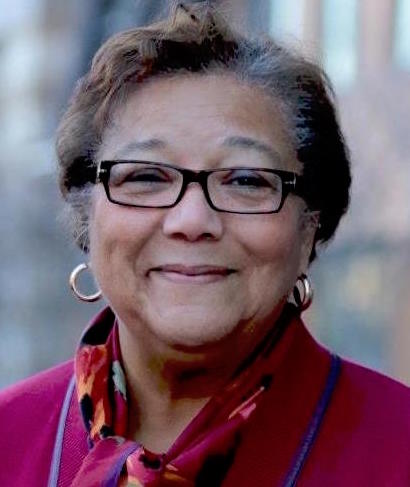
Bonds focused on her past achievements as council member, including the creation of a public housing maintenance and repair fund. She said that the density of the city is likely to change, as people move in and developers, in exchange for providing public amenities, are allowed to build bigger. Bonds said she is proud that the council voted to grant public housing residents the right to return to their neighborhoods after complexes are reconstructed.
“I want to do more to make sure that we have equity throughout our communities,” she said.
Lewis focused on equity and communication, saying that the city must be clearer with residents. The government ought to improve traffic and parking signage, he said, as well as require that landlords do more to advertise the affordable units available in their large developments.

“I know how to compromise. I know how to collaborate. And most importantly, I know how to listen,” he said.
Chittams, the Republican candidate, emphasized oversight, lowering taxes, and providing more parking. He claimed that the public schools under mayoral control are part of an “apartheid” system and are failing the city’s children.
“I have never been a part of the problem that is right now the District of Columbia government,” he said. “I’m coming in as a true outsider who has had enough of this nonsense.”
DC residents can vote for two at-large candidates, with the top two vote-getters winning the positions.

At a forum last week held by the Southwest Neighborhood Assembly and The Southwester, the contenders were asked who would get their other vote. Schwartzman and Silverman each backed the other, as did Lewis and Chittams. Reeder said her second vote will go to Bonds, who hadn’t yet arrived from an interfaith service held across town that same night. When Washington Post reporter Fenit Nirappil, the moderator, asked Bonds the same question after she sat down a few minutes later alongside her council colleague and the four other candidates, she at first demurred. “You can’t put me on the spot like that,” Bonds said, prompting Reeder to point out that she was the only one of the five who had pledged support for Bonds. “She has the upper hand,” Bonds said in response.
Chris Kain contributed to this report.
Comments are closed.