

‘Week of Action’ returns to DC to share Black Lives Matter principles in local schools
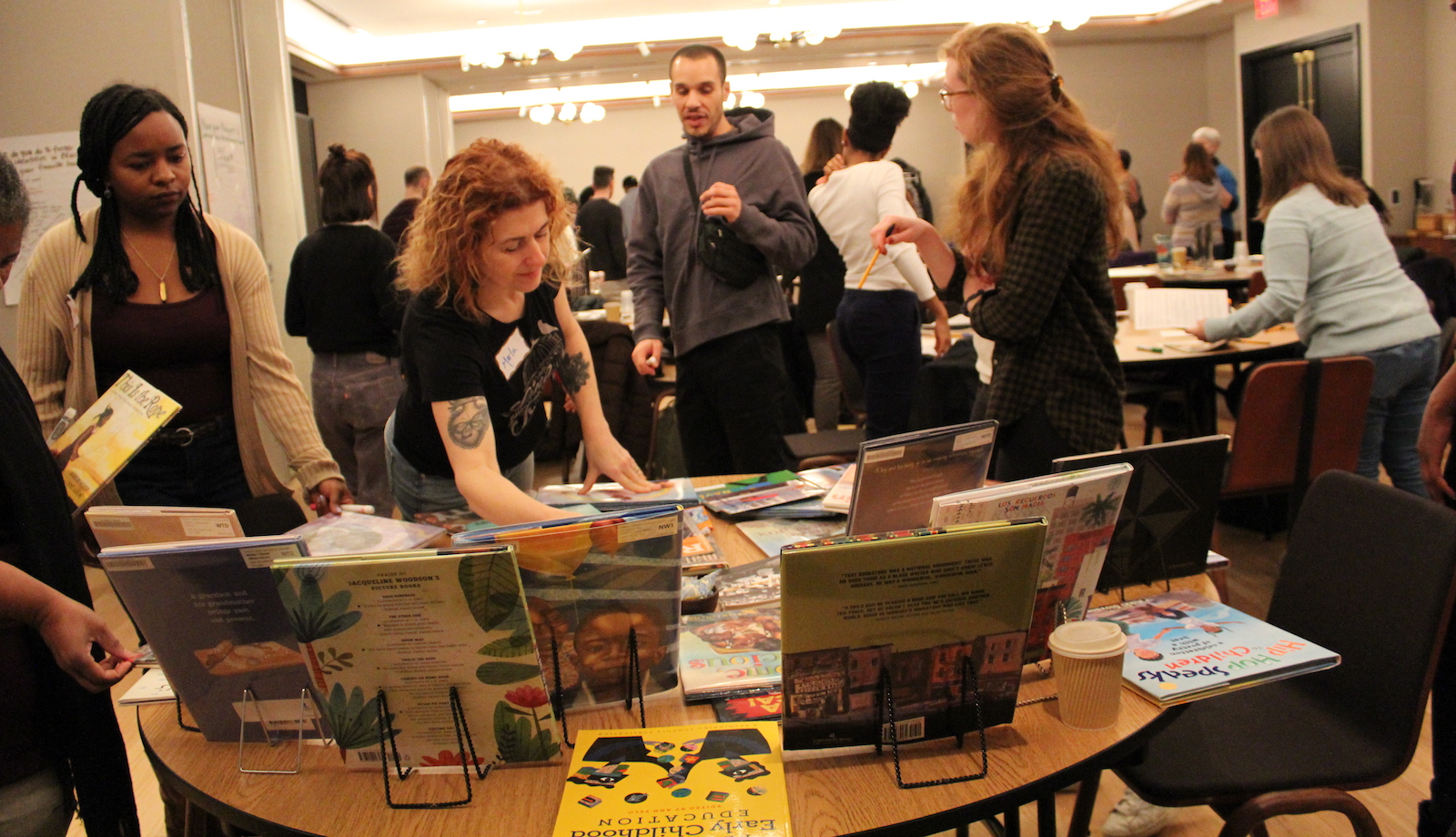
Dozens of early childhood teachers from around DC were gathered in a hotel conference room on an early Saturday morning to tackle a challenging and sensitive topic: how to talk about race with young students.
It was one of two training workshops the DC nonprofit Teaching for Change hosted to prepare for the Black Lives Matter at School Week of Action, which starts today. Coinciding with Black History Month, the national campaign attempts to spark honest conversations on social justice issues in U.S. classrooms and improve the school experience for students of color.
In DC, Teaching for Change is helping coordinate local activities for the second year in a row. As of early last week, over 450 educators from more than 130 area schools had signed up to participate, according to Rosalie Reyes, the nonprofit’s coordinator of teacher engagement and professional development. Participating DC schools stretch across the city, from Anacostia High, Turner Elementary and Thurgood Marshall Academy Public Charter School in Ward 8 to Wilson High, Eaton Elementary and Sidwell Friends School in Ward 3.
“Educators are really excited about centering this,” Reyes told The DC Line. “In response to the social and political realities of our nation right now, we recognize the importance of this work and the importance of anti-biased, anti-racist curriculum.”
Through suggested curriculum and activities for pre-K through 12th-grade students, the campaign aims to disseminate the 13 guiding principles of the Black Lives Matter activist movement — which include restorative justice, empathy and “loving engagement.”
“We really connected with the importance of the Black Lives Matter principles that focus on improvement of the school experiences for students of color,” Reyes said. “A lot of work is centered on bringing these issues of racial justice into the classroom in order to affirm the identities of students.”
Along with the school activities, evening events throughout Black History Month will incorporate community members. On Tuesday, Feb. 5, for example, Black Panther Party co-founder Bobby Seale is scheduled to speak at American University. On the same day, author and civil rights activist DeRay Mckesson will speak on a panel for high school students at Eastern High School. On Friday, Feb. 8, an open mic called “Ode to the Black Village” takes place at Politics and Prose at Union Market.
To prepare for the School Week of Action, DC Area Educators for Social Justice — an arm of Teaching for Change — co-hosted the two training workshops for teachers last month in the Eaton Hotel on K Street NW. Both the Jan. 12 and Jan. 26 sessions focused on exploring racial issues in children’s literature.
Ward 1’s DC State Board of Education representative, Emily Gasoi, participated in the Jan. 12 workshop to help her develop a relevant reading list for students, parents and teachers. She attended as part of the parent committee at her daughter’s school, but also to see what she could bring back to the education board.
For Gasoi, it is not only important to teach students about black history but to do so with a greater sense of purpose. “It is about being educated and intentional about what you are teaching, especially for young children — like how you are teaching them about the civil rights movement without ‘othering’ other children in your classroom,” she said.
The workshops aimed to create space for collaborative and honest conversations among the educators. At the Jan. 26 session, coordinators taped talking points to the wall of the conference room. They included “What questions have you heard young children ask about racial identity or racism?” and “What messages/information promote positive racial identity for young children?”
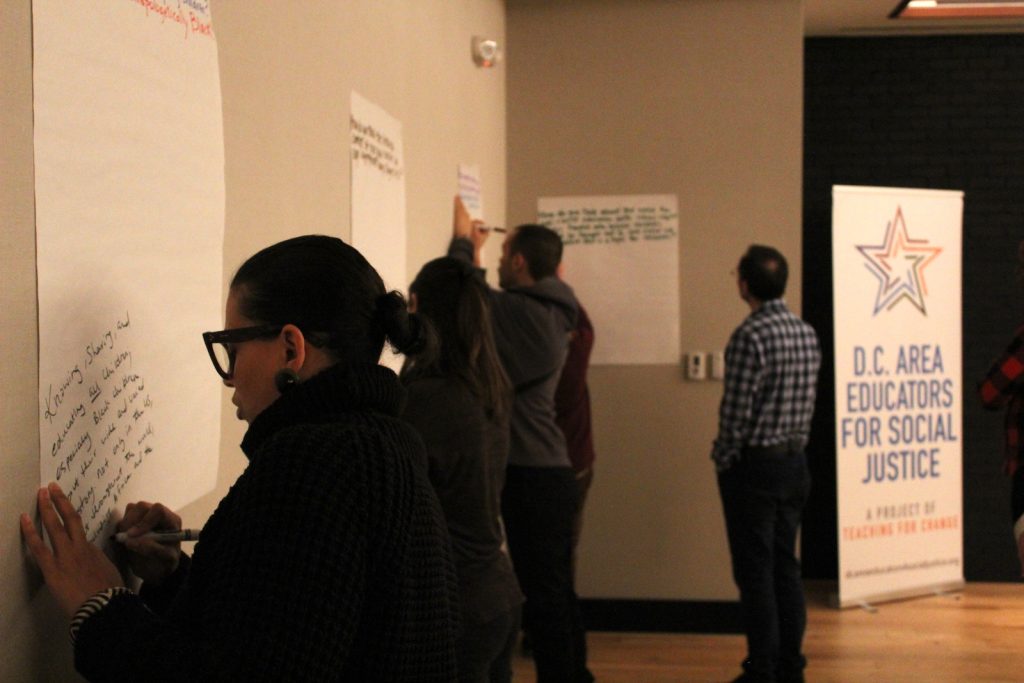
“Part of [this workshop] is us sharing resources, but another part is making connections and sharing real stories and real strategies that can be used in the classroom,” said Carlos Duque, a school librarian at Capital City Public Charter School.
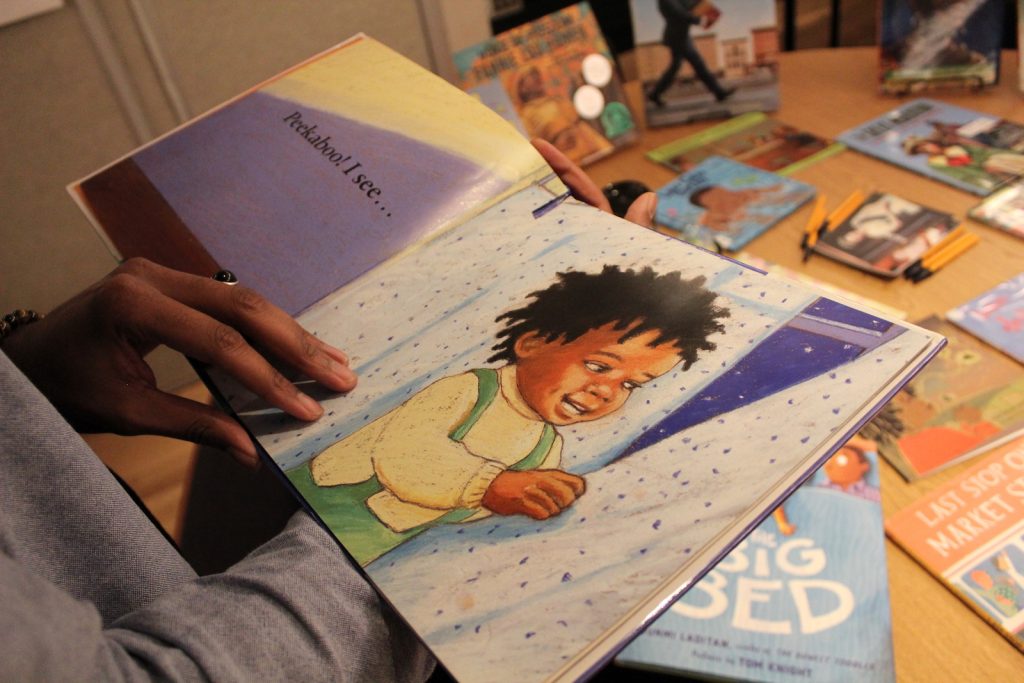
Duque, one of the coordinators for the Week of Action, pointed to the children’s books on display for educators to preview, including titles like Child of the Civil Rights Movement by Paula Young Shelton and Mama Africa! by Kathryn Erskine and Charly Palmer.
“These books are chosen by Teaching for Change, and for today it reflects Black Lives Matter and the principles shared,” Duque said about the books provided for educators attending the workshop. “We share books that reflect all kinds of realities.”
One of the participating teachers, Ebony Marshman, expressed the challenges she faces talking about weighty topics — like civil rights, and the current state of racial inequality in the U.S. — with young students.
“When things come up that are a little more sensational to the children — [like] violence or incarceration — I don’t know how much to say,” said Marshman, a teacher at the Breakthrough Montessori Public Charter School in Petworth.
One handout from the workshop suggested that no age is too young to start processing topics of race. Though adults may be concerned that these conversations can encourage racial bias, “silence about race reinforces racism,” says the handout from The Children’s Community School of Philadelphia.
“I would love for the Week of Action to be a true testament and experience for students of color to know they are valued in their schools, communities and our societies,” said Reyes. “The reality is that messages they receive can tell them otherwise. This is an important week to center and promote racial identities and celebrate them.”
Comments are closed.