

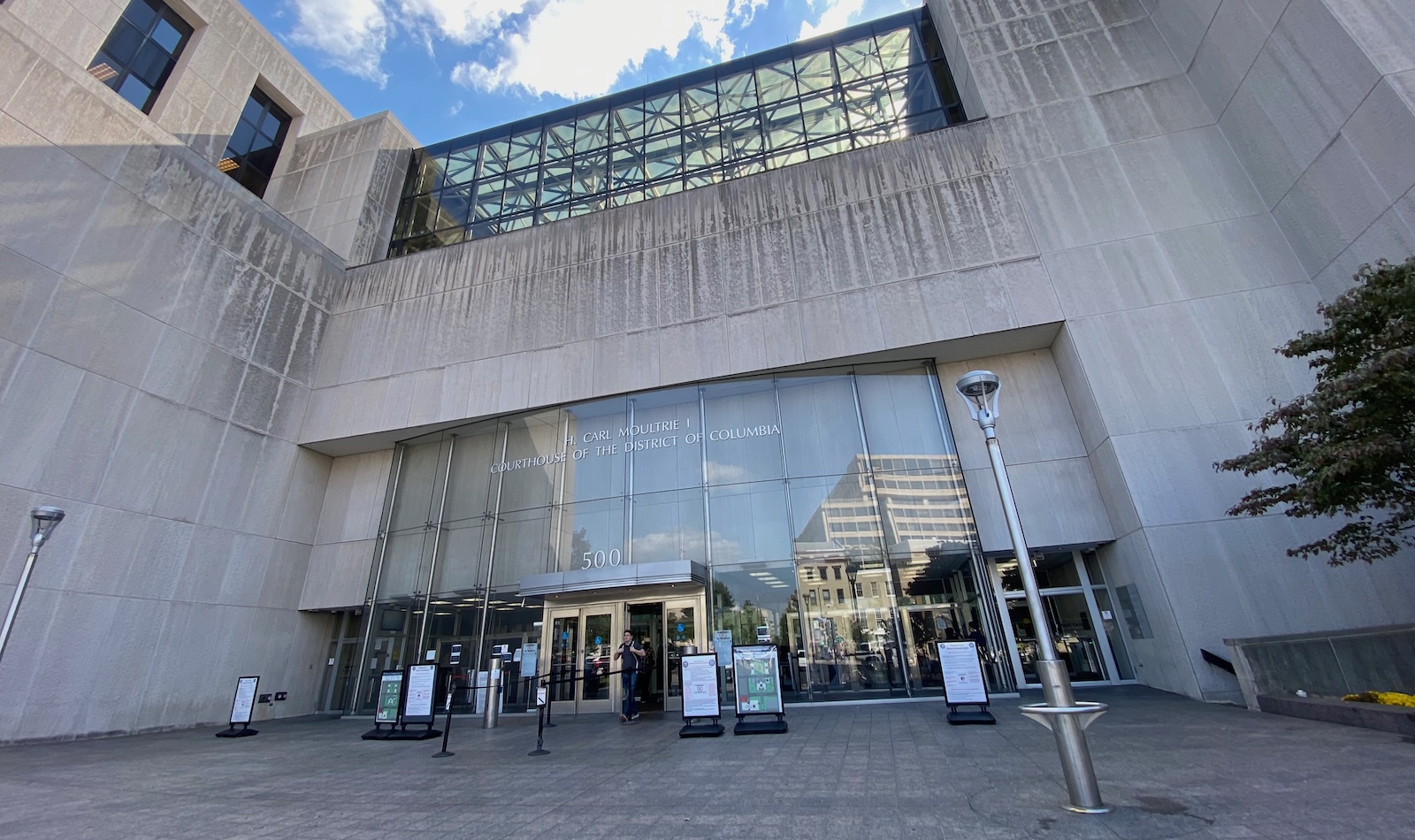
Paulette Chapman and Jelahn Stewart: Congress filled DC’s judicial vacancies. Now it must fund the courts.
Congress has proposed funding cuts to the DC Courts that threaten more than just the court’s budget. They threaten the professionals and infrastructure that make justice possible in the District — as well as the residents who rely on the courts to address their problems. After four years of essentially flat federal funding and rising caseloads, further cuts to court resources in 2027 would make DC’s already strained system less accessible, less efficient, and less capable of delivering justice.
When people picture a courtroom, they mostly just picture a judge. Maybe a prosecutor and defense attorney. Perhaps a jury. But there is so much more happening inside a courthouse that makes it possible for cases to go to trial.
What people probably do not picture is the clerk who helps a parent navigate the first steps toward seeking custody of their child. The interpreter who makes sure someone can understand the proceeding that will determine their future. The court reporter creating the official record. The security officer who keeps the courthouse safe. The judicial assistant who manages an overflowing docket. The IT professional who prevents cyberattacks and maintains systems that allow people to file documents electronically.
Over the summer, DC Court of Appeals Chief Judge Anna Blackburne-Rigsby and DC Superior Court Chief Judge Milton Lee Jr. warned that the DC Courts are at a fiscal breaking point. They described rising caseloads, growing security and technology demands, and the many people — both judges and staff — required to keep a court system functioning.
The Senate recently confirmed eight new judges to DC’s local courts, an important step after years of significant vacancies. But as the chief judges noted, a judge cannot hold a fair and timely hearing alone. A functioning courtroom — the place that our laws rely on for fair determination of facts and where our constitutional principles are upheld — requires a complex web of support to equip judges to rule in cases. So while the Senate addressed one of the DC Courts’ problems by confirming judges, they may be creating a different problem if they don’t adequately fund our courts.
For everyday people who rely on the courts, the path to justice begins long before appearing before a judge or having a trial. It begins with understanding where and how to file, having documents processed, getting questions answered, and being able to navigate a system that is intimidating even when it is working well. For a domestic violence survivor seeking a protection order, a tenant facing eviction, or a defendant who needs appointed counsel, access to justice depends on whether there are people throughout the system to help them navigate it and have their case heard.
It also depends on having enough resources to meet the volume of cases that are coming in the door in a timely manner. In DC, caseloads have been rising since the pandemic, and court staffing has not been able to keep up. This delays resolution in far too many cases that affect the lives of DC residents and the operations of businesses here in the District.
When resources shrink, all of the fundamental functions of a court — security, case-filing support, interpretation, IT, and others — become harder to provide, and the people who can least afford additional time, expense and uncertainty end up bearing the brunt of the consequences when the system cannot keep up.
DC’s situation is unique. Unlike state court systems around the country, our local courts depend on Congress for their funding. This should not be a partisan question. A functioning court system is fundamental infrastructure for any functioning city or state. It is essential to public safety, due process, economic stability, and confidence in government itself. And, of course, it is our independent third branch of government. That independence can exist only if the judiciary has the operational capacity to fulfill its constitutional role.
Congress was right to recognize that DC needed more judges. Now it must recognize the folly of strengthening the bench but hollowing out everything around it. If we want timely justice and an independent judiciary capable of doing its job, we have to invest in the entire system that makes justice possible.
Paulette Chapman and Jelahn Stewart are president and chair, respectively, of the Council for Court Excellence.
About commentaries
The DC Line welcomes commentaries representing various viewpoints on local issues of concern, but the opinions expressed do not represent those of The DC Line. Submissions of up to 850 words may be sent to editor Chris Kain at chriskain@thedcline.org.