


Nick Manning: An electrifying cautionary tale about trying to be greener in DC
Our electricity bill is outrageous. It is a financial burden, but it is also a shameful monthly reminder of the damage that one family is blithely doing to the planet. The house is now airtight, over-insulated, shuttered and shaded. Thermostats have been replaced with Wi-Fi enabled gadgets that send information about our lifestyle to Google and, as a bonus, allow us to adjust the temperature. One of us, who will remain unnamed, quietly and smugly turns the heating down and reduces the air conditioning whenever he can without risking domestic uprising. If all this effort made a difference, it is no more than a rounding error. The monthly Pepco bills continue to be outrageous.
A paradigm shift is required. If there’s no way to reduce our electricity usage, then we must move to renewables, an easy path toward virtue.
For us, the first step along the way was to sign up for a wonderful scheme called Groundswell. After many months of patient waiting — and not so patiently reminding this DC-based nonprofit that we were waiting — we were selected as one of 50 households to share in a large solar farm located on the grounds of the Monastery of Our Lady of Mount Carmel in Northeast DC. We pay a fixed amount for our share of running that solar farm. In exchange, Groundswell puts some of the electricity generated back into the grid in our name, leading to a rebate. We don’t know exactly how much energy it will be generating, but Groundswell has calculated the payment so that it roughly equals the rebate. Doing the right thing for free feels particularly good as 12 households out of the 50 are low-income and are benefiting without having to contribute. What is not so good is when Groundswell meets Pepco in the Venn overlap of despair.
Pepco is, of course, owned by Exelon — a conglomerate that owns many electricity “generation” and “delivery” companies, such as Pepco. This is the same Exelon that has recently been in some trouble over a bribery scandal in Illinois. The primary mission of Exelon is to make money. Under its guiding hand, Pepco’s monthly bills are all but impenetrable, but I was pleased to discover that a couple of months ago we got the promised solar power credit. However, then, Pepco simply stopped sending bills. The DC Public Service Commission is staffed with very helpful people, but this small group could do nothing to hold such a behemoth to account. Pepco started sending bills again, in a brand-new and differently impenetrable format, but the Groundswell credits disappeared, never to be seen again. So we are now paying extra to Groundswell, on top of our original outrageous bills.
The solar power from Groundswell only accounts for some of our electricity usage. Continuing the journey of atonement for our electricity sins, I signed us up with Arcadia. This nationwide tech platform can switch us to competing electricity suppliers while also putting more wind energy in the mix. So, while the average DC electricity consumer has 60% of their electricity from renewables, we, supersmugs, have 80%. And that is for the electricity consumption that is not solar-sourced thanks to Groundswell.
The Venn overlap descended from despair to hell. Thanks to some bewildering contradictions between a Pepco monthly budget scheme and a power supplier that Arcadia shifted us to, the bills increased dramatically in a single month. Pepco staff were unable to explain this, but continued to hope that I had a nice day at the end of each soul-destroying conversation.
I am numerate — a math graduate, and retired from the World Bank. On a recent day, I spent four hours interpreting the bills received so far this year from Pepco, in all their different formats, to figure out what the charges are for and why they have changed. I concluded that, in all this confusion, our monthly average bill has increased.
The lesson of all this is that self-righteous middle-class environmental concerns can easily be mined for profit by the reality of corporate power. Maybe it’s time for another paradigm shift: Our use of too much of the wrong sort of energy is a symptom — fixing it is just a gesture.
We should worry less about where our electricity is coming from today and ask more about the unaccountable corporations that control the sources of power for what’s left of the future. I’ll vote for anyone who might be prepared to take Exelon down. Who might that be, I wonder?
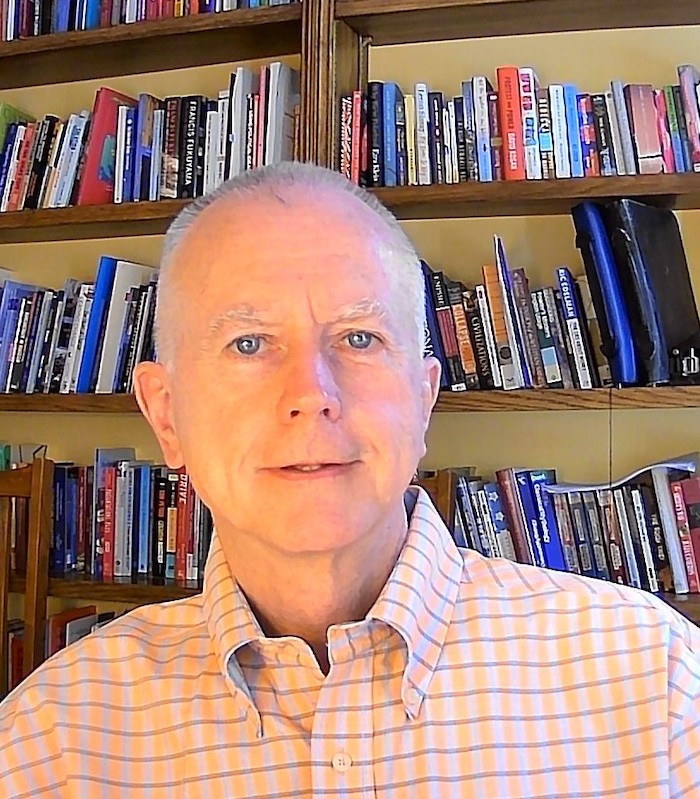
Nick Manning, a Dupont Circle resident, is the retired head of the Governance and Public Sector Management group at the World Bank and former head of the Public Sector Management and Performance Division at the Organisation for Economic Co-operation and Development.
About commentaries
The DC Line welcomes commentaries representing various viewpoints on local issues of concern, but the opinions expressed do not represent those of The DC Line. Submissions of up to 850 words may be sent to editor Chris Kain at chriskain@thedcline.org.
Comments are closed.