

Kimberly Perry: Critical investments are essential to protect the District’s future
Our city — our entire society — has reached a decision point. As we begin to emerge from the worst public health crisis in a century and we grapple with the undeniable epidemic of racial injustice, we must choose how to move forward. Our children cannot afford for us to return to “normal.”
U.S. Census data show that in 2019 roughly 9 out of 10 children living in poverty in the District were Black. The Black unemployment rate was over twice the citywide rate, and white families in DC had a median income of $153,300 — more than three times the Black median income, and the highest of any racial group. Then COVID-19 hit, and based on data from the Census’ Pulse Survey, in February and March 2021 roughly one-third of DC renters with children said they have no or only slight confidence in their ability to make next month’s rent or were deferring their payment — roughly three times the rate of renters without children. In effect, Black and Latino families are struggling to survive in DC while their children, more than any other demographic, are feeling the traumatic, long-lasting consequences.
Now, we have the opportunity to build a caring economy that empowers every child.
We must prioritize explicitly anti-racist policies to dismantle the white supremacist system that has caused irreparable harm to generations of Black and brown families. Our District leaders must make critical investments now to create equitable futures for our children and youth.
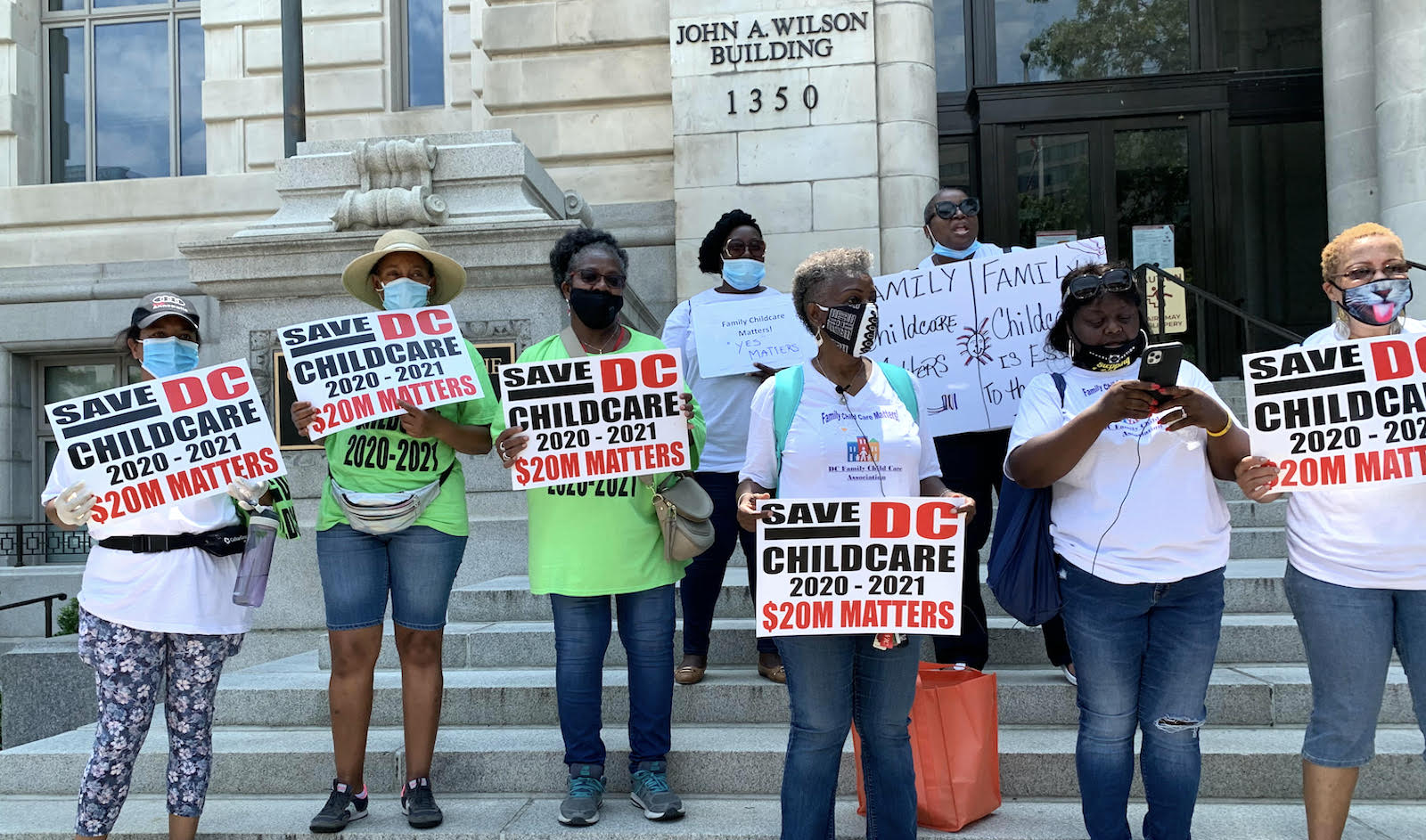
Let’s begin by dedicating resources and demonstrating respect for early childhood education — after all, science has shown that birth to age 3 is the most important developmental time for humans. To promote the best possible physical, social-emotional and cognitive outcomes for children, we must provide accessible, affordable, high-quality child care for all children.
Last year, the Under 3 DC coalition organized parents and educators to attend and speak out during Mayor Muriel Bowser’s budget forums. One District woman, Zerafina, shared her story, which was published in the Spanish newspaper El Tiempo Latino. Zerafina’s granddaughter, now 2 years old, could benefit from early childhood education — yet her parents, although they work hard, struggle to find affordable and safe child care for their daughter.
The District must deliver a meaningful commitment to the people and programs that promote evidence-based, high-quality opportunities for infants and toddlers. At the same time, the District must offer accessible training to early childhood educators and pay them a wage indicative of the importance of their work.
We must create an equitable educational system that strengthens students all day long.
Virtual learning has been tough on most students, but the challenges for Black and brown children are amplified. A Washington Post investigation exposed alarming racial disparities over who is returning to classrooms in the District: “Across the country, Black and Latino communities have been hit hardest by the virus, and many of these families have told their school districts they do not feel safe sending their children back to school buildings. In DC, families in the poorest ward rejected offers for an elementary school spot at twice the rate of families in the wealthiest one, according to city data.”
Almost 1 in 5 U.S. households lack the technology and internet connection required for online school, and the majority of them are low-income families and people of color. These are the same children who have faced the most obstacles to fully engage in virtual learning and are most likely to experience learning loss. Before COVID, the District failed to provide sufficient out-of-school time opportunities. In fact, nationwide data showed the District among jurisdictions with the highest percentage of children without supervised care.
One ready solution to this problem is partnership between schools and out-of-school-time (OST) programs, which have already adapted their models to operate safely in a pandemic environment and have excellent track records of student engagement. Our organization’s Out-of-School Time Coalition has worked to facilitate communication and relationships among OST providers, District and school-level education leaders, and communities to promote greater access to these excellent opportunities for more families.
Likewise, it’s essential that we focus on economic justice for families by addressing housing insecurity. We can’t afford to add more families to the already burdened homelessness system. Many DC working families must pay a high percentage of their income just to keep a roof over their heads. More than half a million households in the region with incomes below $54,300 — including earners with full-time jobs such as nursing assistants, substance abuse counselors and paramedics — pay more than 30% of their income toward their rent or mortgage. Even when they are working full-time or multiple jobs, stable, affordable housing is unattainable for many.
Finally, the District must provide comprehensive physical and mental health care. More than any other demographic, Black and brown children and youth are experiencing trauma caused by the stress of systemic racism and amplified by the ripple effects of the pandemic. When a parent loses a job, the potential for child mistreatment rises, as does the risk of lacking enough money for food, rent and other necessities. The stress can be overwhelming for any family. The U.S. Centers for Disease Control and Prevention reports that Black high school students have the highest prevalence estimates for attempted suicide. Middle school girls of color have particularly high rates of reported suicide attempts.
Now is the time to stop these trends and provide comprehensive health support to families to mitigate the likelihood of lifelong negative physical and mental health effects on our children and youth. The District must strengthen the access to critical health supports such as school-based health services, the Supplemental Nutrition Assistance Program (SNAP), Medicaid, DC Healthy Families, the Immigrant Children’s Program, and the Women, Infants and Children (WIC) Program.
We can’t dismantle structural racism without addressing how it blocks economic opportunity for Black and brown children, youth and their families. Let’s work together to strengthen student outcomes and ensure a successful transition from school to career while demanding equity, transparency and accountability from our elected officials.
Kimberly Perry is executive director of DC Action.
About commentaries
The DC Line welcomes commentaries representing various viewpoints on local issues of concern, but the opinions expressed do not represent those of The DC Line. Submissions of up to 850 words may be sent to editor Chris Kain at chriskain@thedcline.org.
Comments are closed.