


jonetta rose barras: The underbelly of DC’s violence crisis
District officials, including DC Council members, may believe they have helped design an effective public safety model, replete with interrupters, interventionists, and a sprinkling of police officers on the streets. However, this prototype — whatever the ratio of specific ingredients — is essentially a political bromide, treating the symptoms while lacking the depth and breadth for a long-term cure.
In fact, government officials and child welfare experts suggest the number of violent juveniles may be on the rise in DC as a result of so many children having experienced unresolved multiple traumas or being reared in homes with parents suffering from generational trauma. There may be a disagreement over the actual diagnoses for what ails these youths, but there seems to be consensus that they need services beyond the traditional kinds of treatment being provided in DC schools.
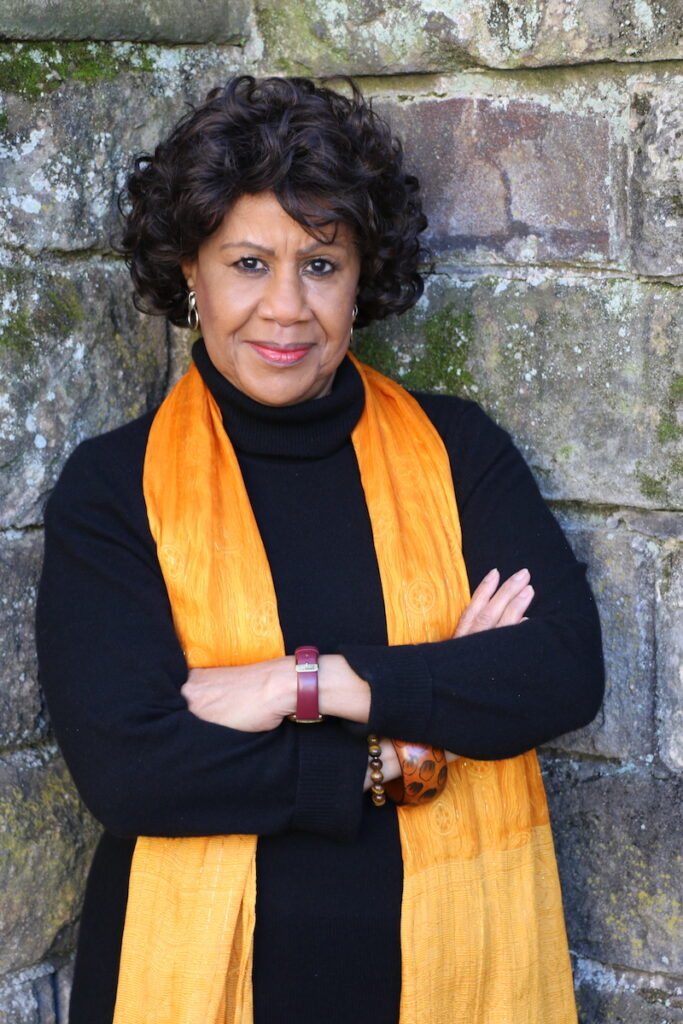
“Very complex things are going on in DC that take a deeper understanding and discussion,” said Christian Greene, a child welfare expert and licensed independent clinical social worker based in DC.
District residents have reacted already with alarm to the rising violence, including youth-involved carjackings. A recent Washington Post poll of 904 residents between Feb. 2 and Feb. 14 revealed that 36% of the respondents listed crime as their top issue. Another 30% indicated that they do not feel safe in their neighborhoods; many of those individuals live in wards 7 and 8.
“We’re seeing kids with what we call oppositional defiant behaviors. Behaviors that if untreated, they begin to basically get over into the [Department of Youth Rehabilitative Services] population. [They start] committing crimes and things of that nature,” said Robert Matthews, executive director of the DC Child and Family Services Agency.
“It’s really violent behaviors that we’re seeing more of versus on the mental health side to where it’s not your schizophrenic [diagnosis]. It’s not those kinds of things,” he continued.
Matthews offered this dark vision when he and I spoke in October after Judith Meltzer, the court monitor for the LaShawn A. class-action lawsuit against DC, decried the inadequacy of mental health services available to children, including those in foster care or otherwise involved with the child welfare system. Matthews told me then that he and the directors at DYRS, the Department of Behavioral Health (DBH) and the DC Health Care Finance Agency were discussing opening a residential psychiatric facility in the city for such youth.
“It’s more severe oppositional defiant behaviors we’re seeing, to where they can’t be successful in a traditional placement. They need more of a structure — almost like a locked facility in order to treat them — and then think about other considerations after they’ve completed their treatment plan,” Matthews added.
Experts say children with ODD, as it is often called, exhibit a persistent pattern of inexplicable anger, irritability, vindictiveness and defiance; they frequently refuse to comply with rules.
“Our children are desperately crying out for help. They don’t feel they are being heard, so they escalate their behaviors,” said Greene, who disagreed strongly with the government’s broad-brush diagnosis of oppositional defiant behavior among the many DC children who have suffered multiple traumas.
Some children have become “fearless” because “they have lived so close to death,” added Greene.
A study conducted by the National Institute for Criminal Justice Reform in collaboration with the Criminal Justice Coordinating Council, the Metropolitan Police Department and other law enforcement agencies from Jan. 1, 2019, through Dec. 31, 2020, concluded that only about 500 individuals were responsible for much of the violence in the city. Over the two-year period, at least 92% of the homicide victims and suspects and 88% of the nonfatal shooting victims and suspects were male; 96% of victims and suspects were Black; and approximately 66% of homicide victims and suspects and 64% of nonfatal shooting victims and suspects were between the ages of 18 and 34.
If we as a city fail to address the mental health issues of youth, we can expect even more violence when they come of age.
Individuals exposed to violence can and often do become violent, sometimes in an effort to protect themselves. Consequently, it’s a mistake to limit the problem entirely to only 500 individuals. Victims can become perpetrators.
Between 2020 and 2021, the arrests of juveniles by MPD for violent crimes — homicide, aggravated assault, robbery, assault with a deadly weapon, and sex abuse — increased by 14%. More specifically, juvenile arrests for kidnapping went from zero in 2020 to seven in 2021; arrests for robberies increased from 252 to 290. And drug arrests increased by 21%.
The number of carjackings by juveniles has exploded, officials say. At a press conference last month, MPD Chief Robert Contee seemed as baffled as most DC residents by the age of the perpetrators, describing them at one point as “just children.” Recently a 14-year-old girl was arrested for her alleged role in a string of armed carjackings. Last year two girls, 14 and 15, were found guilty in the murder of a 66-year-old pizza delivery driver whose car they attempted to steal. Juvenile carjackings are up across the country.
I asked DBH Director Barbara Bazron how serious is the increase of youth with oppositional defiant behavior and is it a factor in the rise of general violence, gun violence and even carjackings in the city. I also asked whether, aside from placing youth in residential facilities, there is anything that can be done.
I didn’t get clear answers.
Instead, her spokesperson Derrick King sent me an email filled with bureaucratic gibberish — the kind that’s all too common on government websites. It underscored a belief common among residents that DC functionaries aren’t genuinely concerned with the people they are supposed to serve or the problems they are being paid to resolve.
I shouldn’t be surprised. In 2020, during the opening chapters of the pandemic, I asked Bazron whether her agency had looked at the connection between COVID-19 and the overall rise in crime. She told me then, “We haven’t done any research on the causal relationship.”
Advocates to whom I spoke suggest that research still hasn’t been done. What is the city waiting for?
How can officials possibly claim they are taking a public health approach to addressing violence if the city isn’t conducting the kind of granular research important to understanding what is happening in affected communities and to people, particularly youth, who live there? Surely being able to quantify and characterize the effects of COVID-19 on the mental health of children and youth is the most basic requirement.
The U.S. Centers for Disease Control and Prevention has in the past two years connected trauma with the pandemic. Earlier this year, it released a report documenting the rise in emergency room visits by children and youth between the ages of 5 and 17 suffering various mental health conditions, including anxiety, eating disorders and obsessive-compulsive disorders.
Mayor Muriel Bowser and council members are expanding the school mental health program on the basis that it addresses the needs of children and youth. It doesn’t, said Greene. “The goal of that therapy is to accomplish an IEP [individual education plan] related to schools.
“When they’re living in the world, what do we do for that?”
Youth themselves have made it clear there aren’t enough clinicians and psychiatrists available to them. That was captured by Washington Informer reporter Sam P.K. Collins, who attended a recent forum sponsored by Attorney General Karl Racine. At that event, Theodore Kendrick, a Roosevelt High School student, asserted that mental health plays a huge role in juvenile crime.
“I know if I was stressed out, seeing my mother going through something and I didn’t know how to survive, I would go out and do whatever I could. And COVID-19 doesn’t make things better,” Kendrick said in the article.
The causal relationship between crime and COVID should be loud and clear to Bazron and other government officials. But they aren’t listening, as Greene asserted.
If DC elected officials continue to provide ineffective, superficial quick fixes instead of reaching beneath the surface to understand the nature of the violence problem that confronts the city, the noise will only get louder and the behaviors more dangerous. How that gets played out is captured by the oft-quoted but obviously little-understood adage “Hurt people hurt people.”
jonetta rose barras is an author and freelance journalist, covering national and local issues including politics, childhood trauma, public education, economic development and urban public policies. She can be reached at thebarrasreport@gmail.com.
Comments are closed.