

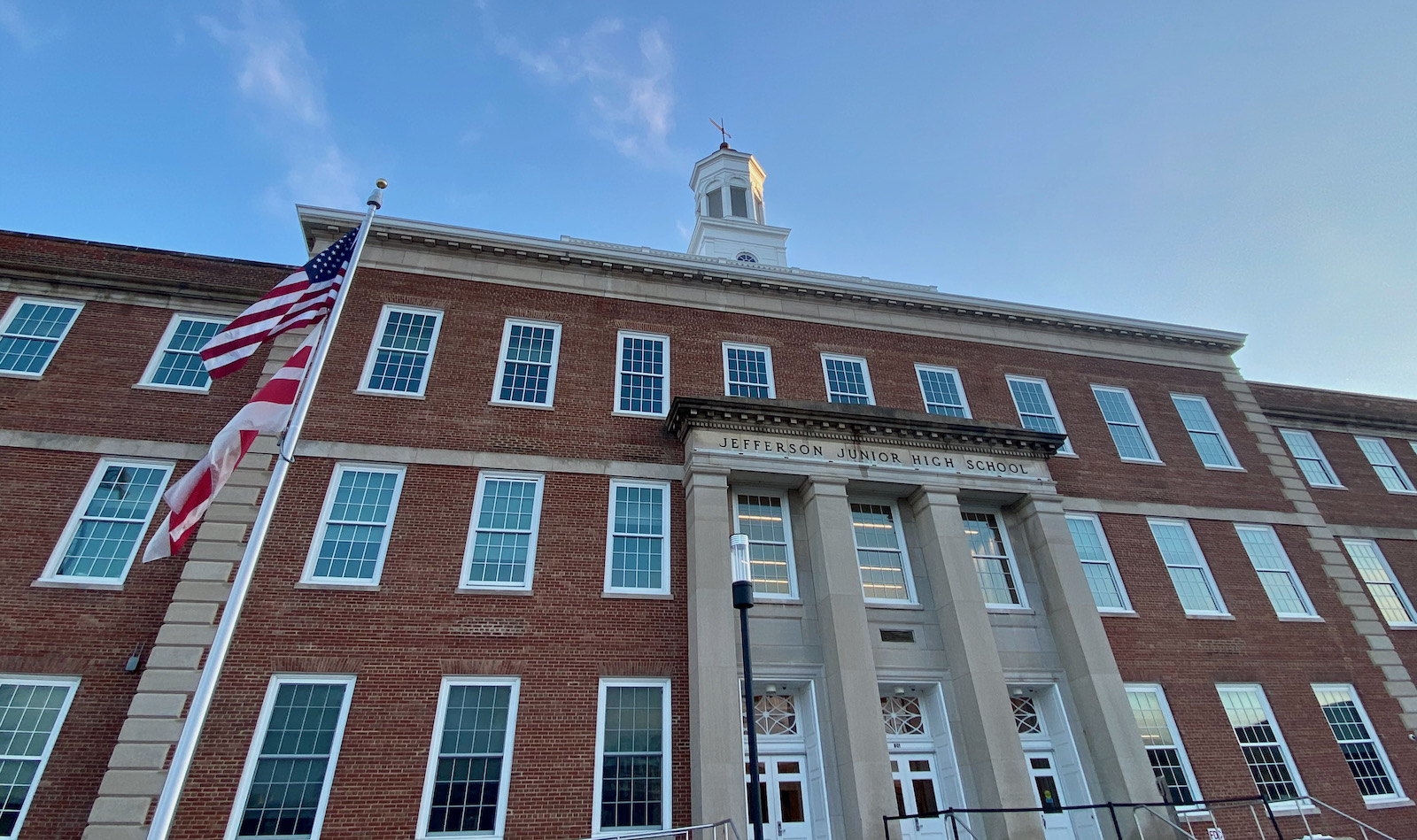
jonetta rose barras: Elected officials’ outrageous treatment of DC’s children and public schools
Even before Mayor Muriel Bowser submits her fiscal year 2024 budget proposal, a full-blown fight has kicked off over spending for public education in the District. This may seem like the annual skirmish between parents, teachers, school administrators, DC Council members and the executive, but this time appears particularly egregious.
Based on initial budgets for the 116 traditional public schools across the city, as many of 67 of them could experience cuts, according to testimony at a recent council hearing on DC Public Schools (DCPS). That may adversely affect programs and services such as special education and English as a second language.
Don’t forget that academic achievement in many schools dropped because of the pandemic, now nearly three years old. Teachers and students are still struggling to make up for the decline.
Disturbingly, the reduced allocations to individual schools could occur even as spending on DCPS’ central administration and the Office of the Deputy Mayor for Education (DME) appear to be growing. Consider that last year, 31 positions in the latter agency had annual salaries in excess of $100,000. Another 19 were paid between $99,000 and $79,000, according to performance oversight documents shared with me but expected to be posted Friday to the DC Council’s website.
Paul Kihn, the deputy mayor, got paid $231,469 last year. The head of workforce investment received $182,130. The generosity to people who mostly run around attending Zoom meetings and punching keys on a computer doesn’t stop there. A special assistant received $138,184 while a policy adviser received $134,661.
Mary Levy, a longtime expert on DCPS financing and budgeting, told the council that based on her analyses over the past 40 years, many school budgets have been “unstable, inequitable, inadequate for what is expected of them, and hard to understand.”
“Unfortunately, nothing has changed in the FY 2024 initial allocations,” Levy added.
How is it that a city that spent $2.8 billion for public education in 2022 can’t give schools and children what they need and deserve? Is the problem primarily about priorities — putting functionaries and political appointees over children?
Bowser may have thought that her announcement of a 5.05% increase in the base uniform per pupil funding would win her friends and fans. Things soured almost immediately after she, through DCPS Chancellor Lewis Ferebee, released initial budgets for individual schools that were as much as 5% less than those institutions’ current spending allotments.
What she gave with one hand, she took back with the other. Bowser is expected to formally submit her Fiscal Year 2024 Budget and Financial Plan later this month. But don’t expect many major changes.
This week, more than 100 parents, educators and advocates came yet again before the DC Council Committee of the Whole for another public hearing — this time conducting performance oversight of the District’s myriad education agencies including DCPS, the DME, the DC Office of the State Superintendent of Education, the DC Public Charter School Board, the DC State Board of Education, the Office of the Student Advocate, and the Ombudsman for Education.
Participants who testified decried the condition of school facilities, the lack of pay equity for childcare teachers, the quality of food service, vacancies for mental health counselors and inconsistent transportation for special needs students. Renica Robinson, single parent of two children, said her special needs child had been getting used to boarding the school bus independently. Then came multiple changes with “different drivers each day. We have had to stand in the cold for two hours” waiting for the bus to arrive.
“It’s not fair. We do not have consistency for our children. We should have a contingency plan,” continued Robinson. “Our children should not have to suffer. We deserve better.”
This column is not a rant. Rather, it is a call to action.
Taxpayers — and we all pay taxes of some kind or another — should demand Bowser stop playing politics, relying on propaganda and what amounts to a pea and cup trick or some other kind of shell game in her interaction with the public. Further, taxpayers ought to demand that the mayor — in practical application and through her designated leaders — set the creation of a high-quality and equitable public education system as the District’s highest priority.
Without a proper education, what socioeconomic heights can DC’s children be expected to reach as adults?
At last week’s public hearing on school budgets, Ferebee and Kihn tried to justify their initial budget marks. Kihn asserted that 72 schools would see increases. Only 44 schools would receive reductions — not the 67 claimed by advocates and DC Council Chair Phil Mendelson.
Kihn offered that the discrepancy in the totals may have been caused because others were including schools that had received “one-time funding. They were told that the money they were getting was one-time spending.”
So, asked Ward 3 Council member Matt Frumin, “It’s not a cut because it was one-time funding?”
See what I mean by pea and cup interactions?
“They are shameless about gaslighting what they’re doing,” Mendelson told me after the public hearing last week. His anger seemed to rise with each minute of the telephone interview.
“What they’re doing is just wrong. It’s wrong on multiple levels,” he continued, adding that “Ferebee and Bowser have the opportunity to change the future for poor Black kids [but] they’re squandering it.”
Mendelson said he and his team performed a very “refined analysis” of the cuts.
Separately, Levy also conducted a thorough examination of the numbers. She found that at least 53 elementary schools could experience a total of $17.2 million in cuts. At least nine middle schools would get reductions of $4.1 million cumulatively. Even some schools that have projected population increases may be affected unless initial budget marks are changed.
For example, “43 schools lost funding for special education students,” continued Levy, while “40 of them are projected to have more special education students or no change (only a few), raising serious questions about services to these highly vulnerable students.”
Near the end of last week’s hearing, Ferebee offered this nugget: “There are some needs raised today that we are happy to be responsive [to].”
What does that mean? And should anyone believe that promise, especially since the mayor’s initial DCPS budget appears to violate the Schools First in Budgeting Emergency Amendment Act of 2022? That legislation, passed in December, set an early compliance date of Feb. 9 for public release of initial budget allocations. The permanent version of the bill is expected to take effect on March 16, according to the council’s website.
Schools First mandates that DCPS budgets be “established first based on each school’s previous year’s budget and other factors, with the remainder of requested funds allocated between the School-Wide, School Support and Central Administration departments.” That law also set the standard that the “school’s budget will be under the control of the school’s principal.”
It’s right there in the law that individual schools must not receive less funding than they did the year before. Parents, teachers, staff and students at the many schools initially seeing reduced funds have good reason to shake their heads in frustrated disbelief.
It’s not surprising that Bowser and her team have thus far ignored the law, making the spurious claim that passage came too late in the process of developing school budgets. I have written countless times about their propensity to act as though the law doesn’t apply to them.
Still Mendelson told me that he is “hopeful [the administration] will fix this,” although he admitted that he is “doubtful they will fix it fully.”
What is wrong with him? OK. Maybe this is a rant.
When I asked Mendelson whether he was prepared to take the mayor to court by filing a lawsuit, he said he doubted that such an endeavor would be successful, since the submission deadline had already passed. It is not the first time the head of the legislative branch has chosen not to defend the power and authority of his institution.
His failure to act, however, doesn’t just injure the legislature. It harms the entire city and sets a bad example for youth who closely watch the lawlessness of the adults around them.
I also asked whether he was prepared to cut excessive spending in the DCPS central office to find the minimum $20 million needed to offset the reductions. “If I cut all the instructional superintendents, that won’t get me $20 million,” he told me.
“Where would I cut?”
Maybe he could start by erasing the deputy mayor for education’s office. In many ways it duplicates the Office of the State Superintendent of Education. And eliminating some of those instructional superintendents within DCPS may not be a bad idea.
Levy found that the number of full-time equivalent (FTE) employees on the central office payroll (no vacancies are included) has reached an all-time high as of January 2023.
“The number of central office FTE staff performing the same functions that DCPS now performs has risen from 516 in 1981, when we had 95,000 students to 626 in 2007, when we had 52,000, and as of January of this year to 859 for about 50,000.
“Why do so many schools suffer losses while central offices grow so much?” asked Levy.
Unfortunately, it’s not a new question. Can we get a credible answer this time?
jonetta rose barras is an author and freelance journalist, covering national and local issues including politics, childhood trauma, public education, economic development and urban public policies. She can be reached at thebarrasreport@gmail.com.
I have the same question Ms. Levy does and this one too: How is it that DC’s mayors have had control of DCPS budgets (which they always had) and of the agency itself for the past fifteen years and they STILL can’t get the budgets right? Sounds like its the mayors who need some schooling in that all important subject.