


Hameed Girowal: Two years later, Afghan allies have found support in DC
Washington, DC, has been welcoming to Afghans who were forced to flee their homes two years ago as U.S. troops abruptly departed from their home country. Those who escaped found support in communities across the country, but especially in the Washington metropolitan area, which has a large Afghan community that provides the comfort of familiar food, culture and language through local neighborhoods, stores and restaurants.
There is still a great humanitarian need to finish the resettlement that’s underway. Congress, President Joe Biden’s administration and, to a degree, Washington area residents and the American public all can act to help change the circumstances of the many thousands of Afghans still seeking refuge in the United States and many more who are here but remain in legal limbo.
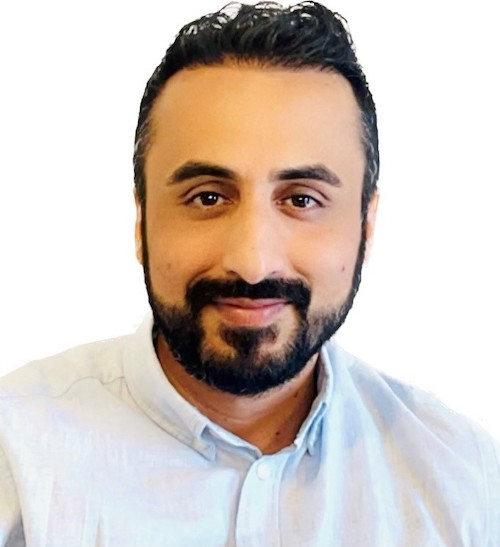
I was born in Kabul. For 10 years, I served as an interpreter and in various other roles for U.S. Department of Defense contractors before joining family in Northern Virginia in 2017 with a Special Immigrant Visa. A year later, I took a job with Lutheran Social Services of the National Capital Area, where I still work, bridging my personal experience and professional skills to help others fleeing violence and persecution.
Aug. 15, 2021, was among the worst days of my life. We had been preparing to support a surge of new families who would need our help as U.S. forces withdrew from Afghanistan. I watched with horror the chaos at the Kabul airport as the Taliban moved into the city with surprising speed. People like my sister, a government official in Kabul, left everything behind that day to escape. She left the life she had built and her career of service in improving Afghanistan. Suddenly she was a refugee with nothing. My three other sisters and their families had no way to leave.
Those who escaped to the U.S. found support in communities across the country. While improving their English and orienting themselves to a new culture, Afghan allies — those who assisted the U.S. government during two decades of war in Afghanistan — initially received public and private support from community partners, which helped them begin to acclimate and transition to long-term housing.
In the best of circumstances, Afghans who have moved to the U.S. face many challenges: learning a new language, finding a job that even remotely fits their skills and training, and knowing that they can never go home. People who were doctors, lawyers, or translators like me, often initially take survival jobs, driving for ride-hailing services or filling similar jobs that are far from matching their education and skills while they work to obtain professional credentials that will allow them to be more fully employed here.
Among those who remain in Afghanistan, many are still in hiding, fearing retribution for their assistance to U.S. military, government or aid programs. Others wait in third countries to be resettled to the U.S. and elsewhere. The numbers are hard to confirm, but conservative unofficial estimates are that tens of thousands of Afghan allies still want refuge.
Two years after the exit from Afghanistan, the need is no less than it was, and there is still much we all can do.
Congress should pass the Afghan Adjustment Act, which has strong bipartisan support. It would allow Afghans who supported the U.S. during the war to apply for legal permanent residence.
The U.S. should lead the way globally to pressure the Taliban on human rights issues.
And the American public, and particularly residents of the Washington area, can support, however they are able, regional settlement agencies in aiding Afghan families who are already here.
The urgency is no less because time has passed. We can all help support the many thousands of Afghans who supported Americans during the war at great personal risk, and assist these loyal, skilled and hard-working new residents in building their lives here.
Hameed Girowal is executive director of refugee and immigrant services for Lutheran Social Services of the National Capital Area. He joined the organization in 2019 shortly after relocating to the United States in 2017 through the Special Immigrant Visa program.
About commentaries
The DC Line welcomes commentaries representing various viewpoints on local issues of concern, but the opinions expressed do not represent those of The DC Line. Submissions of up to 850 words may be sent to editor Chris Kain at chriskain@thedcline.org.
Comments are closed.