


Khari Brown: The Supreme Court has failed us. Mentorship can save us.
First-time college students this fall will be the final class admitted in the era of affirmative action. Theirs could be the most diverse class we’ll see in a while. But, if we act quickly, we have a shot at mitigating the damage for all the classes that follow them.
The news cycle has largely moved on from the Supreme Court’s decision to ban race-conscious admissions. But we must not lose focus. It’s more important than ever to ensure that Black and Latino students — particularly first-generation students and those from low-income communities — get equal access to college degrees.
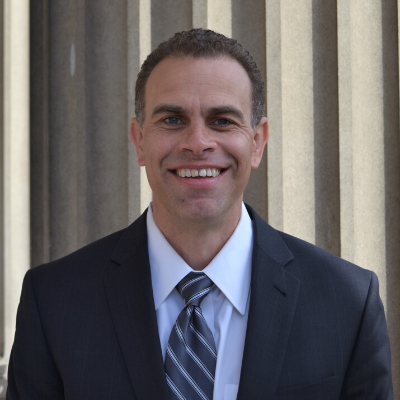
Affirmative action changed the lives of generations of Black and Latino students, including me. In my case, it helped me get into Tufts University, where I received undergraduate and graduate degrees that kick-started my career. In my work at Spark the Journey, a nonprofit organization in DC that provides mentorship and a community of support to young people of color, I witnessed the power of affirmative action countless times when acceptance letters rolled out each spring. For 50 years, affirmative action served as a counterweight to the systemic barriers that historically prevented students like us from attending competitive colleges and fulfilling our potential.
In DC, where 81% of public school students identify as Black, Hispanic, or two or more races, that counterweight is sorely needed.
Next year, we can expect Black and Latino college enrollment to drop around the country. We know this because it has happened before, in places that previously banned affirmative action. After a ban that the California public university system enacted in 1996, Black and Latino enrollment dropped by nearly 50%. Only now, 27 years later, have those campuses begun to return to the baseline diversity figures that they’d established in the mid-1990s.
We can also expect the consequences of decreased enrollment to cascade in the years to come, contributing to lower college completion rates for Black and Latino students, lower incomes, and fewer Black and Latino people in leadership positions. All of us, regardless of race, will suffer from the dearth of diverse perspectives in classrooms, offices and boardrooms.
Such a future is far too likely. We must urgently turn our attention to new solutions. One proven strategy that deserves more attention is mentorship.
In the 23 years that I’ve led Spark the Journey, I’ve seen the impact that mentorship can make on Black and Latino students’ journeys to college. Though our program model is built on formally matching volunteers with young adults, any type of mentorship — formal or informal — can be valuable.
Mentors make a difference in three critical ways on the path to college enrollment. They provide academic coaching as young adults navigate the challenges of school. They also offer guidance on college applications, which is particularly useful for first-generation college students. Lastly, they offer personal support, serving as friends and cheerleaders for any part of life that a young person may want to talk about. Black and Latino students from low-income neighborhoods face unique barriers to college success, and they demonstrate enormous courage in pursuing degrees without the same resources as their wealthy, white peers. When you’re up against that kind of systemic obstacle, having someone in your corner is priceless.
Make no mistake, no single mechanism can fully replace affirmative action. We need a number of strategies to tackle campus diversity, including eliminating legacy admissions and testing requirements and prioritizing the recruitment of students from low-income households.
But recent research has demonstrated that even when we control for things like test scores, college admissions favor the rich — who are overwhelmingly white. So we must continue to come at the issue from every angle we can.
Mentorship provides a powerful opportunity for all of us to contribute to a more level playing field. Anyone can become a mentor, whether formally through a volunteer role or informally in your community.
Most importantly, mentors are needed right now, as a new school year gets underway. That way, students will be able to reap the benefits when college applications open in just a few months’ time. Together, we can all do our part to make campuses as diverse as they should be.
Khari Brown is president and CEO of Spark the Journey. Formerly known as Capital Partners for Education, the DC-based nonprofit provides mentorship and a community of support for young adults in the Washington area to chart their own path to achieving college and career success.
About commentaries
The DC Line welcomes commentaries representing various viewpoints on local issues of concern, but the opinions expressed do not represent those of The DC Line. Submissions of up to 850 words may be sent to editor Chris Kain at chriskain@thedcline.org.
Comments are closed.