


Julie Camerata: Three intentional steps to live up to our promise to DC’s students with disabilities
When the federal government enacted the Individuals with Disabilities Education Act (IDEA) in 1975, this landmark legislation was premised on what was then a radical idea: that all students, including students with disabilities, are entitled to learn at grade level and capable of doing so.
That spirit is backed by research: 9 in 10 students with disabilities can perform at grade level, alongside their non-disabled peers, when receiving high-quality instruction and needed accommodations.
But decades later, our U.S. educational system still prioritizes compliance over creativity and risk mitigation over rigor. That’s especially true in DC, where students with disabilities trail their counterparts in major cities such as Miami, Boston, New York and San Diego. Just 10% of DC students with disabilities perform at grade level in English and only 8% do so in math, according to the 2023 statewide assessment results.
Test scores, however, aren’t the only measure on which DC underperforms. We place students in non-public schools at an alarming rate — three times the national average — instead of providing resources within the school building to meet student needs. When DC students with disabilities do learn in their public schools, they are less likely to be in an inclusive setting, learning alongside non-disabled students.
This is the bad news.
The good news is that DC doesn’t need to revolutionize how to teach students with disabilities in order to improve the situation. DC just needs to do what research and experience tell us works. At the DC Special Education Cooperative, our team has identified three practices that will have an outsized impact on student outcomes.
First, teach students with grade-level content. When students learn grade-level content, they are more likely to achieve. That makes sense, but schools know this requires a lot of intentional planning and layers of support. We embrace a framework for teaching and learning called Universal Design for Learning (UDL), which bases classroom practice on how the brain learns and ensures multiple access points to learning. This allows students to learn with assistive technology and to show mastery of the material in different ways.
Second, students need access to evidence-based interventions to get extra help. Especially coming out of the pandemic, many students, disabled or not, need extra time and support to close skills and knowledge gaps. But doing so in a quick, equitable manner requires leaders who will select proven interventions like Reading 180 that have been rigorously studied to show literacy improvements among students; continuously use data to closely track what students know and how they are progressing; and set up schedules so that extra supports occur in addition to, not instead of, regular coursework.
Finally, schools need to support every student in identifying what they want to do after high school in order to ease the transition. That support should start in middle school. In practice, this means that schools ought to have firm community partnerships with entities that provide training, employment and postsecondary education; strong counseling programs for all students; and a school-based advocate for students. With these in place, students can both dream bigger and achieve more as far as selecting the right college, university or career path.
To those not steeped in the day-to-day of DC schooling, it’s likely surprising — if not shocking — both that special education legislation wasn’t codified until the 1970s and that the basics of teaching and learning aren’t being delivered equitably to DC’s students with disabilities.
But it’s time to take that shock and use that energy to implement programs and practices borne out by experience and research. It’s time to provide high-quality teaching and learning to all DC students.
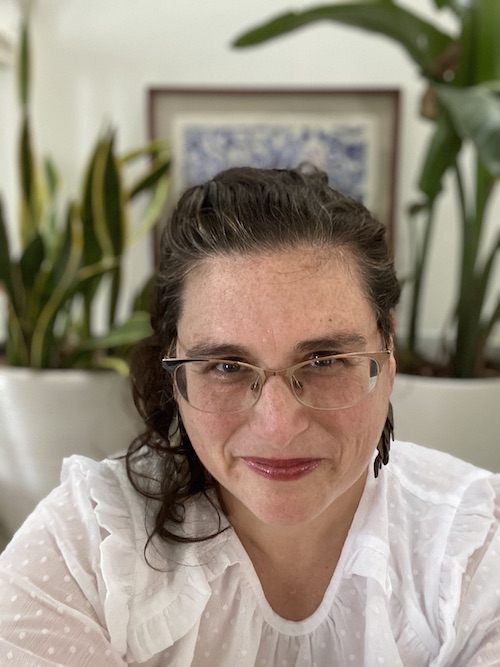
Julie Camerata is executive director of the DC Special Education Cooperative.
About commentaries
The DC Line welcomes commentaries representing various viewpoints on local issues of concern, but the opinions expressed do not represent those of The DC Line. Submissions of up to 850 words may be sent to editor Chris Kain at chriskain@thedcline.org.
Comments are closed.