

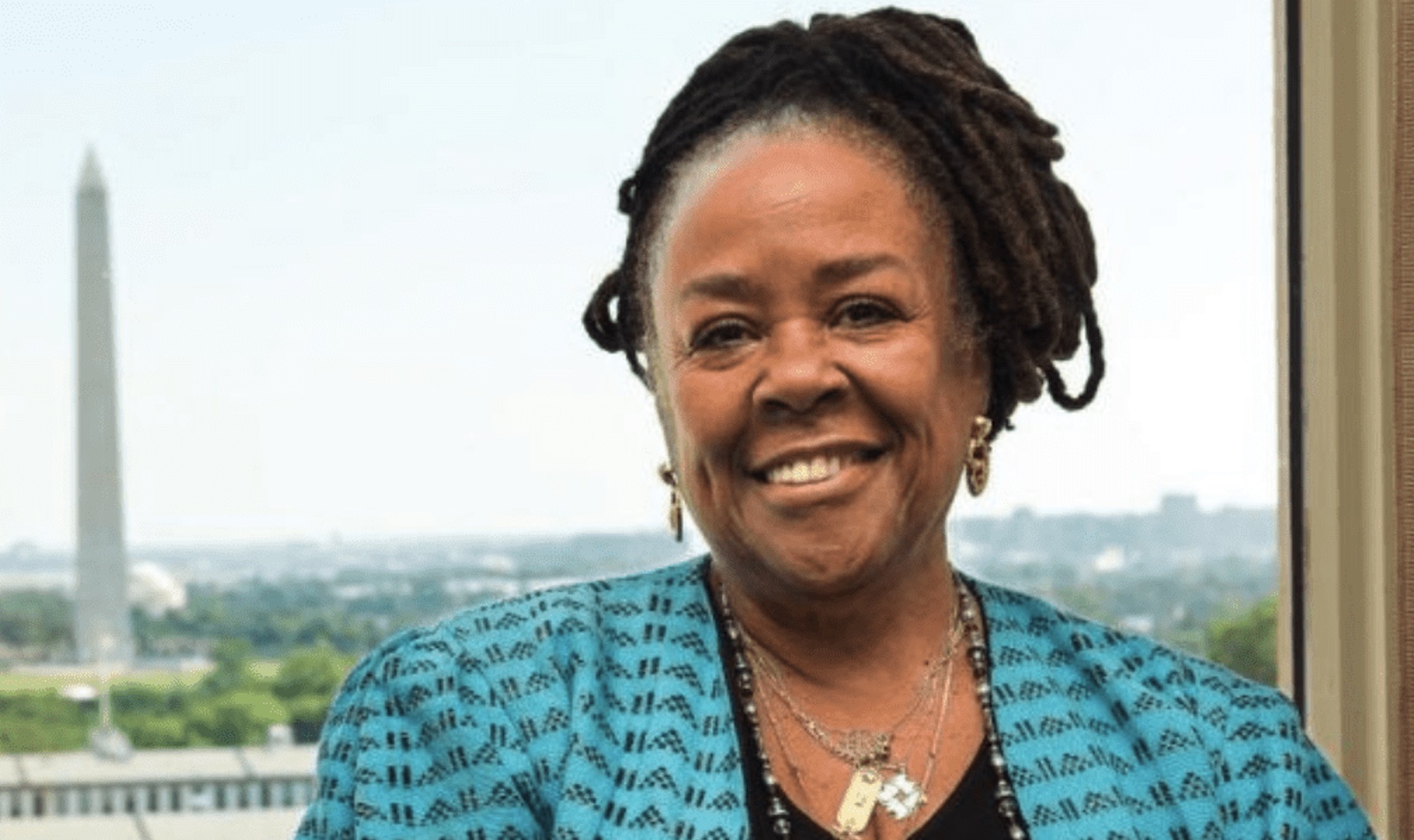
Linda Moore: The recognition of education as social justice is Ramona Edelin’s legacy
This month marked a formal goodbye to Dr. Ramona Edelin, my dear friend and an indefatigable fighter for social justice whose memorial service was held recently at Shiloh Baptist Church.
A keen student of the work of W.E.B. Du Bois, Dr. Edelin completed her doctoral thesis at Boston University on why he should be considered a philosopher as well as a sociologist and historian. This followed from a master’s degree via the University of East Anglia in England, after earning an undergraduate degree from Atlanta’s Fisk University, a historically Black institution from which Du Bois also received his first college degree.
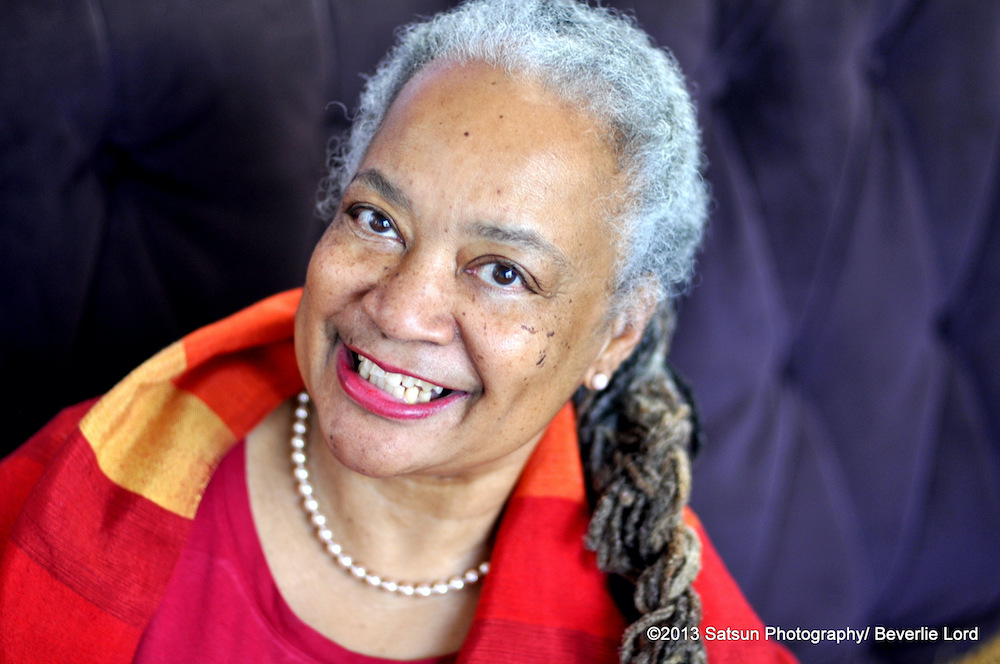
In 1895, Du Bois became the first African American to graduate from Harvard University with a doctorate. He was born into a tiny, free Black community in Massachusetts five years after the Emancipation Proclamation. He died the year of its 100th anniversary — one day before the 1963 March on Washington, at which the Rev. Dr. Martin Luther King famously and movingly spoke. Ramona fondly recalled saving up her money that summer to take the bus from Atlanta to attend the march in DC at the age of 17. “To experience that unity, and to know that we could do it and we did do it, helped to contribute to the sense of inevitability that we would be victorious in the struggle,” she told one interviewer.
The close of Du Bois’ long and productive career was the beginning of Ramona’s, who likewise was drawn to activism and the academy. With the achievement of social justice at the heart of her life and work, she was profoundly affected by her early experiences at a segregated school and by the U.S. Supreme Court’s 1954 Brown v. Board of Education judgment, which struck down the notorious segregationist Plessy v. Ferguson decision 58 years earlier. From this dawn of the civil rights era, Ramona worked tirelessly to advance social justice just as Du Bois had labored during the heartbreaking disappointment and disillusionment of the Jim Crow era, which followed the hope of the abolitionists’ hard-won victory in the Civil War.
Starting out teaching in Massachusetts at Emerson College and Northeastern University, where she established the nation’s first African American studies department in 1973, Ramona’s academic career turned to activism with her move to DC in 1977. In the nation’s capital, Ramona took various roles, including CEO of the National Urban Coalition; executive director of the Congressional Black Caucus Foundation; President Bill Clinton’s appointee to the President’s Board of Advisors on Historically Black Colleges and Universities; and executive director of the DC Association of Chartered Public Schools. I knew Ramona before this last calling, but working with her professionally cemented our friendship.
In the mid-1990s, Ramona and I were among those extremely concerned about the state of the city’s traditional public school system — in particular how it failed children of color growing up in the District’s most underserved neighborhoods. Families with means were fleeing the city-run system for suburban school districts beyond city limits or choosing private schools; meanwhile, families lacking such options were left in a troubled system that a congressionally mandated report concluded was underperforming, unsafe and inequitable.
The DC Council had just passed a school reform act, allowing charter schools — public schools run independently of the city system — to open. I was scouting for board members to give much-needed hands-on advice and assistance as I planned and opened my new school — Elsie Whitlow Stokes Community Freedom Public Charter School, named for my mother, who was my inspiration as a teacher. The vision was a pre-K through sixth grade bilingual immersion campus that would teach children what and how to learn in either French or Spanish as well as English. The reality was that we quickly had to hire suitably qualified teachers, find a facility, and establish a stable cash flow from the city to make it all work.
In those days, public charter schools were a novel concept. While DC law had established equal per-student funding for District students enrolled in chartered public schools as their traditional public school counterparts, in practice payments were often delayed, which made for quite a few sleepless nights as a charter school pioneer.
Ramona turned out to be the one who got away when it came to our board. But our loss proved to be the greater charter community’s gain as she became a powerful advocate for equality in per-student funds and access to surplus school buildings — which, due to falling enrollment and increasing high school dropout rates at the time of the charter reform, were initially relatively abundant, albeit neglected and in need of extensive renovation. As the cash-strapped District learned when to pay for our students’ public education, it sadly began selling vacant schoolhouses to deep-pocketed private developers for condos. Ramona stood at our side, championing the cause of children whose families previously lacked choice.
The transformation from those early days to today — with nearly half of all District public school students now educated at the city’s charters — is a lasting legacy of her commitment to social justice, including at our two thriving campuses.
Today, our school, which started out with a class of 35 children, growing one grade at a time until fully enrolled, has two campuses. The first is in the Brookland community, where we were fortunate enough to acquire a former seminary; the second is on East Capitol Street NE. With over 500 students, these campuses practice community service, teach students to be global citizens, and offer study tours in Martinique and Panama, as well as an International Baccalaureate program. We are a feeder to the DC International School, which specializes in French, Spanish and Mandarin immersion. Ranked high-performing by the city’s public charter school board, our school aims to provide the experience and opportunities that rival the best schools in the world but are tuition-free and accessible to all of the city’s diverse communities, from the long-established to newly arrived immigrants.
There is a long through line in Ramona’s life, from her teacher and librarian mother — who was the first woman to obtain a degree in library science from Columbia University — to Ramona’s involvement in the struggle for civil rights, building on the groundbreaking work of her revered Du Bois, co-founder of the NAACP and editor of its monthly journal. As professor of economics, history and sociology at Atlanta University and the author of such scholarly classics as The Souls of Black Folk and Black Reconstruction in America, Du Bois blazed a trail that Ramona and others followed, standing on his shoulders to correct social injustices.
As a thinker, Du Bois developed the concept of double consciousness — how one feels inside versus how the world sees us. This was echoed by Ramona’s coining of the term African American in 1988.
Ramona liked to quote Du Bois’ prescient prediction that “the problem of the Twentieth Century is the problem of the color line,” and she would often add “it’s up to us to be sure that’s not the problem of the 21st century.” We honor Ramona by taking her work for social justice forward. With her lasting legacy as inspiration, our school has created the Founder’s Award for Excellence and Community Service, the first of which will be awarded to Ramona posthumously at this year’s graduation ceremony.
Linda Moore is the founder of Elsie Whitlow Stokes Community Freedom Public Charter School.
About commentaries
The DC Line welcomes commentaries representing various viewpoints on local issues of concern, but the opinions expressed do not represent those of The DC Line. Submissions of up to 850 words may be sent to editor Chris Kain at chriskain@thedcline.org.
Comments are closed.