

jonetta rose barras: Why don’t DC officials already know the cause of gun violence?
I asked myself that question when DC Council Chairman Pro Tempore Kenyan McDuffie and eight of his colleagues introduced the Center for Firearm Violence Prevention Research Establishment Act of 2019. Were they suffering group confusion or engaged in political posturing, I wondered?
Why had they endorsed earlier this month the use of $6 million by Mayor Muriel Bowser and Attorney General Karl Racine for so-called violence prevention, if they didn’t know the cause for the uptick in murders?

Why had they passed the Neighborhood Engagement Achieves Results (NEAR) Act of 2016, if they had not conducted significant research? That law mandated the creation of an Office of Neighborhood Safety and Engagement “to identify, recruit, and engage individuals determined to be at high risk of participating in, or being a victim of, violent criminal activity.” It established the Office of Violence Prevention and Health Equity “to utilize public health methods to halt the spread of violence” and amended the Homeland Security, Risk Reduction, and Preparedness Amendment Act of 2006 “to reestablish the Comprehensive Homicide Elimination Strategy Task Force.”
Are McDuffie and his colleagues proposing the research bill in response to their concerns that the mayor hasn’t implemented aspects of the NEAR Act with fidelity? Is that why they want to outsource research to a third party? Or, are they worried the public might perceive them as not doing enough to stop the murders?
“I spent a lot of time doing actual research in best practices and solutions, which is how we came up with the NEAR Act,” McDuffie told me during a polite but tense conversation about the redundancy of his legislation and about his political motivations. He said the center would “build on” previous work. “I don’t think we have figured out all of the solutions.”
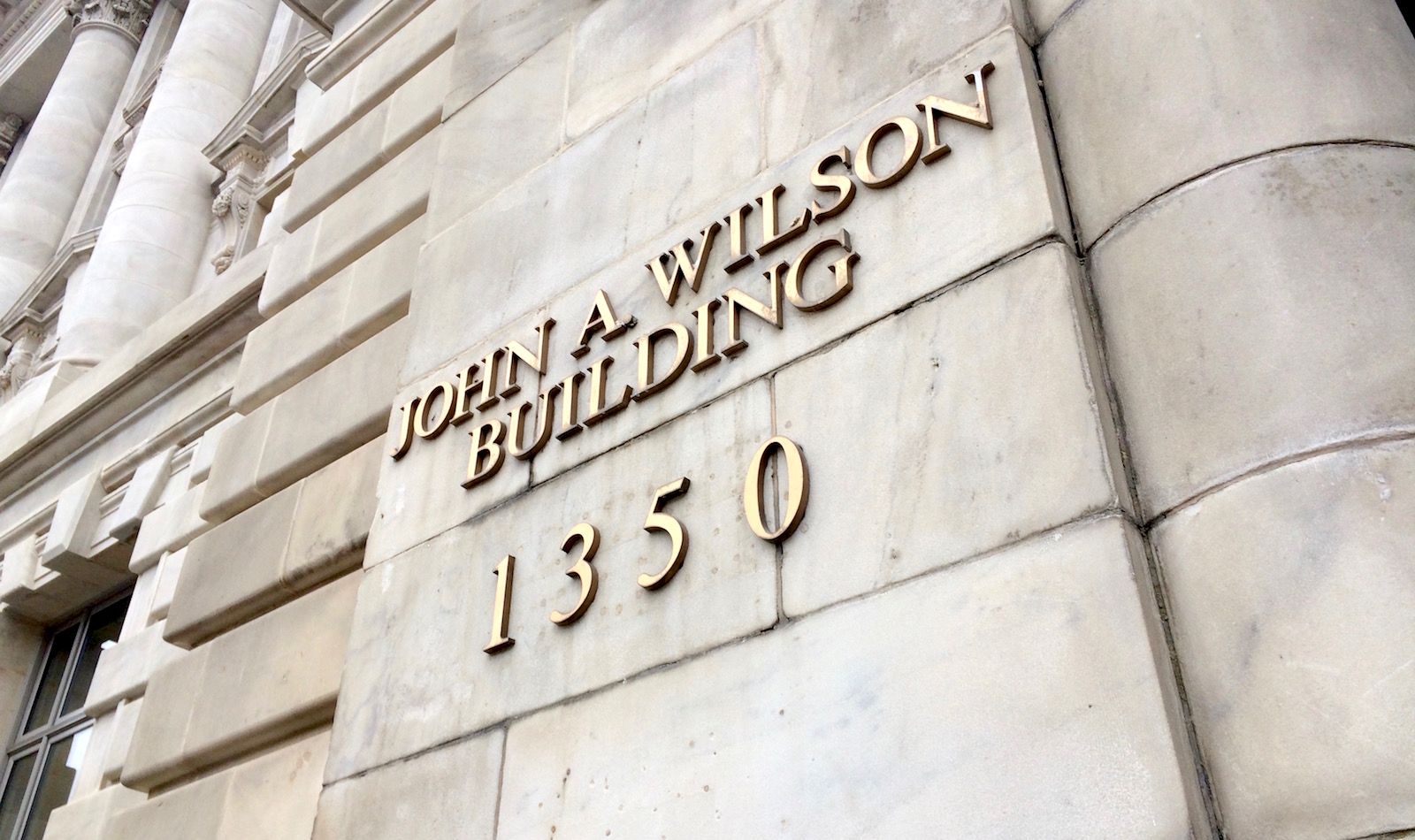
Several organizations — the Violence Policy Center, the National Gun Violence Research Center and the Coalition to Stop Gun Violence, for example — already are conducting research around the causes of gun violence. Those groups have offices in walking distance of the John A. Wilson Building.
“How much of the research that currently exists is specific to the District of Columbia?” McDuffie asked me.
Those best practices McDuffie lifted from California, Boston or Baltimore to shape the NEAR Act weren’t specific to the District. Many urban centers are confronting the scourge of too many guns and gun violence.
“I don’t think there has to be an either-or proposition. This is one additional step to augment what we are doing,” McDuffie continued.
The legislation is not an augmentation but a duplication. There is evidence from testimony by executive branch officials presented during the past month to the Committee on the Judiciary and Public Safety that the mayor and her team are already collecting critical data to do just what McDuffie wants done. Further, if he is dissatisfied with or distrusting of the Bowser administration, it seems odd that the legislation would require the deputy mayor of public safety and justice, the Metropolitan Police Department and the Office of Neighborhood Safety and Engagement to turn over, if requested, data they have collected to the third-party academic research center.
Could there be other motivations for McDuffie’s insistence? He introduced similar legislation in 2018 in the middle of his Ward 5 re-election bid. Before that win, some his supporters had sought to persuade him to seek an at-large council seat. From that perch, they argued, he could launch a mayoral run.
Will McDuffie jump into the race for an at-large seat in 2020? Democrat Robert White is facing re-election, as is independent David Grosso. Who is more vulnerable?
“I just came off an election last year; I’m focused on the challenges that are facing Ward 5,” McDuffie told me, doing the usual politician dance. He admitted, however, that he has encountered residents who, impressed with his performance, have urged him to seek a larger platform.
“If an opportunity does present itself, that is a decision for me to make with the people who put me in office and my family,” McDuffie added.
Did that sound like yes?
McDuffie also has amped up his rhetoric around the state of African-Americans in DC. Last month, along with 11 of his colleagues, he introduced the Racial Equity Achieves Results Amendment Act of 2019. (What’s up with the “achieves results” phrase he has locked on to? Is there some kind of psychology or magic behind it? I digress.)
That legislation would require the Office of Budget and Planning to design and implement a racial equity tool, beginning in fiscal year 2020. The mayor would also have to include “racial equity-related performance measures in the development of an agency’s annual performance plans and include an evaluation of the use of the racial equity tool in the annual performance accountability reports.”
Seriously? Could non-black residents have grounds for a lawsuit, if they are denied services or receive a reduction in services based on this racialization of the government?
The U.S. Census Bureau reported in 2017 that blacks comprised 47.1 percent of the District’s population; whites made up 45.1 percent. Is the fear of a white takeover driving McDuffie and his council allies, many of whom, oddly, are white?
“I am using the tools of the government to address long-standing intractable issues in the District of Columbia,” McDuffie told me, identifying inequities related to education, housing and employment.
Last month, McDuffie hosted a symposium in Ward 8 on race and policy. In his prepared statement after introducing the racial equity legislation, he also claimed to have pushed for the council to “become a member of the Government Alliance on Racial Equity (GARE).” He convened a racial equity working group, facilitated racial equity training for council members and their staff, and spearheaded the introduction of the “Sense of the Council on Establishing Race, Equity and Social Justice Resolution of 2017.”
Is he becoming DC’s new race man?
Racial discrimination certainly is a serious problem. However, if the DC government hasn’t effectively ensured racial equity, African-Americans bear a significant portion of the blame. After all, ever since DC residents secured Home Rule, blacks have controlled the major levers of power in DC. “It’s not about pointing fingers at anyone,” countered McDuffie. “To suggest black people are to blame is not what the focus should be on.”
Responsibility and accountability should never be dismissed. However, what ails the District isn’t race. It’s class or income inequality. Maybe that will be the focus of McDuffie’s next research center.
I forgot: Ward 8 Council member Trayon White already has introduced legislation to create a Commission on Poverty in the District of Columbia. Did I mention he may be running for re-election?
jonetta rose barras is a DC-based freelance writer and host of The Barras Report television show. She can be reached at thebarrasreport@gmail.com.
Comments are closed.