


Destiny Fullwood-Singh and Madeline Hall: Threats to DC’s Revised Criminal Code Act jeopardize progress against over-incarceration
Both DC Mayor Muriel Bowser and a Republican-led coalition of House members oppose meaningful and data-backed changes to the District’s sentencing laws by challenging the DC Council’s Revised Criminal Code Act (RCAA) and its provision for Second Look for All in particular. They insist against all evidence that lengthy sentences keep our communities safe. These actors may seem to be at odds with one another politically, but they nonetheless align in their desire to keep District residents incarcerated for their lifetimes and deny them power at every level of our political system.
As litigators working with the Incarceration Reduction Amendment Act (IRAA), a Second Look law that has been successfully implemented in the District, we know that failing to implement and expand sentence-review provisions could cause our community to continue to suffer the effects of over-incarceration for generations to come.
Both the IRAA and the RCCA’s Second Look for All provision require a court to consider an individual’s rehabilitation and whether their release poses a danger to their community after decades of incarceration, alongside the interest of community healing and other factors. These sentence-review mechanisms offer a meaningful way to reduce the tragic effects of mass incarceration and their outsized impact on Black communities by shortening unjustly long sentences. The persistent attempts to stop their implementation are merely votes in favor of the sprawling and harmful system that over-incarcerates our District residents for far too long.
Justified outrage about the Feb. 9 vote of the U.S. House of Representatives to overturn the RCCA — not to mention the ominous signs regarding the Senate’s expected vote in the coming days — emphasizes the struggle for District self-determination and autonomy, as well as concerns about our lack of voting representation in Congress. Some observers and elected officials have rightly described the problematic synergy between Mayor Bowser and the Republican-led coalition in their efforts to derail the RCCA, but they have not highlighted the racist underpinnings of that political alignment or its persistent role in the District’s struggle for statehood.
Indeed, the District was a majority-Black city until recently and remains a plurality-Black city. This fact has motivated decades of denying the District statehood, conceding limited power under Home Rule, and rolling back said power in the 1990s. All attempts to limit the District’s self-governance have been strongly motivated by anti-Blackness.
This attempt is no different. Within the RCCA — unanimously passed by the DC Council, vetoed by Bowser, and revived by a near-unanimous council vote to overturn the veto — lies a provision for the Second Look for All sentence review. This is a post-conviction solution to reduce lengthy sentences for all individuals 25 years and older convicted of a DC Code offense and sentenced to more than 20 years of incarceration. This law expands the already-enacted IRAA, which affords a meaningful chance for sentence reduction to individuals who were 24 or younger when an offense occurred and who have served at least 15 years of incarceration.
The data has shown that lengthy sentences are disproportionately given to, and experienced by, Black residents of DC, regardless of their age at the time of a given offense. Those who are sentenced, as well as their families and loved ones, suffer deeply as a result of this racial disparity. The historical practice of separating Black families and removing members — predominantly men — from the home perpetuates the cycle of incarceration for generations.
Our experience as Second Look litigators confirms the data. The Second Look Project is the only organization that exclusively represents incarcerated District residents who are eligible for post-conviction relief through the IRAA. That means that when our clients are granted relief from their lengthy or life sentences, we bear witness to the healing magic of their return: Their families are reunited, their communities welcome a long-lost friend, and they are finally given a meaningful chance at redemption outside of prison. These returning District citizens then often actively contribute to the safety of their own communities by using their journeys to guide and mentor younger generations.
We also know that expanded Second Look laws, like the RCCA’s Second Look for All, are a way to unwind the sprawling effects of mass incarceration. Mass incarceration disproportionately impacts Black communities, and its racist impacts are felt at every stage of the criminal legal system and permeate the fabric of all Black lives.
Most significantly for the purposes of Second Look for All, Black people are disproportionately serving sentences of life or life without parole compared to their non-Black counterparts. And the collateral consequences of incarceration spread far beyond the people who are locked behind bars: The Black community disproportionately experiences the negative effects of their loved ones’ incarcerations, including broken families, vicarious trauma, and an increased likelihood of subsequent criminal legal system involvement.
Mayor Bowser’s silent complicity with the House vote was made explicit in her recently proposed DC Council legislation. Assuming the RCCA survives the current federal attack, she seeks to eliminate its provision for Second Look for All. Though she has recently asked the Senate to vote “no” on the pending disapproval resolution, her own proposed legislation will perpetuate the same offense against District residents that the House has committed: a rejection of the District’s people as deserving of freedom and autonomy.
This would be done in defiance of the insistent voice of DC’s council members passing the law and overturning Mayor Bowser’s veto, as well as the broad coalition of stakeholders — including representatives of survivors — who helped develop the RCCA. And it upholds the system that currently incarcerates District residents, disproportionately Black, in far-flung states that are prohibitively expensive for many loved ones to visit, with no meaningful opportunity for parole under broken federal control, and no provision whatsoever for clemency.
It may be tempting to distinguish the sources of political efforts to roll back the RCCA and its expanded Second Look provisions. But in practical terms, these distinctions have no difference. When elected leaders from either side of the aisle insist on using the same racist carceral solutions under the guise of addressing community harm and safety, we end up with virtually the same system that has minimized Black power and autonomy. This is a tragedy in the face of creative and brave solutions that, while not perfect, take an important step toward returning our District community members to their lives outside of prison.
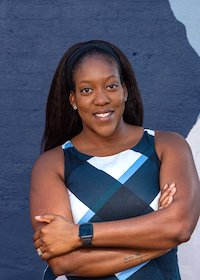
Destiny Fullwood-Singh is co-executive director and Madeline Hall is a staff attorney at the Second Look Project, where they represent incarcerated people from the District seeking relief from extreme sentences.
About commentaries
The DC Line welcomes commentaries representing various viewpoints on local issues of concern, but the opinions expressed do not represent those of The DC Line. Submissions of up to 850 words may be sent to editor Chris Kain at chriskain@thedcline.org.
Comments are closed.