

Noah Dougherty: DC has new social studies standards. Teachers need to bring them to life in new ways.
While some communities fight over book banning or whether enslaved people benefited from their own enslavement, DC leaders have been hard at work developing and adopting new, inclusive K-12 social studies standards for all DC students.
Adopted in June, these new standards increase representation, deepen connections to local history and empower students to be civic-minded leaders.
These updates — the first since 2006 — take a significant step toward ensuring every student sees a part of themselves in their school work by including more historical accounts of Black, Indigenous and LGBTQ+ people. They also introduce the accomplishments of diverse communities from around the globe to students at a younger age than the previous standards, starting in second grade.
Studying social studies is critically important to public schooling. It doesn’t just ground students in our shared history; it also equips them to be more culturally agile, improves their reading and writing skills, and prepares young people to be engaged members of their community and country.
Yet recent national tests show that our civic and education virtues are at risk: Just 13% of eighth graders nationally are proficient in U.S. history, and even fewer students report confidence in their civic knowledge, according to accompanying survey data on the Nation’s Report Card.
So how can DC schools take these standards and inspire young people to develop a deeper understanding of history and be ready to take on the civic responsibility we will leave to them?
The answer is that we must empower our teachers — who do the real work of implementing these standards — by supporting their efforts to teach history with all its complexities and contradictions, and to make it relevant to young people. That’s true not only in DC but also Virginia (which updated standards this spring amid a contentious debate) and Maryland (which updated standards in 2020).
To best accomplish this, teachers can highlight empowering narratives from traditionally marginalized communities that have previously been skipped over.
First, teachers must transform standards into meaningful lessons. Consider DC’s new standard in U.S. History II (a course taught in 11th grade) covering “movements for justice and equality,” which asks students to analyze the history of grassroots movements and how different pushes for equality intersected with one another. Students must then evaluate the extent to which the civil rights movement achieved its goals.
In their lessons, teachers will likely include Martin Luther King Jr.’s 1963 “I Have a Dream” speech — a foundational document to our history. But they can also introduce students to Bayard Rustin, a central civil rights leader who worked with A. Philip Randolph to organize the March on Washington where Dr. King delivered his pivotal speech.
This will help students more deeply understand the significant roles of the many people and strategies that went into building the Civil Rights Movement. They can also understand the contradictions in history: Rustin was ultimately sidelined from the movement for being gay.
As an educator, I know students learn more from this deeper, more representative history. There is enormous benefit in grappling with the complexities and contradictions in our past and the ongoing work of living up to our country’s highest ideals.
Teachers can also make content more locally relevant. While our own backyard houses incredible resources about our shared national history, such as the National Archives and the National Museum of the American Indian, students also need to connect to the history of their communities.
Educators can find resources on our local histories at places like the People’s Archive at the DC Library, the Smithsonian’s Anacostia Community Museum, the Rainbow History Project at the DC History Center, or the Alexandria Black History Museum in Virginia. (Relevant Learner, an organization that I co-founded, also provides teachers with materials that come from our nation’s and city’s premier research institutions and museums.)
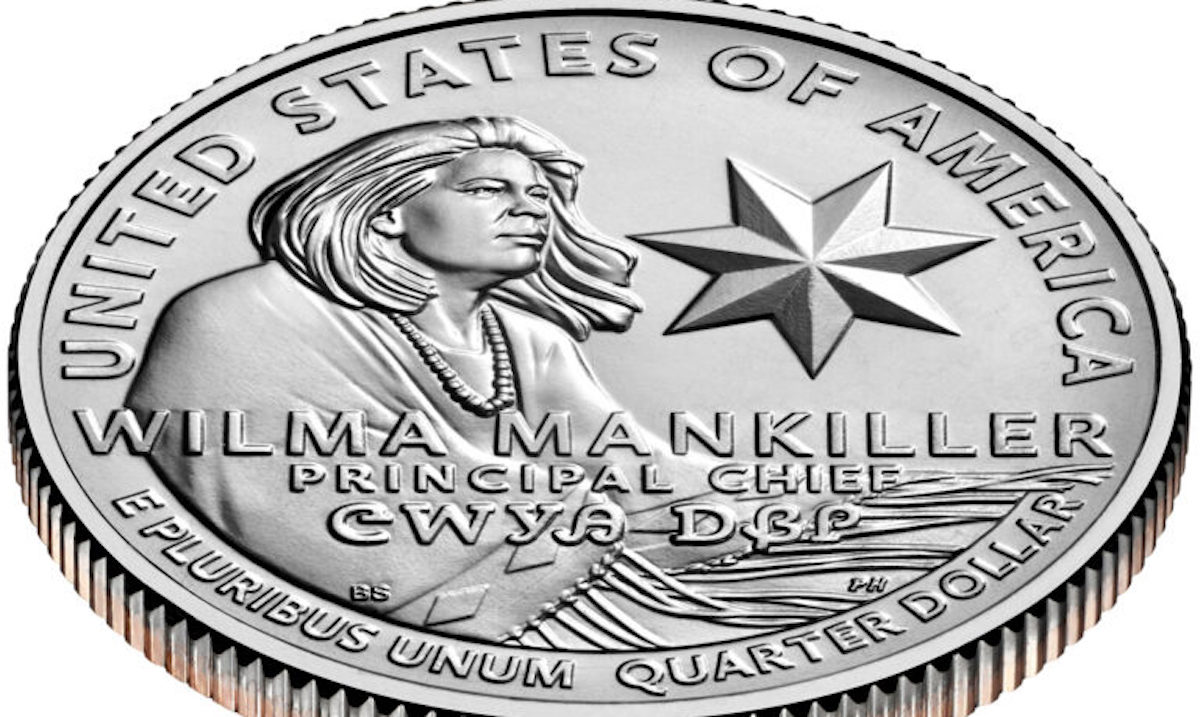
Finally, classroom content can inspire students to act as civic-minded leaders. Educators and historians from across the political spectrum recognize the importance of civic education. Students need to learn about both the rights and responsibilities of citizenship and the people who have fought to make those a reality for all Americans. Teachers can highlight the often-forgotten narratives of people like Pauli Murray, a civil rights activist and Episocopal priest who used fluid gender pronouns in the 1970s; the Golden Thirteen, who as the U.S. Navy’s first Black officers faced still-too-common tropes about Black Americans’ abilities; and Wilma Mankiller, the first woman to serve as principal chief of the Cherokee Nation.
Learning about history should inspire us by honoring our past, deepening connections to our shared communities, and empowering our sense of possibility as agents of change. This is, and has always been, the purpose of learning social studies.
Noah Dougherty is the co-founder of Relevant Learner, which connects students with locally and culturally relevant content. He has been a DC public school educator for 15 years.
About commentaries
The DC Line welcomes commentaries representing various viewpoints on local issues of concern, but the opinions expressed do not represent those of The DC Line. Submissions of up to 850 words may be sent to editor Chris Kain at chriskain@thedcline.org.
Comments are closed.