

Scott Williamson, Sam Brooks and Bill Updike: Two blocks from the White House, DC is taking the lead on climate
A rising tide may lift all boats, but it can also drown the people left ashore.
The Trump administration recently released a hefty new report finding devastating impacts of climate change across the country — including here in DC, where we will see “hellish heat and high water,” according to The Washington Post. This means more people will get sick from heat waves, and major flooding events will soon become the norm.

At the same time, many in DC are already struggling to stay afloat — especially lower-income residents and local businesses — and face particularly dire consequences. Following major disaster events, vulnerable residents struggle to survive, and 25 percent of small- to mid-size businesses never reopen. Extreme weather events can cost businesses thousands of dollars every day they remain closed.
Our DC leaders have the responsibility to respond — but in a way that does not exacerbate inequality or burden local residents and businesses. We need to protect everyone in DC as we move the city to a sustainable economy.
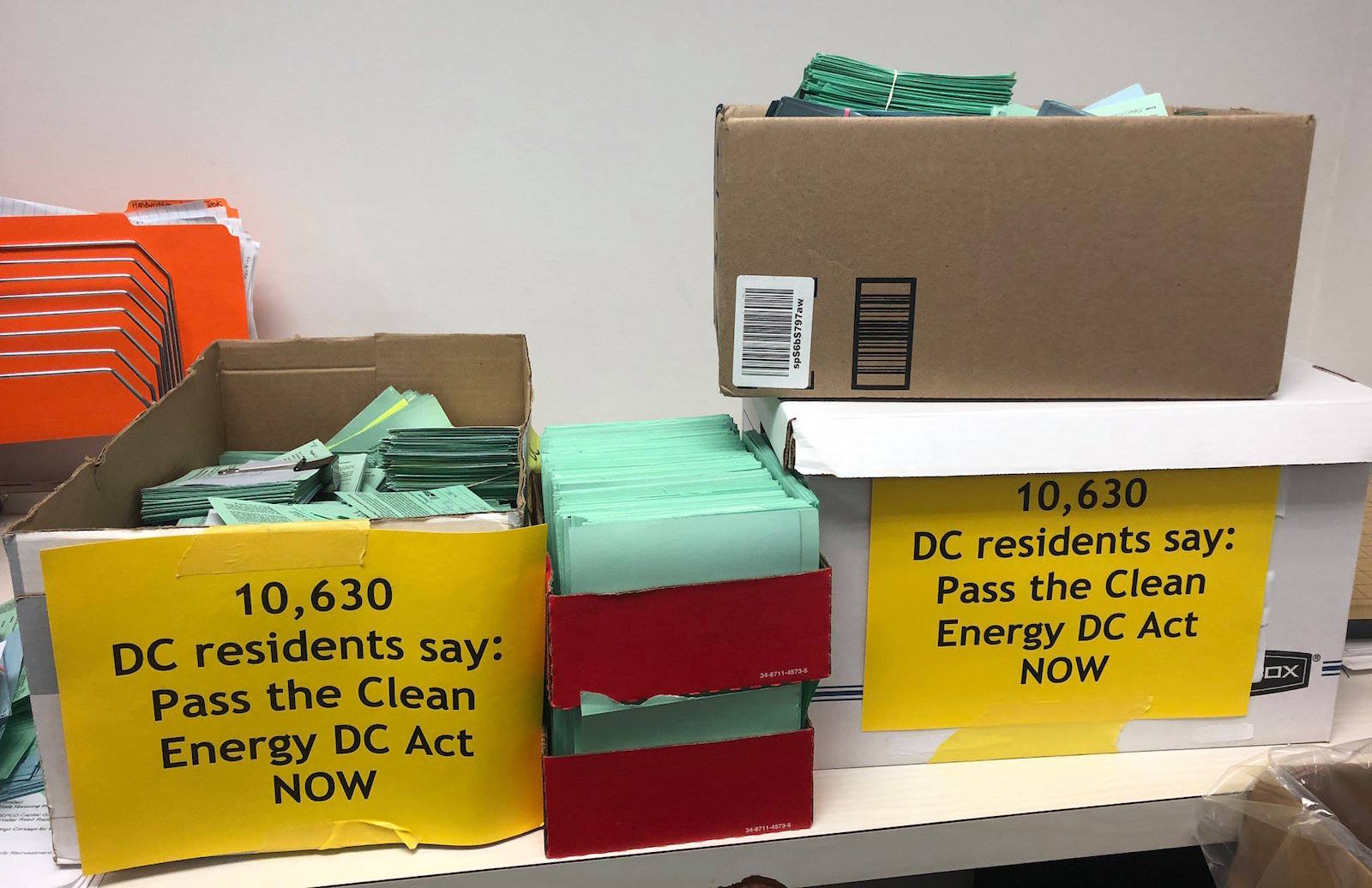
Now, we have the answer. The CleanEnergy DC Omnibus Amendment Act of 2018, introduced by Ward 3 DC Council member Mary Cheh, relies on practical and cost-effective methods to reduce carbon emissions in the District, while contributing to Mayor Muriel Bowser’s commitment to address climate change. The DC Council’s final vote on the bill is scheduled for Dec. 18.

This common-sense bill would reduce carbon emissions in the District in four distinct ways. First, it would transition the District to 100 percent renewable electricity by 2032 through the city’s Renewable Portfolio Standard. This would put DC on the fastest timeline to 100 percent clean electricity among major cities around the country.
Second, this bill would marginally increase the Sustainable Energy Trust Fund (SETF) fee on fossil fuels in order to address dirty electricity, natural gas and fuel oil consumption. The proceeds would help fund programs such as the planned DC Green Bank, an initiative to facilitate clean energy projects by leveraging private investment and reducing upfront costs. About a third of the revenue would be targeted to fund projects and ratepayer relief for low-income households, with $3 million annually specifically carved out to support energy projects for affordable housing buildings.

Third, this bill would establish a new Building Energy Performance Standard for existing buildings. The District boasts an impressive history of green building policies to cover new construction projects, but historically has not had sufficient policies to promote energy efficiency in existing buildings — hence the need for the new building standard established in the bill. The efficiency standard would not only help residents and businesses save money on energy, but it would support thousands of new jobs as well.
The final piece of this puzzle is transportation. Vehicular emissions alone account for more than 20 percent of all greenhouse gas emissions in the District. This bill seeks to reign in those emissions by tying the city’s excise tax on newly purchased cars to fuel efficiency. In practice, that means that a District owner of a shiny new Hummer can expect to pay significantly more to register their gas guzzler than the new owner of a low-emissions or electric vehicle.
Together, these four provisions would reduce carbon emissions in the District by more than 40 percent while also growing our economy. The Clean Energy DC Omnibus Amendment Act is a smart and sensible policy that has substantial support on the council, evidenced by unanimous passage during the first reading of the bill on Nov. 27. Bill advocates hope for an equally favorable vote at its second reading Dec. 18.
However, there remain a few sticking points in the bill from questionable amendments added without any discussion at the behest of the District’s electric utility. Pepco convinced lawmakers to insert a last-minute proposal that would give the utility total control over energy efficiency and electric vehicle infrastructure in the District. This flies in the face of what its parent company, Exelon, said on the record in testimony to the council when the two companies went through a merger, when it confirmed that the independent Sustainable Energy Utility would manage efficiency efforts.
Many climate, affordability and good governance advocates ardently and justifiably object to this kind of dealmaking. The omnibus bill has gone through a robust legislative process since it was introduced in July, including over 20 hours of testimony in front of two council committees. Numerous stakeholder meetings have also been held to work through various issues.
In contrast, the proposed changes that originated from Pepco have received no analysis or public comment. In its testimony before the council committee hearings, Pepco did not discuss the proposed amendments; instead the company brokered this back-door deal. This 11th-hour and self-serving effort by a major corporation and campaign contributor should not be rewarded by a council that has been striving toward better governance, as evidenced by a campaign finance bill that recently won final approval with unanimous support.
Advocates for this bill are open to a public discussion of the Pepco provisions next year in the light of day, with full transparency and a reasonable amount of time for full debate and consideration. At this point, however, council members should not allow this kind of back-door maneuvering to sully one of the most substantive and important bills on climate change in the country. The provisions should be promptly removed from the bill.
Simply put, we need and deserve a clean Clean Energy DC bill. The District has the opportunity to become a leader on climate — now all eyes are on our council members to deliver.
Scott Williamson is program management officer of the DC-based Center for Climate Strategies; Sam Brooks is managing director of ClearRock and co-founder of Coalition for a Resilient DC; and Bill Updike is a member of the DC Climate Coalition.
About commentaries
The DC Line welcomes commentaries representing various viewpoints on local issues of concern, but the opinions expressed do not represent those of The DC Line. Submissions of up to 850 words may be sent to editor Chris Kain at chriskain@thedcline.org.
Comments are closed.