


jonetta rose barras: The slow process of attaining health equity
Back during the opening months of the COVID-19 pandemic, everyone seemed to be condemning the deplorable health disparities and inequities in the nation’s capital: Better services were sorely needed for low-income and working-class Black people, many of whom were the hardest hit by the virus.
Many of them were either on the frontline in the service industry or suffered underlying conditions that made them among the most vulnerable because they were not recipients of high-quality health care. The rhetoric about improving their circumstances, including access to critical care, was amplified by elected officials inside the John A. Wilson Building, including Mayor Muriel Bowser and DC Council members.
Why then, you might ask, has the city been sitting on $95 million that is supposed to be used to eliminate health disparities? The money is the settlement from a 12-year legal battle fought by Walter Smith and his nonprofit organization, Appleseed Center for Law and Justice, over CareFirst BlueCross Blue Shield’s unlawful hoarding of its surplus revenues.
Am I the only person wondering: Where is the money? And when will District residents reap the benefits?
Hoping for answers I spoke last week with Smith who seemed a tad worried: “With the mayor’s support, we settled our case with CareFirst a year ago. The reason we settled was to get the $95 million out the door right away to address the pressing health needs of underserved District residents.
“We’re concerned about the long delay in addressing those needs and urge the District government to redouble its efforts now to get the job done,” added Smith.
In November — more than eight months after the agreement essentially had been reached — Bowser finally made a public announcement. She asserted that the money was “a unique opportunity to double down on solutions that promote DC HOPE — health, opportunity, prosperity, and equity” — and an impetus for moving “forward into this next phase of building a healthier, more equitable DC.”
Don’t you love it when elected officials make big pronouncements, then take forever to actually put all their talk into action?
CareFirst actually transferred the $95 million months ago. It has been sitting in a donor account at the Greater Washington Community Foundation since Dec. 10.
What’s happening with the interest that’s accruing? And since this Health Equity Fund is supposed to be expended over the span of five years, how will all these unused funds be invested in the meantime?
A spokesperson for the DC Department of Insurance, Securities and Banking (DISB) told me via email that the Community Foundation is responsible for implementing “an investment policy that will preserve capital and maximize returns. All investment income will accrue to the Fund and will be available to grantees.”
DC Auditor Kathy Patterson may want to place a review of the fund on her to-do list. I don’t expect the newly constituted Health Equity Committee, mandated by the settlement, to closely track anything.
The committee members, appointed by the mayor and CareFirst, are supposed to be public health experts. They appear to include more than a few of the usual suspects.
CareFirst selected Shirley Marcus Allen, the founder and managing director of Kirkland Byrd Group LLC and a former member of the CareFirst board; Dr. Djinge Lindsay, medical director for CareFirst Community Health Plan DC, which appears to be the same organization that has a managed care contract with the city; and Jeffrey Franco, CEO and founder of the Camino Consulting Group and former executive director of City Year Washington, DC.
Bowser and CareFirst jointly appointed Dr. Nnemdi Kamanu Elias, a physician in private practice whose experience includes time as senior medical director at United Medical Center — the hospital that many have decried for failing the residents of Ward 8. Separately the mayor also chose Dr. Tollie Elliott, chief executive officer at Mary’s Center, a community health system that serves a large immigrant population; Lori Kaplan, who is the former director of the Latin American Youth Center; and Courtney Snowden, a former DC deputy mayor for greater economic opportunity who left a questionable legacy and went on to become a lobbyist for Juul Labs Inc., the e-cigarette company.
Help us!
Legislators may want to jump in and push for an opportunity to make their own appointments. They may want to at least get Smith named to the panel to ensure someone is really looking out for District residents and it’s not all politics as usual.
The Equity Committee held its first meeting on Feb. 22. Dr. LaQuandra Nesbitt, director of the DC Department of Health (DOH), made a presentation to the group. The PowerPoint presentation, a copy of which I was provided by DISB and DOH, was puzzling. The source data are from 2018 — prior to the pandemic. A spokesperson for DOH said some of the information also comes from 2021. Combining data, the agency has created a COVID-19 Structural Vulnerability Map and Index; unsurprisingly DC’s most vulnerable neighborhoods are in predominantly Black and brown communities.
The presentation alludes to a post-pandemic plan of attack and offers an “Equity Stool” that features three legs — “Social & Structural Determinants of Health,” “Structural & Institutional Racism” and “Access to Quality HealthCare.” There is no further explanation, however.
Am I the only person getting that feeling that money is about to be wasted and there will be little radical change in the health outcomes for vulnerable residents?
Thus far, none of the $95 million has inured to their benefit. It certainly hasn’t been deployed to address the current substance abuse or mental health crises in this city.
So where is the holdup?
DISB is responsible for moving things forward. Readers may recall that for at least a decade this very agency’s past leadership stood in the way of District residents getting their share of CareFirst’s excess surplus. Commissioner after commissioner either said there wasn’t any excess, or Maryland and Virginia were entitled to some of it, or the excess wasn’t as much as Smith claimed.
The current commissioner, Karima Woods, sided with Smith during the last stages of the case when it was in the DC Court of Appeals. Then, she did nothing. The court — at the urging of Smith and his pro bono team of Covington & Burling LLP, Mathematica, and Harkins Cunningham LLP — compelled her to act.
No disrespect to Woods but DISB seems synonymous with the molasses express.
She sent me a statement via email: “Despite the impact of the Omicron variant, the [Equity Committee] held its inaugural meeting in February and have begun to identify goals, priorities and prepare for the first competitive [request for proposals] to go out by the Spring of 2022.
“Funding [is] to start in the Summer of 2022,” added Woods.
See what I mean about slow?
Don’t expect any speed in reviewing whether CareFirst continues to hold tightly to its excess surplus. DISB is required to conduct such a review every three years. The $95 million is based on a 2011 assessment. Where are the reports for 2014, 2017 and 2020?
Since CareFirst is a DC contractor, the council may want to consider legislation that would prohibit any contract extensions or renewal until DISB has concluded its review and until the health care company has handed over more money it is likely hoarding.
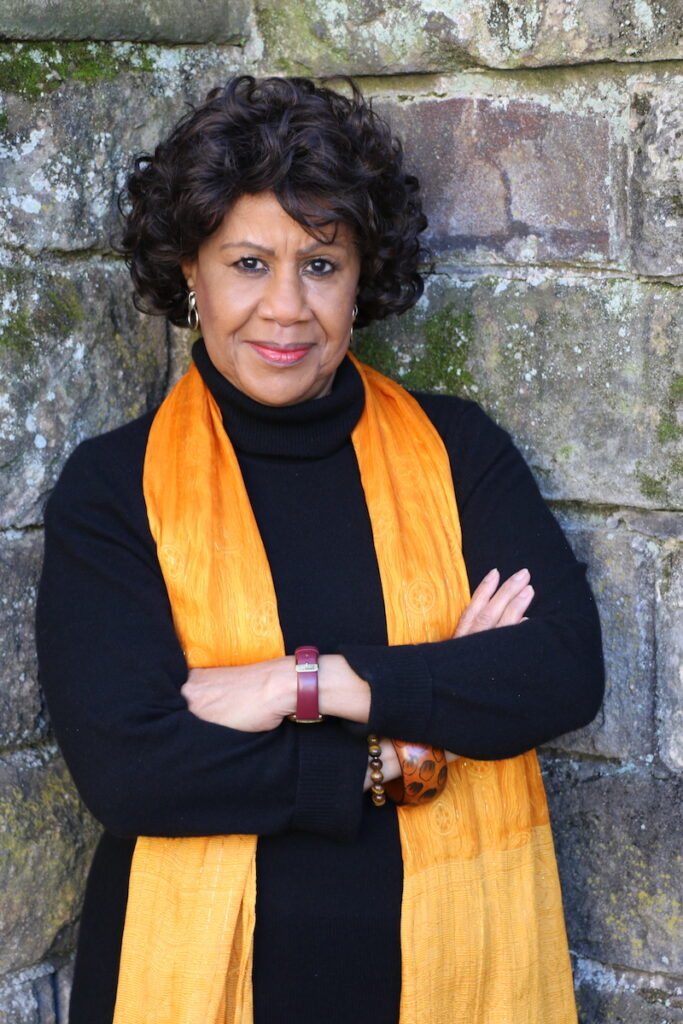
jonetta rose barras is an author and freelance journalist, covering national and local issues including politics, childhood trauma, public education, economic development and urban public policies. She can be reached at thebarrasreport@gmail.com.
Comments are closed.